

A Shih Tzu Teacup Dog can be hard to resist. The tiny body, big eyes, and familiar Shih Tzu coat may look like the perfect small family companion. But the word teacup creates a lot of confusion about what these dogs actually are.
Here is the key fact: there is no separate AKC recognized teacup or Imperial Shih Tzu variety. The recognized breed is simply the Shih Tzu. Its official standard calls for a mature weight of 9–16 pounds and a height of 8–11 inches, while also emphasizing that the dog should remain compact, solid, and substantial.
That distinction matters because choosing a puppy based mainly on extreme smallness can distract from more important questions about breathing, health testing, temperament, grooming, and family fit. Here’s what to know before making that decision.
What Is a Shih Tzu Teacup Dog?
A teacup Shih Tzu is simply a Shih Tzu smaller than the breed standard. It isn’t a separate breed, an official size class, or a special variety. “Imperial” means exactly the same thing.
The American Shih Tzu Club, which is the American Kennel Club’s parent club for the breed, puts it bluntly. It says the terms “imperial” and “tiny teacup” should be seen for what they are: a myth used by unethical breeders to create a market for dogs that don’t conform to the standard.
The club is equally clear that there’s no AKC-recognized Imperial or Tiny Teacup Shih Tzu.
What the AKC Shih Tzu Standard Actually Says
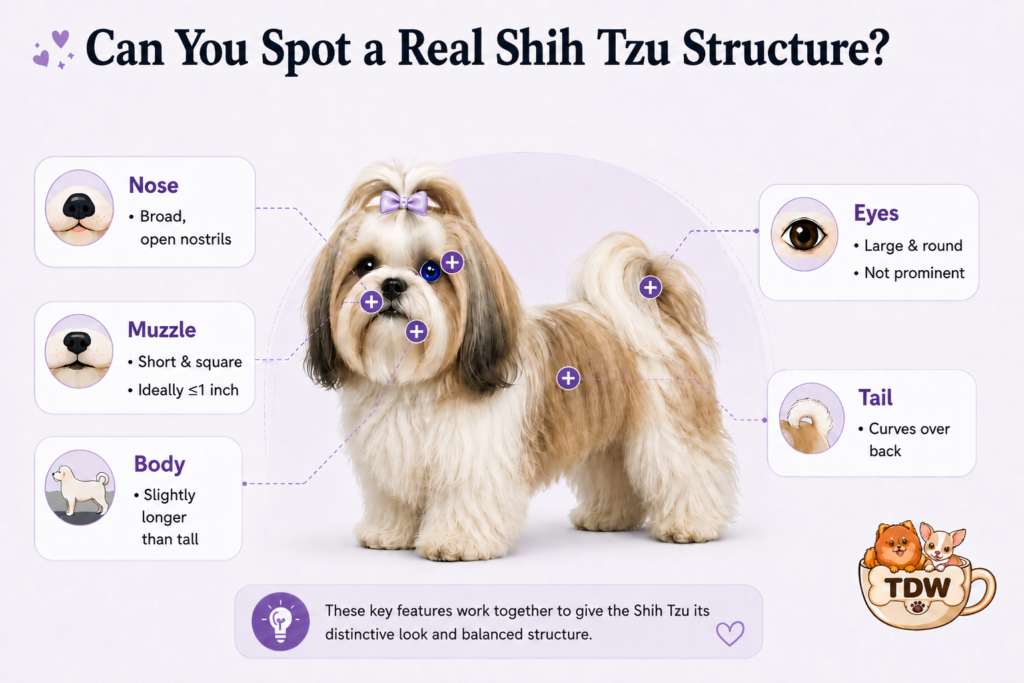
The AKC breed standard gives an ideal height at the withers of 9 to 10½ inches, “but not less than 8 inches nor more than 11 inches.” Ideal mature weight is 9 to 16 pounds.
That’s worth pausing on. Unlike some toy-breed standards, this one sets a floor as well as a ceiling. A Shih Tzu is meant to be at least 8 inches tall. Most dogs advertised as teacups fall below that.
The standard also acknowledges there’s always been considerable size variation in the breed. But whatever the size, it says the Shih Tzu must be “compact, solid” and carry good weight and substance.
In other words, sturdiness is part of the breed’s definition. Breeding for extreme smallness works against that. One clarification, since you’ll see it claimed online: the standard doesn’t list a size disqualification. A very small Shih Tzu isn’t automatically disqualified from the show ring. It simply falls outside what the standard describes as ideal.
“Imperial,” “Teacup,” “Tiny Toy”: What the Labels Really Mean
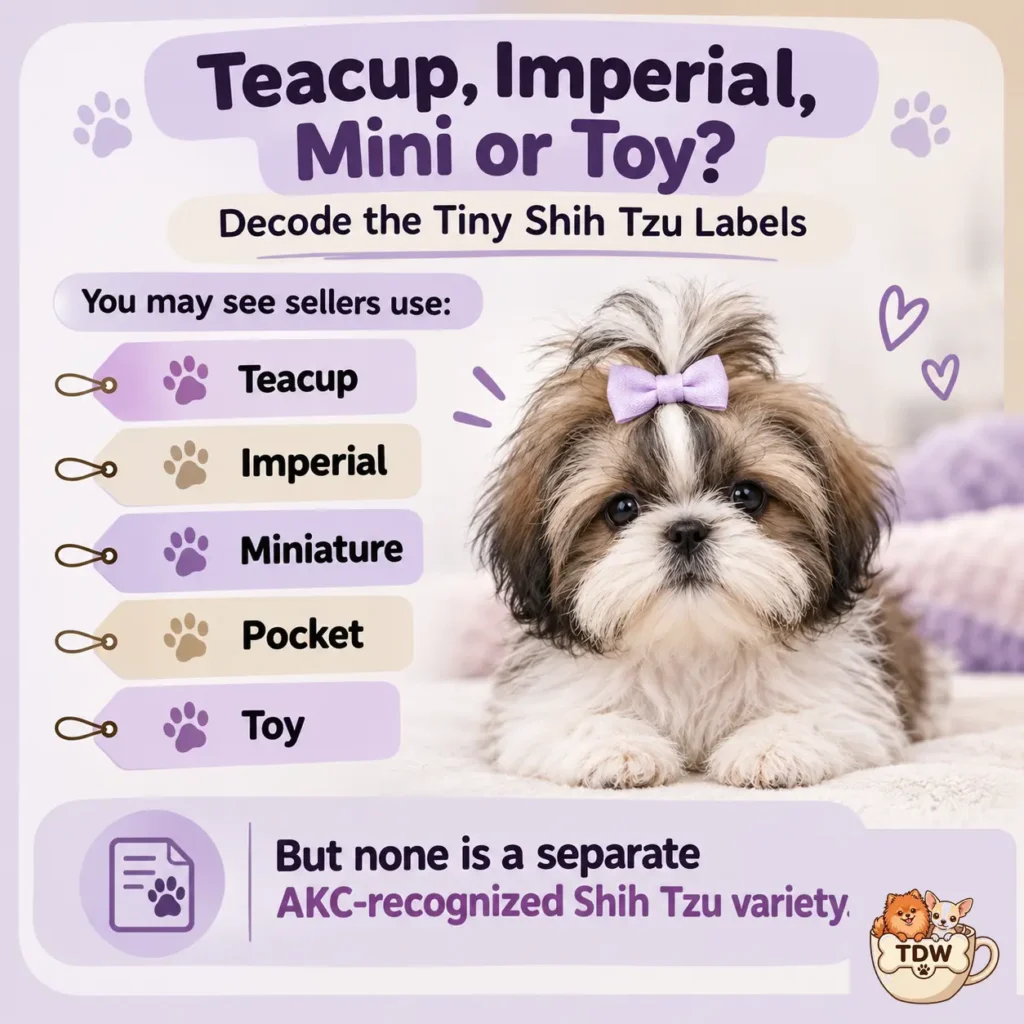
Some sellers claim their dogs carry an “imperial gene.” The breed club says there’s no proof such a gene exists.
What actually happens is simpler. Size reduction comes from breeding the smallest dog in one litter to a small dog from another, then repeating that over generations. The club warns this produces not just abnormally small Shih Tzus but puppies that may have health problems.
“Imperial” also doesn’t mean royal bloodlines, despite what the word implies.
| Label | Official? | What it usually means |
|---|---|---|
| Shih Tzu | Yes | The breed, part of the AKC Toy Group |
| Imperial Shih Tzu | No | A seller label for an undersized Shih Tzu, sometimes implying “royal” lineage |
| Teacup, tiny teacup, mini, miniature, tiny toy | No | Seller labels for dogs below the standard |
| Shih-Poo, Shichon, Shorkie and other “designer” names | No (mixed breed) | Crosses with other breeds, not smaller Shih Tzus |
The breed club is direct about that last row too. It calls designer-dog labels another myth used to create demand for mixed-breed dogs.
How Big Do Teacup Shih Tzus Get?
There’s no official teacup size, so any number you see is a seller’s or a website’s definition, not a standard. You’ll find pages quoting 4 to 7 pounds, “under 7 pounds,” and 6 to 9 pounds, and they don’t agree with each other.
More importantly, nobody can guarantee how big a puppy will be as an adult.
Here’s what actually helps:
- Ask for both parents’ adult weights and heights. It’s the best clue available.
- Consider an adult dog. If size really matters to your family, an adult’s size is already known.
- Treat any size guarantee as a red flag, not a selling point.
One piece of useful context: in UK veterinary records, the average adult Shih Tzu weighed about 7.9 kg, which is roughly 17 pounds. Pet Shih Tzus often weigh a little more than the show ideal, and that’s normal.
Teacup Shih Tzu Quick Facts
| Fact | Detail |
|---|---|
| Breed | Shih Tzu (“teacup” and “imperial” are labels) |
| AKC group | Toy |
| Standard size | 9–10½ in ideal (8–11 in limits); 9–16 lb ideal |
| Coat | Long, flowing double coat; all colors allowed |
| Shedding | Low, but not truly hypoallergenic |
| Lifespan | About 10–18 years; a UK study found a median age at death of 12.7 years |
| Temperament | Outgoing, happy, affectionate, friendly |
| Key health watch-points | Teeth, eyes, anal glands, ears and skin, hernias, heat |
Personality and Family Life
The breed standard says the Shih Tzu’s sole purpose is to be a companion and house pet, and describes the ideal temperament as “outgoing, happy, affectionate, friendly and trusting towards all.”
That’s not marketing language. It’s what the breed was built for, and it’s the single best reason to want one.
A size label doesn’t change any of this. A smaller Shih Tzu has the same personality as any other Shih Tzu.
Are Teacup Shih Tzus Good With Kids?
The breed’s temperament suits families well. But a very small individual dog is fragile, and that changes the rules.
VCA Animal Hospitals describes Shih Tzus as playful and good with children, while adding that children must be supervised because they could easily hurt such a small dog.
If you have kids, set a few simple house rules:
- Kids sit on the floor to hold the dog.
- Young children don’t carry the dog.
- An adult supervises play.
- The dog always has a quiet place to retreat to.
Living With Other Pets
Shih Tzus are generally sociable with other dogs and pets. Just supervise play with larger dogs, since size differences can cause accidental injuries.
Training, Barking, and House Training
Shih Tzus learn quickly but can be stubborn. VCA notes they don’t do well with force-based methods and respond much better to rewards, whether that’s food or games.
Be prepared for house-training to take time. VCA says it can be more challenging with this breed than with many others. Small bladders mean frequent potty breaks, and consistency matters more than speed. Some families use an indoor potty area alongside outdoor trips.
Shih Tzu Health: What the Research Actually Shows
Here’s where this article can offer something the ads won’t: real data.
A 2024 study from the Royal Veterinary College examined records for 11,082 Shih Tzus under UK veterinary care. It’s the largest picture of this breed’s health available, and the findings are more reassuring than you might expect from a flat-faced breed.
The most commonly recorded problems were periodontal (gum) disease at 9.5%, anal sac impaction at 7.4%, and ear disorders at 5.5%. The researchers noted that most of the disorders Shih Tzus face are ones common to all dogs, without the prevalent extreme conditions seen in some other flat-faced breeds.
They also found the breed appears relatively long-lived. That said, the study did identify specific watch-points, and they’re the ones that matter most for daily care. Note that this is UK data, though the conditions themselves are the same anywhere.
Eye Problems
Shih Tzu eyes need real attention. In the UK study, corneal ulcers were recorded in 3.5% of Shih Tzus compared with 0.77% of dogs overall. The same paper cites earlier research finding Shih Tzus had around 10 times the odds of corneal ulcers compared with crossbreed dogs.
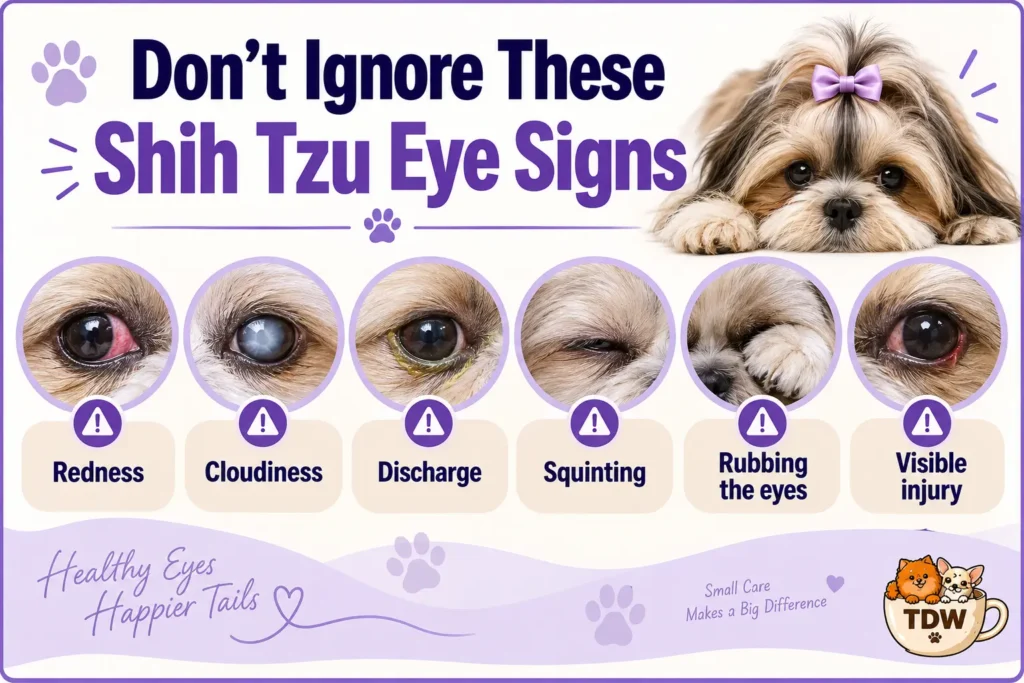
A corneal ulcer is an open sore on the clear surface of the eye. Dry eye, where a dog doesn’t produce enough tear film, is another common problem in the breed.
See your vet promptly if you notice squinting, redness, discharge, cloudiness, or your dog pawing at an eye. Eye problems can worsen quickly. Day to day, the best prevention is simple: keep the hair around the eyes trimmed short or tied up so it isn’t rubbing the surface of the eye.
Teeth: The Most Common Problem
Gum disease was the single most recorded disorder in the study, and it became more common with age.
There’s a second dental issue worth knowing about. Retained baby teeth, where a puppy tooth doesn’t fall out after the adult tooth comes in, were found in 8.47% of Shih Tzus under two years old. VCA explains that the crowding traps food and plaque, which speeds up gum disease.
So check your puppy’s mouth during teething, and ask your vet if you see two teeth in one spot.
For prevention, daily brushing with dog toothpaste does more than anything else. The American Animal Hospital Association also recommends that small-breed dogs have their first full dental evaluation under anesthesia by around one year of age.
Breathing and Heat
Shih Tzus are brachycephalic, meaning they have a short, flat muzzle. That shape can restrict airflow, and breathing problems have been reported in the breed.
But this is where the balance matters. The UK study found Shih Tzus don’t show the airway problems at anything like the rates seen in breeds such as Pugs and Bulldogs. It’s a watch-point, not a defining crisis.
Practically, that means avoiding exercise in midday heat, keeping your home cool in summer, and using a harness rather than a collar so walks don’t put pressure on the throat. See your vet if breathing becomes loud or labored, or if your dog tires unusually fast.
The Orthopedic Foundation for Animals runs a breathing-function test for flat-faced breeds, and it has recently expanded to more breeds including the Shih Tzu. If you’re talking to a breeder, it’s worth asking whether it’s available for their dogs.
Anal Glands, Ears, and Skin
This is the answer to a question a lot of Shih Tzu owners eventually ask: why does my dog smell?
Anal sac impaction was the second most common disorder in the study, at a higher rate than in dogs overall. Scooting along the floor is the classic sign. Your vet or groomer can express the glands; don’t attempt it yourself unless you’ve been shown how.
Ear disorders came third at 5.5%. VCA recommends checking the ears weekly, because the breed’s heavy ear hair and drop ears mean poor air circulation. Head shaking, odor or discharge means a vet visit.
Skin problems were the most common disorder group overall at 16.6%. Matted hair traps moisture against the skin, which is one more reason grooming isn’t just cosmetic.
Kneecaps, Hips, and Hernias
Patellar luxation means the kneecap can slip out of its normal position, causing a skipping step. It matters enough in this breed that the American Shih Tzu Club includes a patella exam in its recommended health tests. Hip evaluation is an optional test the club also mentions.
One finding that surprises most owners: umbilical hernias were more common in Shih Tzus than in dogs overall, at 3.9% versus 0.93%, and were more often recorded in younger females. Ask your vet to check your puppy’s belly button at their first appointment.To protect knees and backs, discourage jumping down from furniture and use ramps or steps instead.
Extra Risks for Very Small Shih Tzus
Very small puppies carry a few extra risks that have nothing to do with the breed.Low blood sugar is the main one. Veterinary Partner explains that toy-breed puppies can struggle to keep blood sugar steady, so regular meals matter. PetMD recommends three or four meals a day for Shih Tzu puppies for exactly this reason.
Tiny puppies are also easier to injure in a fall, so handle them carefully and keep them off high furniture.There’s one more consideration that affects breeding rather than pet ownership. The American Shih Tzu Club notes that undersized females may not be able to give birth normally.
Beyond these points, be cautious about sweeping claims. You’ll read online that teacups are more prone to organ disease or airway problems specifically because of their size. There’s very little research on dogs bred this small, so treat confident claims either way with skepticism.
How Long Do Teacup Shih Tzus Live?
PetMD gives an average lifespan of 10 to 18 years, which is generous for any breed.The UK research found a median age at death of 12.7 years. A separate UK life-table study estimated life expectancy at birth at 11.05 years. Different methods produce different numbers, and both are UK figures.
There’s no reliable data on dogs sold as “teacups.” What’s clear is that Shih Tzus are a relatively long-lived breed, and how a dog is bred and cared for matters far more than a label.
Grooming Teacup Shih Tzu
If one thing changes whether a Shih Tzu is right for you, it’s this.
That long, flowing double coat grows continuously and mats easily. VCA recommends brushing and combing every other day at minimum to prevent mats. PetMD suggests brushing at least a few times a week, preferably daily, plus a weekly bath.
A puppy cut or teddy bear cut cuts the daily workload substantially, but it needs regular professional trims to maintain. Most families find this trade worth making.
Now for a myth worth clearing up. Shih Tzus shed very little, and you’ll often see them called hypoallergenic. PetMD is careful here: they don’t shed much, but no dog is 100% hypoallergenic, since skin, saliva and urine all contain allergens. Low shedding also doesn’t mean low maintenance. Loose hair stays in the coat instead of falling out, which is precisely why it mats.
| How often | Task |
|---|---|
| Daily | Brush (long coat), wipe the face and eye area, check the eyes |
| Several times a week | Brush (puppy cut); aim for daily tooth brushing |
| Weekly | Bath (PetMD), ear check (VCA) |
| Every few weeks | Nail trim, sanitary and face trim |
| Regularly | Professional grooming, whether maintaining the long coat or clipping it |
Caring for a Small Shih Tzu
Beyond grooming, the daily essentials are straightforward:
- Keep them cool. Avoid midday heat and keep the house comfortable in summer.
- Use a harness instead of attaching the leash to a collar.
- Add ramps or steps to furniture rather than letting them jump down.
- Watch the weight. VCA notes Shih Tzus tend to stay in good weight or run a bit heavy.
- Feed puppies frequently, following a plan from your vet.
- Keep hair out of the eyes, every single day.
- Brush the teeth, ideally daily.
- Walk them. VCA points out that even though indoor games meet much of their physical need, they still benefit from the mental stimulation of walking and sniffing outdoors.
Is a Teacup Shih Tzu Right for Your Family?
| Likely a good fit | Probably not right now |
|---|---|
| Wants an affectionate companion dog | Wants a running or hiking partner |
| Has time for daily grooming, or budget for a groomer | No time or budget for coat care |
| Older, gentle children | Toddlers with a very tiny dog |
| Cool home or reliable air conditioning | Hot climate without cooling |
| Budget for dental and eye care | Tight budget for vet bills |
| Patient about house-training | Needs a quickly house-trained dog |
If you land mostly on the left, a Shih Tzu may suit you beautifully. And a healthy dog within the breed standard, or a rescue, is usually a better choice than the smallest puppy you can find.
How to Find a Healthy Shih Tzu
Where your puppy comes from shapes its health far more than its size does.
Questions to Ask a Breeder
A good breeder will welcome these:
- Have both parents had the breed club’s recommended health tests? Since 2021, the American Shih Tzu Club’s CHIC requirements are an eye certification through OFA’s Companion Animal Eye Registry and a patella certification through OFA. Cardiac testing and hip certification are optional.
- Can we see the results? Ask for both parents’ registered names so you can look them up in the OFA database yourself.
- Do they have cardiac or hip results too? Optional, but a good sign.
- What are the parents’ adult weights and heights?
- Will you guarantee my puppy’s adult size? An honest breeder won’t.
- Can we meet the mother?
- Do you offer a written contract, health guarantee and take-back policy?
- Why do you call your puppies “imperial” or “teacup”? The answer tells you a great deal.
Two things worth understanding. A CHIC number means the required tests were done and the results are public, not that every result passed, so read the actual results. And CHIC participation is voluntary, so a missing CHIC number isn’t proof of a bad breeder. Health results you can verify for yourself are the strong signal.
Why “Imperial” Isn’t Worth Paying Extra For
The breed club’s argument is straightforward: these labels exist to create a market, and a higher price, for dogs that fall outside the standard. It also points out that a responsible breeder doesn’t advertise an occasional runt as an “imperial” or “tiny teacup” Shih Tzu.
PetMD is just as direct, noting that teacup dogs are bred to be as small as possible, often without any consideration of their health.
For context, PetMD puts a typical Shih Tzu at $1,000 to $3,000 depending on breeding lines. Paying above that for a word buys you nothing.
How to Avoid Online Puppy Scams
Tiny puppy photos are a favorite tool for scammers. The FTC’s advice on pet scams highlights clear warning signs:
- Pressure to pay a deposit fast, before someone else takes the puppy.
- Payment by gift card, wire transfer or cryptocurrency. No legitimate seller requires these.
- No visits or video calls to see the puppy live.
- Borrowed photos. Run a reverse image search to check whether the pictures appear elsewhere.
- Surprise fees for shipping, crates or insurance.
- Prices that seem too good to be true.
If you think you’ve been targeted, report it at ReportFraud.ftc.gov.
Shih Tzu Rescue and Adoption
The American Shih Tzu Club runs a rescue committee with regional contacts, and Shih Tzus turn up in shelters regularly.An adult dog comes with a real advantage: you can already see their size, coat condition and personality, with no guessing required.
Teacup Shih Tzu FAQs
Is an imperial Shih Tzu a real breed?
No. It’s a marketing label for an undersized Shih Tzu, and the breed club calls it a myth. There’s no AKC-recognized imperial or teacup variety.
Is a Shih-Poo a teacup Shih Tzu?
No. A Shih-Poo is a Shih Tzu crossed with a Poodle, which makes it a mixed-breed dog rather than a smaller Shih Tzu. The same goes for Shichons and Shorkies.
Can a teacup Shih Tzu be AKC registered?
Only as a Shih Tzu, and only if both parents are registered Shih Tzus. There’s no teacup or imperial registration category.
At what age should a Shih Tzu puppy come home?
Ask your breeder and your vet. Because very small puppies are prone to low blood sugar, some breed-club sources recommend waiting until puppies are older before they go to new homes.
Conclusion
A Shih Tzu teacup dog isn’t a special kind of Shih Tzu. It’s an undersized one wearing a marketing label the breed’s own club describes as a myth, and the standard itself says these dogs should be compact and solid rather than fragile.
The good news is that Shih Tzus are a generally healthy, long-lived, affectionate breed. They just need real commitment to their coat, eyes and teeth.
So focus on health testing you can verify, a coat routine you can sustain, and a breeder who doesn’t sell you a word. Take the checklist above with you, or start with a rescue.arket is not necessarily the best Shih Tzu. The best choice is one that has the greatest chance to grow into a healthy, confident, and loving companion.

The TeacupDogWorld Editorial Team researches and creates practical guides about small and teacup-sized dogs, including breed characteristics, grooming, nutrition, health, training, and everyday care. Our content is developed using reputable veterinary, breed-club, and animal welfare sources to help dog owners make better-informed decisions.