
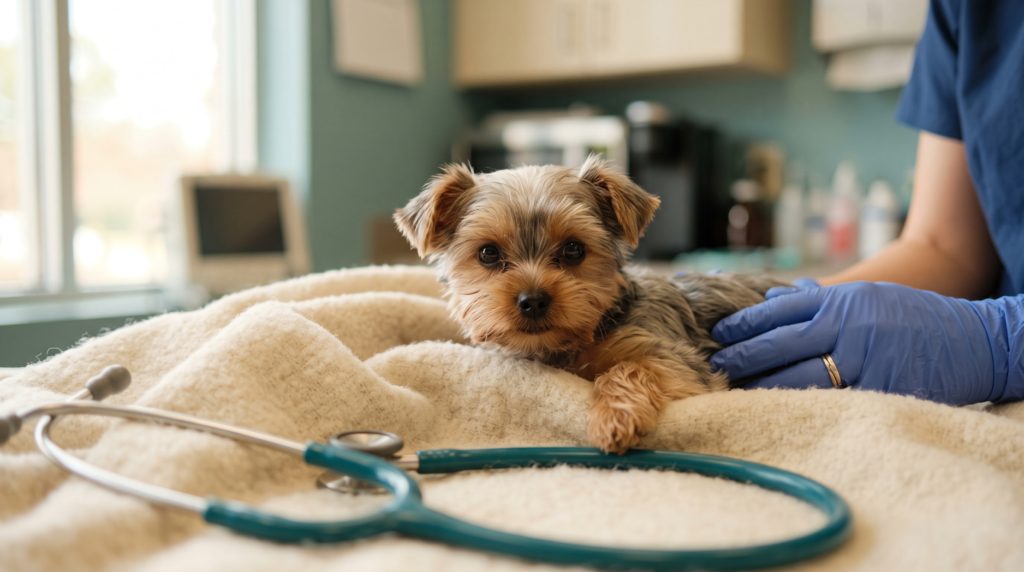
Teacup dogs are not automatically unhealthy, but their tiny size and the way many are bred bring real, known health risks. The most common teacup dog health problems are low blood sugar, broken bones, dental disease, liver shunts, slipping kneecaps and a collapsing windpipe.
If you are thinking about getting a very small dog, this guide will help you understand what you would be taking on. If you already have one and something seems wrong, the warning signs table below will tell you how quickly to act.
Every problem below comes with the signs to watch for and your next step. After that, you will find what lowers the risk most, from the questions to ask a breeder to the small daily habits that keep a tiny dog safe.
Are Teacup Dogs Unhealthy?
Not automatically, but they do carry more risk than dogs of a normal size for their breed.
The health problems fall into two groups. Some happen simply because the body is so small, like low blood sugar, getting cold quickly and breaking bones easily. Others are inherited conditions that already run in toy breeds, like liver shunts and slipping kneecaps. Breeding dogs to be even smaller than their breed normally is can make both groups more likely.
That does not mean every tiny dog will be sick. Plenty of small dogs live long, happy lives. The point of knowing the risks is so you can spot problems early and lower the odds where you can.
Why There Is No Research on “Teacup Dogs” Specifically
“Teacup” is not a breed or a medical category. It is a word sellers use for dogs bred smaller than usual, so scientists do not study “teacup dogs” as a group.
What they do study is toy breeds, and how a dog’s body weight affects its health. That is where every fact and number in this article comes from. When you read that very small dogs have a higher risk of something, it means small body size or a toy breed background, not the teacup label itself.
Warning Signs and When to Call the Vet
If you are here because your dog is doing something that worries you, start with this table. It is a guide to how quickly to act, not a diagnosis. If you are ever unsure, call your vet or an emergency clinic. They would always rather hear from you.
| What you notice | What it could mean | How fast to act |
|---|---|---|
| Puppy is weak, trembling, very sleepy or wobbly | Often low blood sugar, but other illnesses can look the same | Same day. Emergency if the puppy collapses or will not wake |
| A seizure lasting more than five minutes, or several seizures close together | Low blood sugar, liver shunt, or a brain problem | Emergency, now |
| A single seizure that stops on its own | Several possible causes | Call your vet the same day, even if your dog seems fine afterward |
| Dazed, staring, circling or acting strangely after meals | Possible liver shunt | See a vet soon, within a day or two |
| Domed head, clumsy, bumping into things | Possible fluid on the brain | See a vet soon |
| Skipping or hopping on one back leg | Slipping kneecap | Routine appointment |
| A young puppy limping on a back leg, getting worse over weeks | Possible hip damage (Legg-Calvé-Perthes disease) | See a vet soon |
| Dry honking cough, like a goose | Collapsing windpipe | Appointment soon. Emergency if struggling to breathe or gums look blue |
| Bad breath, red gums, dropping food | Dental disease | Routine appointment |
| Limping or crying after a fall or jump | Possible broken bone | Same day |
| Cold to the touch, shivering, sluggish | Getting too cold | Warm the dog gently and call your vet |
| Not gaining weight, or falling behind littermates | Several possible causes | See a vet soon |
If your dog has a seizure, time it on your phone, move anything nearby that could fall on it, and keep your hands away from its mouth. Cornell University’s veterinary college advises going straight to a vet if a seizure lasts more than five minutes, and recommends a vet exam after any first seizure, even one that stops quickly.
Each of the problems in the table is explained in more detail below.
Problems Caused by Being Very Small
These risks come from size itself. The smaller the body, the less room it has for error.
Low Blood Sugar
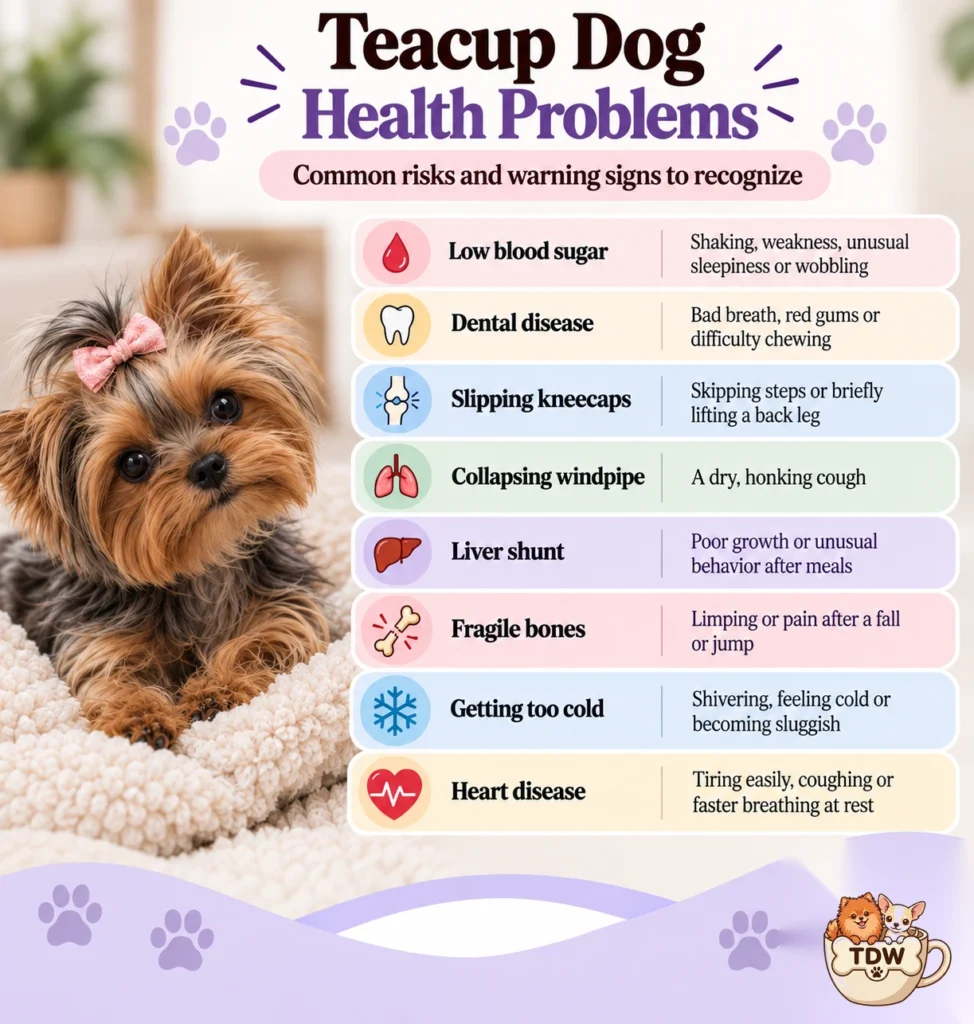
Low blood sugar, called hypoglycemia, means the puppy has run out of the sugar its body and brain need to work. It is the emergency owners of tiny puppies are most likely to face.
The Merck Veterinary Manual describes it as a problem of toy breed puppies in their first six months, linked to a liver that is not yet fully developed. A missed meal, cold, stress, a long car ride or a tummy upset can all tip a tiny puppy over.
Signs: weakness, trembling or shaking, being very sleepy or hard to wake, wobbling, pale gums, and in serious cases seizures or collapse.
What to do first: rub a small amount of corn syrup on the puppy’s gums, keep it warm, and go to a vet the same day, even if it seems to recover. Veterinary Partner, a veterinarian written resource for owners, explains that puppies who do not fully bounce back need hospital care. The corn syrup is first aid to get you to the vet, not a treatment.
One important caution: weakness in a tiny puppy is often low blood sugar, but not always. Other problems, including the liver shunts described further down, can cause the same signs, and can also be the reason blood sugar dropped in the first place. So even if corn syrup seems to help, your vet still needs to find out why it happened.
Prevention: small meals often, a warm place to sleep, and never letting a young puppy skip a meal. Your vet will tell you when your dog is old enough to eat less often.
Getting Cold Easily
A tiny body loses heat very quickly. Very small dogs can get dangerously cold, called hypothermia, in conditions a bigger dog would barely notice.
Watch for shivering, a body that feels cold to the touch, or a dog that seems slow and dull. Give your dog warm bedding away from drafts and cold floors, and a coat for outdoor walks in cold weather. Heat loss is also a concern during surgery, which is one reason anesthesia needs extra care in tiny dogs.
Broken Bones and Injuries
Very small dogs have small, fragile bones. Ordinary household accidents can cause real injuries.
The most common causes are jumping down from beds or sofas, being dropped, being stepped on, getting caught in a closing door, and rough play with bigger dogs. If your dog limps or cries after a fall, see a vet the same day. The prevention checklist further down covers simple ways to make your home safer.
Anesthesia and Medication Risks
Anesthesia is generally safe, but small size adds some risk. A large UK study of anesthetic deaths in dogs, summarized here by dvm360, found that dogs weighing under 5 kg, about 11 pounds, had higher odds of dying from anesthesia than bigger dogs.
That sounds frightening, so here is the context. The overall risk is still low, and it is manageable. Tiny dogs need careful monitoring, active warming during surgery, and medicine doses worked out precisely for their weight.
What you can do: choose a vet who is comfortable treating toy breeds, ask how they monitor and warm small patients, and never split tablets or guess a dose at home. Always ask your vet.
Crowded Teeth and Gum Disease
Small dogs have the same number of teeth as big dogs, squeezed into a much smaller jaw. That crowding traps food and plaque and leads to gum disease, called periodontal disease.
The evidence here is strong. A study of more than three million dogs seen at US Banfield pet hospitals, published in The Veterinary Journal, found that extra-small dogs under 6.5 kg, about 14 pounds, were up to five times more likely to be diagnosed with gum disease than giant breeds. A large UK study from the Royal Veterinary College’s VetCompass program, published in the Journal of Small Animal Practice, found the same pattern: the lighter the dog, the higher the odds.
Baby teeth that do not fall out on their own add to the crowding and often need to be removed by a vet.
Signs: bad breath, red or bleeding gums, tartar, dropping food, or not wanting to chew.
Prevention: brush your dog’s teeth, starting as a puppy, have your vet check the mouth at every visit, and expect professional cleanings under anesthesia over the dog’s life.
Inherited Problems Common in Toy Breeds
These conditions run in families. They are common in the toy breeds that most teacup dogs come from, such as the Yorkshire Terrier, Maltese, Chihuahua, Pomeranian and Toy Poodle.
Liver Shunts
A liver shunt, or portosystemic shunt, is an extra blood vessel that lets blood skip past the liver. Normally the liver cleans waste out of the blood. With a shunt, that waste builds up and can affect the brain.
The Merck Veterinary Manual calls shunts the most common liver problem dogs are born with, and notes that the type found outside the liver is more common in toy breeds, including Yorkshire Terriers, Maltese and Havanese.
Signs usually show up young, often before six months: poor growth, acting dazed or strange after eating, staring, circling, pressing the head against things, vomiting, diarrhea, and sometimes seizures.
Vets look for shunts with a blood test that checks bile acids, which are substances the liver normally handles, and with imaging such as an ultrasound. The good news is that the kind of shunt small dogs usually have is, according to VCA Animal Hospitals, generally easier to repair with surgery than the kind larger dogs get.
Fluid on the Brain and the Soft Spot on the Skull
Hydrocephalus means fluid has built up inside the brain, putting pressure on it. VCA Animal Hospitals notes that it is more common in small, toy and short faced breeds, including the Chihuahua, toy poodle and Yorkshire Terrier.
Signs can include a domed or unusually rounded head, clumsiness, trouble seeing, unusual behavior and seizures.
Many owners first notice a soft spot on top of their puppy’s head. This is called an open fontanelle, a place where the skull bones have not fully joined, a bit like a human baby’s soft spot. On its own, it is not a diagnosis and not a reason to panic. Some small dogs have one and are perfectly healthy.
But if you feel a soft spot and also see any of the signs above, it is worth a vet visit soon. Either way, mention it at your puppy’s first checkup.
Slipping Kneecaps
A slipping kneecap, or patellar luxation, is when the kneecap slides out of its groove. Cornell University’s veterinary college notes it is far more common in small breeds, and signs usually appear early in life.
The classic sign is a skip or hop: the dog runs along, lifts one back leg for a few steps, then carries on as if nothing happened. Mild cases may just need watching and a healthy weight. Severe cases can need surgery, and untreated ones can lead to arthritis later.
Hip Damage in Young Small Dogs
Legg-Calvé-Perthes disease is a less common but painful hip problem. The blood supply to the ball at the top of the thighbone is disrupted, so the bone breaks down inside the hip joint.
The Merck Veterinary Manual describes it in young small and miniature breed dogs, usually between about 4 and 11 months old. VCA Animal Hospitals lists Chihuahuas, Poodles and Pomeranians among the breeds affected.
The main sign is a limp in a back leg that slowly gets worse over weeks, sometimes until the puppy will not put weight on it at all. The leg muscles may also look thinner. This is different from the on and off skip of a slipping kneecap, so if your young puppy has a limp that keeps getting worse, have it checked. Surgery usually brings good relief.
Collapsing Windpipe
The windpipe is held open by rings of cartilage. In some toy breeds those rings weaken and flatten over time, making the airway narrower. This is called tracheal collapse.
Cornell lists it as common in toy breeds, usually showing up in middle age. The sign is a dry, harsh cough that sounds like a goose honking, often worse with excitement, heat or pressure on the neck.
Keep in mind that a honking cough is a strong clue, not a diagnosis. Other problems, including heart disease, can also cause coughing in small dogs, so let your vet confirm what is going on before assuming.
That last point matters every day. VCA Animal Hospitals notes that pressure from a collar can trigger coughing, so walk small dogs on a harness. Keeping your dog lean and away from smoke also helps. If your dog ever struggles to breathe or its gums look blue, treat it as an emergency.
Heart Valve Disease
Mitral valve disease, a slow wearing out of one of the heart’s valves, is the most common heart condition in small breed dogs. The valve stops closing tightly, and blood leaks backward with each beat.
The first sign is usually a heart murmur, a whooshing sound your vet hears with a stethoscope, often years before your dog seems unwell. If your vet hears one, try not to panic: a murmur does not automatically mean heart failure. It means the heart needs a closer look, and many dogs with a murmur simply need monitoring for a long time. Later signs to watch for include coughing, tiring easily and breathing faster than usual while resting. Regular vet checks catch it early, when it is easiest to manage.
How Breeding for Tiny Size Adds to the Risk
To produce dogs smaller than their breed normally is, breeders have to choose the smallest dogs to breed from, sometimes the runt of a litter, and repeat that over generations.
That has two effects. First, it narrows the family tree, which can concentrate the inherited problems described above. Second, it pushes bodies smaller, which raises the size related risks.
To be fair, not every puppy sold as a teacup came from that kind of breeding. Some are simply the smallest puppy in an ordinary litter, and that says nothing about their health either way. The real difference is what the breeder prioritizes: health testing and sound dogs, or the smallest possible size. That is something you can check, and the next section shows you how.
A Note on White Teacup Dogs
A white coat on its own does not make a dog less healthy. A white Maltese, white toy poodle, white Pomeranian or white Chihuahua faces the same risks as any other dog of its breed and size.
There is one exception worth knowing. Some puppies look mostly white because both parents carried a coat pattern called merle. When a puppy inherits merle from both parents, it is called a double merle. The American Kennel Club explains that double merle dogs are often mostly white and have a high risk of deafness and eye problems.
Merle occurs in several small breeds, including Chihuahuas and Pomeranians. So if a mostly white puppy comes from two merle parents, ask questions before going any further. Responsible breeders do not breed two merle dogs together.
How to Lower the Risk
You cannot remove every risk, but you can lower it a lot. Here is what makes the biggest difference.
Before You Buy: Health Screening to Ask For
Several of these problems can be screened for in the parents before puppies are born. Depending on the breed, that can include checks for slipping kneecaps, eye disease, heart problems and breed specific DNA tests.
These results are often recorded with the Orthopedic Foundation for Animals, and anyone can search them. Ask the breeder for both parents’ registered names, then look them up yourself before you pay anything.
A few more questions worth asking:
- How much do the mother and father weigh as adults?
- Can I meet the mother, in person or on a live video call?
- How old are the puppies when they go home?
- What happens if the puppy turns out to have a health problem?
A breeder’s own vet check is a good start, but it does not replace screening results or your own vet’s exam.
The First Vet Visit
Book your puppy’s first vet visit within a few days of bringing it home, not weeks. Many of these problems show up early, and catching them early helps.
Ask your vet to check:
- Growth and weight, compared with what is normal for the breed
- Gums and teeth, including any baby teeth that look crowded
- The soft spot on the skull, if there is one
- The kneecaps
- The heart
It is also worth asking whether a bile acid blood test makes sense, especially if your puppy is from a breed prone to liver shunts, is small for its age, or has shown any odd behavior after meals.
Everyday Prevention at Home
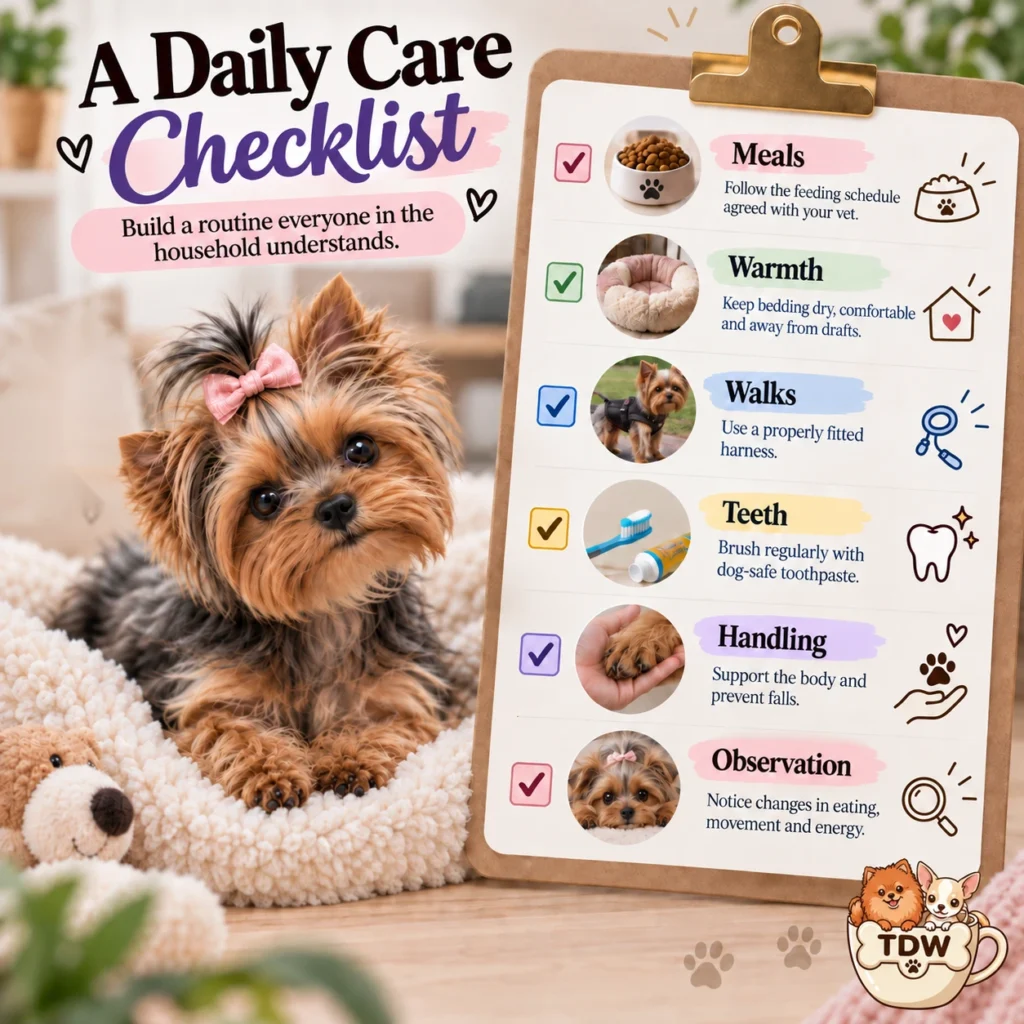
These simple habits cover most of the risks in this article:
- Feed small meals often while your puppy is young, and never let it skip a meal
- Keep your dog warm, with cozy bedding away from drafts
- Use a harness, not a collar, to protect the windpipe
- Add ramps or pet steps to sofas and beds, and discourage jumping down
- Set handling rules so children sit on the floor to hold the dog
- Watch your feet and doors, because tiny dogs love to be underfoot
- Brush your dog’s teeth from puppyhood
- Keep your dog lean, since extra weight strains knees, airway and heart
- Choose a vet who is experienced with toy breeds
Make a simple family plan. When several people share care, it is easy for each to assume someone else fed the puppy. A short written plan on the fridge prevents that:
- Who feeds the dog, and when, with a box to tick after each meal
- What to do if the puppy will not eat, as advised by your vet
- The handling rules everyone in the house has agreed on
- Your vet’s number and your nearest emergency clinic’s number, side by side
- A note of anything unusual, such as coughing, limping or odd episodes. A short phone video can help your vet see a problem that comes and goes
How Long Do Teacup Dogs Live?
Nobody knows for sure, because nobody keeps records for teacup dogs as a group.
Small breeds generally live longer than large ones, and that is often quoted as good news for teacups. But that pattern comes from ordinary small breeds, not from dogs bred below their breed’s normal size. There is no reliable data showing that teacup dogs share the same advantage, so any exact lifespan you see for a teacup is a guess.
What actually shapes how long your dog lives is inherited health, keeping a healthy weight, good dental care, avoiding injuries, and getting to a vet early when something seems wrong. Those are the things you can influence.
What Teacup Dog Health Problems Can Cost
It is worth planning for health costs before you bring a tiny dog home.
Routine care, like checkups and vaccines, is an ongoing expense for any dog. On top of that, very small dogs often need professional dental cleanings under anesthesia more than once in their lives. And some of the conditions in this article, such as slipping kneecaps or a liver shunt, can need surgery, which is a significant cost.
If you are thinking about pet insurance, look into it before you bring your puppy home or very soon after. Insurance plans do not cover conditions that already exist, so a problem found at your puppy’s first checkup may not be covered if you buy the policy afterward.
Are Teacup Dogs Right for Families With Children?
They can be, with care. But a very small dog and young children is a combination that needs clear rules.
A tiny dog can be badly hurt if a child drops it, steps on it or plays too roughly. And a dog that has been hurt or frightened may start to snap, which puts the child at risk too.
If you have children, set these rules from day one: children sit down on the floor to hold or pet the dog, an adult is always present with toddlers, and the dog has a safe place to rest where children cannot follow.
If you have toddlers, it is worth considering a dog within its breed’s normal size range. You still get a small dog, with a sturdier body that copes better with family life.

Teacup Dog Health Problems FAQs
What is the most common health problem in teacup dogs?
Dental disease is one of the most common lifelong problems, because a small jaw crowds the teeth. In young puppies, low blood sugar is the most common emergency. Both can be managed well if you know what to watch for.
Can teacup dogs be healthy?
Yes. Many very small dogs live long, healthy lives, especially when they come from health tested parents and get good everyday care. The risks are higher than for a dog of normal size, but they are not a certainty.
Why is my teacup puppy shaking?
Shaking can simply mean the puppy is cold or nervous. But in a tiny puppy it can also be a sign of low blood sugar, especially if the puppy is also weak, sleepy or wobbly. If it does not stop quickly once the puppy is warm, rub a little corn syrup on its gums and call a vet the same day.
How do I know if my teacup dog has a liver shunt?
Only a vet can tell you, usually with a bile acid blood test and an ultrasound. Signs that should prompt a visit include poor growth, acting dazed or strange after meals, staring, circling and seizures.
Should I get pet insurance for a teacup dog?
Many owners find it worthwhile, because tiny dogs are more likely to need dental work or surgery. The key is timing: buy it early, since conditions that already exist are not covered. Read what each plan includes before choosing.
Do teacup dogs need special food?
They need a good quality food suited to small breeds, fed in small, frequent meals while they are young. Ask your vet what and how often to feed your particular dog, and when it can move to fewer meals.
Are mixed breed teacups healthier?
Not automatically. A mix can inherit problems from either parent, and small size brings the same risks whatever the breed. Health testing of both parents matters just as much for a mix.
Conclusion
Teacup dogs are not doomed to be sick, but their tiny size and the way many are bred raise real risks. Low blood sugar, broken bones and dental disease come from being small. Liver shunts, slipping kneecaps and a collapsing windpipe run in the toy breeds most teacups come from.
Most of these can be spotted early, and many can be prevented or managed well. Ask a breeder for health screening you can check yourself, book a vet visit in the first few days, and build simple habits at home: small frequent meals, warmth, a harness and a tooth brush.
If you are still deciding, a dog within its breed’s normal size gives you a small companion with fewer of these worries. And if you already have a tiny dog and something feels wrong, trust that instinct and call your vet. Keep the warning signs table above handy for exactly that moment.

The TeacupDogWorld Editorial Team researches and creates practical guides about small and teacup-sized dogs, including breed characteristics, grooming, nutrition, health, training, and everyday care. Our content is developed using reputable veterinary, breed-club, and animal welfare sources to help dog owners make better-informed decisions.