
About Us
Why We Created Teacup Dog World
People looking online for information about teacup dogs will come across confusing or exaggerated information. Teacup dogs are sometimes referred to as separate breeds of dog. Others don’t care about the physical appearance, and forget that there are other aspects of care and health that can accompany very small dogs. We created Teacup Dog World to make this information clearer. We hope to help our readers to understand what the term “teacup dog” typically means, how they might be bred, the issues that can arise with them and what responsible ownership entails. Our articles are written for ordinary dog lovers, not only for experts. We write complex topics in simple terms so that readers can make informed decisions about their dogs.
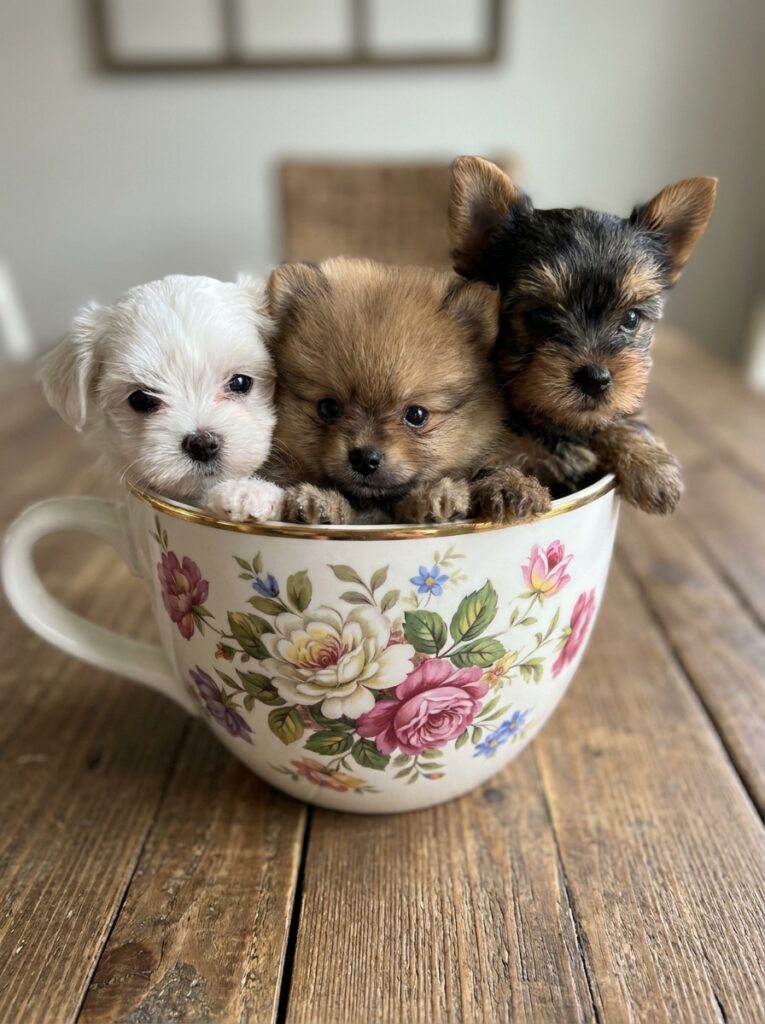
Our Mission
Our mission is to provide accurate, practical, and responsible information about teacup dogs and small dog breeds.
We aim to help readers:
- Understand the reality behind the term “teacup dog”
- Learn about different small dog breeds
- Recognize possible health concerns
- Provide safer everyday care
- Choose responsible breeders or adoption options
- Avoid misleading sellers and harmful breeding practices
- Understand the long-term responsibility of owning a very small dog
Above all, we want every dog to be treated as a living companion, not as a fashion accessory.erinary care. If your dog seems unwell, please contact a licensed vet directly — our guides are here to help you understand and prepare, not to diagnose or treat.
What You Will Find on Our Website
From the most important topics all small-dog enthusiasts should be familiar with, to the latest news and updates on the area, Teacup Dog World features all of this and more.
Breed Guides
Our breed guides cover the looks, size, temperament, history, care and health issues of popular small breed dogs.
We will also discuss whether a “teacup” version is actually an official designation or if it is primarily a marketing term.
Health and Wellness
Small dogs can also suffer from low blood sugar, dental crowding, weak bones, trouble breathing, joint issues and sensitivity to temperature.
Our health content is designed to alert owners to potential indicators and when it is advisable to seek veterinary assistance.
Daily Care
Small dog requirements can differ from larger dogs: they might need special feeding routine, gentle handling, a warmer environment, and suitable exercise and fall or injury protection.
We give practical advice that can be used in day-to-day life by the owners.
Food and Nutrition
The nutrition articles detail feeding frequency, portion control, puppy nutrition, healthy weight management, and foods that can be hazardous for dogs.
Grooming
Each of the small breeds has a different coat and grooming requirements. Bushing, bathing, dental care, nail care, ear care, tear staining, and professional grooming are topics we cover.
Training and Behaviour
Even a little dog needs training, socialization, boundaries, exercise, and mental stimulation. We educate owners about some of the most common behaviour issues and use patient, positive methods of educating dogs.
Buying and Adoption
Finding a dog should never be an impulsive decision.
Our guides cover the topics of how to find a good breeder, what to look out for, scams to avoid, questions to ask and adoption.
Ethical Breeding
We discuss the welfare concerns connected with breeding dogs only for extremely small size.
We want to promote responsible breeding that ensures the dog’s well being rather than their looks or financial gain.
Our Content Approach
Every article is approached with a research-based and reader-friendly approach.
Prior to publishing content, we research from trusted veterinarians, animal care organizations, breed organizations, qualified dog care professionals, and reputable kennel clubs.
Then we arrange that information in orderly guides that are easier to comprehend by readers of all ages.
There are four key principles in our content process.
Accuracy
We take great care to avoid exaggerated claims, myths and misleading information.
Clarity
When it comes to technical terms, we explain them in simple terms, rather than make articles unnecessarily complicated.
Animal Welfare
The well-being, welfare and quality of life of the dog is always the first concern.
Transparency
Where there is no official recognition of a term, size, or breed variation, it is clearly explained.
We also make updates to our articles as new information becomes available.
Meet Our Team
Our Editorial Team
A team of experienced writers, researchers and editors, all with a love for dogs and responsible pet ownership, run Teacup Dog World.
Every team player participates in researching topics, in article structuring and the information published on the website is clear, accurate and useful for readers.
Content and Editorial Support
We may also work with third party writers, editors, researchers and experts to enrich our content and make it more accessible.
All contributors are expected to adhere to our editorial principles: accuracy, clarity, responsible ownership and respect for animal welfare.
Veterinary Information
Teacup Dog World is an education site and NOT a veterinary practice.
Our health articles are researched using trustworthy veterinary and animal-health sources. The information found online should not be a substitute for an examination, diagnosis, or treatment by a qualified veterinarian, however.
If a dog exhibits symptoms of being ill, in pain, injured, weak, labored breathing, or abnormal behavior, it is important that the dog’s owner contact a veterinary practitioner who has been licensed.
Our Promise to Readers
We promise to:
- Put animal welfare before trends
- Do not encourage irresponsible breeding
- Describe the advantages and disadvantages of having a small dog.
- Sort out facts from marketing claims
- Use simple and easy to understand words.
- Correct important errors when they are identified
- Invite readers to consult vets if necessary
- Understand the emotional and financial commitment of dog ownership
We will not refer to a dog as a pet product or pressure anyone into adopting a dog because it is abnormally small.
Why Choose Teacup Dog World?
We understand that trust must be earned.
We attempt to explain to readers how we do our research and the sources of important facts.
We’re here to assist readers with asking better questions, identifying false statements and making safer decisions.
We do not believe that an educated pet should be afraid. It should educate people to the wonders and the duty of animal keeping.
Our Vision
In the long term, we hope to be able to make Teacup Dog World an education hub for small dog owners globally.
We hope to treat each and every moment of a dog’s life, from:
- To select the right breed
- Preparing for a puppy
- Feeding and care on a day to day basis.
- Training and socialization
- Preventive health care
- Grooming Travelling safely
- Caring for adult and senior dogs
- Understanding genetic conditions
- Finding responsible breeders and adoption organizations
As the site expands we hope it is a place where readers can get the honest answers without getting confused or pressured.
Responsible Pet Ownership Matters
Adopting a dog is a lifelong responsibility.
A dog requires the right diet, medical treatment, education, nurturing, activity, hygiene, protection, tolerance, and affection. Very small dogs may require extra protection due to their small size.
We recommend that before selecting any dog, readers take the time to think about their lifestyle, budget, time available, home, and their capacity to give a dog lifelong care.
But not every little dog or fancy dog is the best dog. The best match is a healthy dog with needs that are a close match to yours and your family.
Join the Teacup Dog World Community
We are growing and we are thankful to each and every one of those who come to our site, learn and share responsible pet care info.
Read our breed guides, health and care articles, and owner’s advice to discover more about these little marvels. Share a question, correction, suggestion or experience!
Visit our Contact page and get in touch with us.
As a community, we can help more individuals to make informed choices and provide small dogs the safe, healthy and loving lives they deserve.
Important Disclaimer
The information on Teacup Dog World is intended solely for educational purposes.
It should not be used as a substitute for veterinary advice, diagnosis, or treatment. Please always ask a qualified veterinarian regarding your dog’s health, diet, medication, symptoms or medical condition.
Teacup Dog World does not breed, sell, or arrange the sale of dogs.