
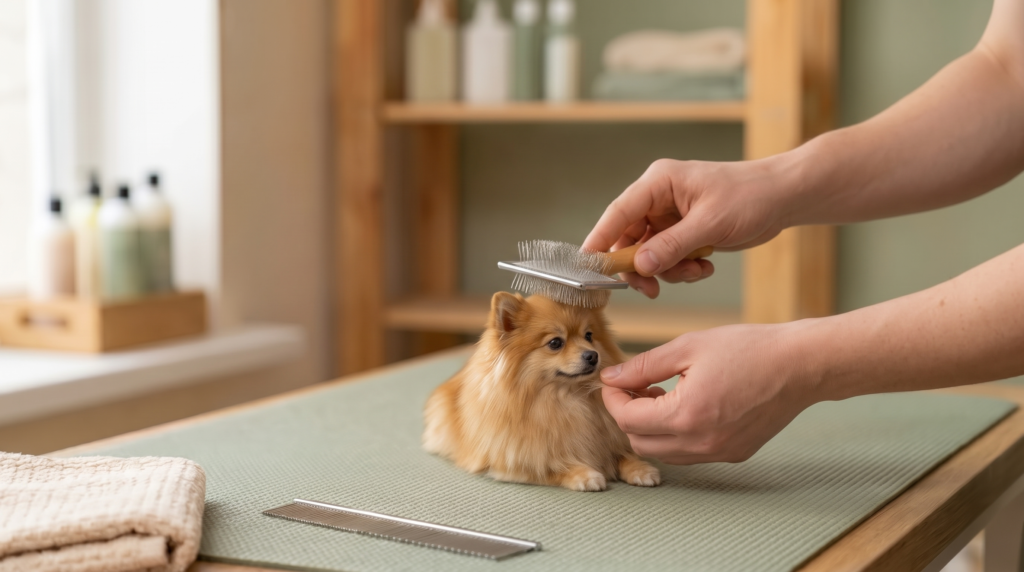
Your Pomeranian looks like a soft ball of fluff. But under that fluff is a thick coat that tangles fast. If your dog is very small, you may also worry about hurting them.
Don’t worry. Pomeranian grooming is easy once you know what to do. A few short sessions each week keep your dog clean, comfy and healthy.
In this guide, you will learn how often to brush and bathe your Pomeranian and which tools to buy. You will also learn whether you can shave a Pomeranian, how to clean tear stains on white Pomeranians, and how to keep tiny teacup Pomeranians safe.
Pomeranian Grooming Schedule: How Often to Do Each Job
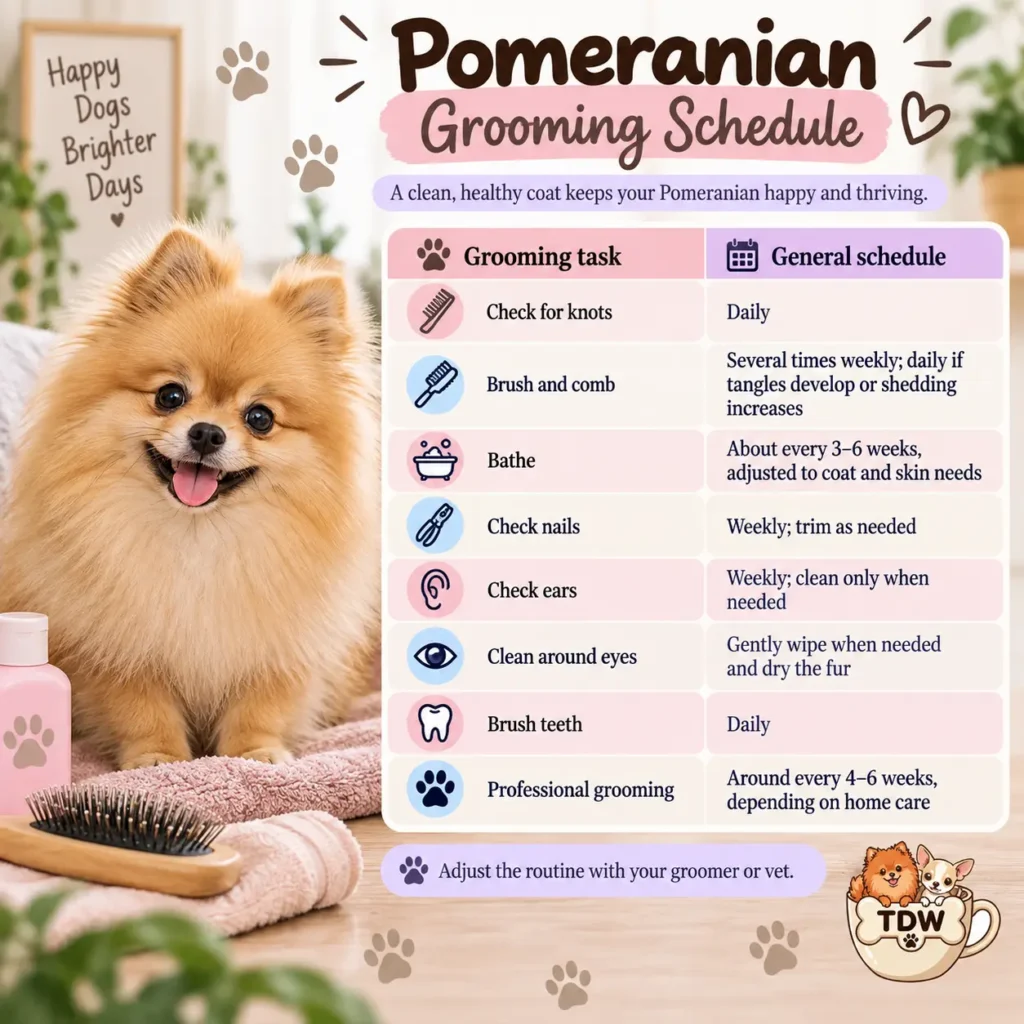
Here is a simple Pomeranian grooming schedule. Every dog is different, so use it as a guide.
| Job | How often | Why |
|---|---|---|
| Quick coat check | Every day | Finds small knots before they grow |
| Brushing | 2 to 3 times a week (every day when shedding) | Stops mats and tangles |
| Bath | Every 3 to 6 weeks, or when dirty | Keeps skin clean without drying it out |
| Nail trim | When nails click on the floor | Long nails hurt when walking |
| Ears | Check every week, clean only when dirty | Finds problems early without overcleaning |
| Eyes | Wipe every day for white Pomeranians | Stops tear stains |
| Teeth | Every day if you can | Small dogs get gum disease easily |
| Professional groomer | Every 4 to 6 weeks | Keeps the coat neat and mat free |
The American Kennel Club (AKC) suggests a professional groomer every 4 to 6 weeks if you don’t feel comfortable caring for the coat at home. The AKC also says dogs with long coats often do best with daily brushing.
If you keep finding knots every time you brush, you may need to brush more often or book the groomer sooner.
Understanding Your Pomeranian’s Double Coat
A Pomeranian has two layers of fur. This is called a double coat.
The bottom layer is short, soft and thick. It keeps your dog warm. The top layer is longer and a bit rough. It protects the soft layer underneath and gives your Pomeranian its puffy look. The AKC breed standard describes the coat this way.
Think of it like a warm sweater under a jacket.
Here is the problem. The soft bottom layer sheds all the time. The loose hair gets stuck under the top layer and twists into knots. These knots are called mats. Mats pull on the skin and can hurt your dog.
This is why a coat can look perfect on top and still have knots hiding underneath. Brushing only the top is not enough.
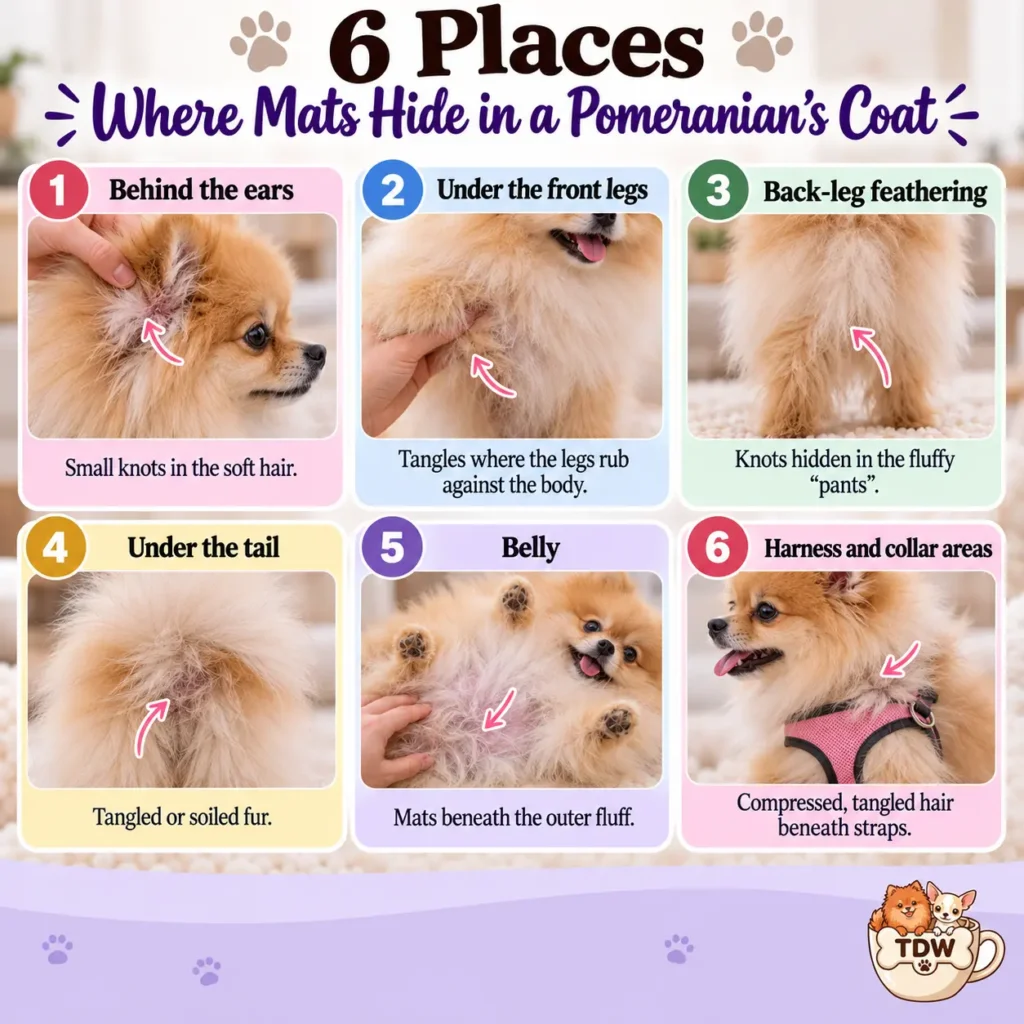
Where Pomeranian Mats Form
Mats like to hide in these spots:
- Behind the ears
- Under the front legs (the armpits)
- The fluffy “pants” on the back legs
- Under the tail
- The belly
- Where the collar or harness rubs
Check these places every time you brush.
Pomeranian Shedding Season
Pomeranians shed a little all year. But many shed a lot more in spring and fall. People call this “blowing coat.”
During this time, brush your dog every day. An undercoat rake (a brush made to pull out loose fluff) helps a lot.
Heavy shedding is normal. But bald spots, sores or itchy skin are not. If you see these, call your vet.
Pomeranian Grooming Tools and the Best Brush for a Pomeranian
You only need a few tools to start.
| Tool | Do you need it? | What it does |
|---|---|---|
| Small slicker brush | Yes | Best brush for a Pomeranian. Pulls out loose fluff |
| Metal comb | Yes | Finds knots the brush missed |
| Detangling spray | Yes | Makes brushing easier and stops hair breaking |
| Dog shampoo and conditioner | Yes | Cleans without hurting the skin |
| Dog dryer, or a hair dryer on the cool setting | Yes | Dries the thick coat fully |
| Towels and a nonslip mat | Yes | Keeps your dog steady and helps with drying |
| Small nail clippers | Yes | Trims tiny nails |
| Styptic powder | Yes | Stops bleeding if you cut a nail too short |
| Dog toothbrush and toothpaste | Yes | Keeps teeth clean |
| Soft cloths | Yes | Cleans eyes and face |
| Pin brush | Nice to have | Makes the coat fluffy |
| Undercoat rake | Nice to have | Helps in shedding season |
Tip: Pick a small slicker brush with soft pins. Try it on your arm first. If it scratches you, it will scratch your dog.
Don’t buy a brush just because the box says it removes the most hair. A gentle brush that fits your dog’s coat works better. If you’re not sure, ask your groomer to show you which brush to use.
[INTERNAL LINK OPPORTUNITY: article about the best brushes for Pomeranians]
How to Brush a Pomeranian the Right Way
The best way to brush a Pomeranian is called line brushing. You brush one small part of the coat at a time, starting from the skin. This way you reach the bottom layer, not just the top.
Follow these steps:
- Sit on the floor or use a low table with a nonslip mat.
- Spray the coat lightly with detangling spray.
- Start at a back leg. Push the hair up with one hand so you can see the skin.
- Brush a small row of hair down, away from the skin.
- Move up a little and do it again.
- Keep going up the leg, then the body, chest, neck and tail.
- Run the metal comb through each part. If it gets stuck, don’t pull. Brush that spot again gently.
- Gently brush the face, ears and feet last.
Brush softly. Pressing hard can scratch the skin. Give your dog treats so brushing feels like fun.
You don’t have to finish the whole coat in one go. If your dog gets tired or upset, stop and finish later. A calm short session is better than a long fight.
How to Remove Pomeranian Mats Safely
Found a small, loose mat? Here’s what to do:
- Hold the hair at the bottom, near the skin, so you don’t pull.
- Spray the mat with detangling spray.
- Gently pull the knot apart with the end of your comb, bit by bit.
If the mat is very tight or your dog cries, stop. Do not cut it out with scissors. The skin can lift up with the mat, and you could cut your dog by mistake. Take your Pomeranian to a groomer instead.
If your dog has lots of bad mats, the groomer may need to cut the coat short. That’s okay. Your dog’s comfort matters more than looks. If the skin under the mats looks red or sore, see your vet.
Always brush before a bath. Water makes mats tighter.
How to Bathe a Pomeranian
Bathing a Pomeranian is easy if you go slowly. Get your towels and dryer ready before your dog gets wet. Then follow these steps:
- Brush out all the knots first.
- Use a warm room and put a nonslip mat in the sink or tub.
- Wet your dog all over with warm (not hot) water.
- Rub in dog shampoo, starting at the neck. Keep it out of the eyes.
- Rinse very well, including under the belly and legs. Leftover shampoo can make the skin itchy.
- Use dog conditioner if the coat feels dry. Rinse again.
- Gently squeeze the water out with a towel. Don’t rub, because rubbing makes tangles.
- Dry your dog with the dryer on the cool or low setting. Brush while you dry.
- Dry inside the ear flaps at the end.
If your vet gave you a special medicated shampoo, follow the vet’s directions instead. Never bathe your Pomeranian outside when it’s cool. The AKC warns this can make a dog’s body temperature drop too low.
How Often Should You Bathe a Pomeranian?
Most Pomeranians need a bath every 3 to 6 weeks. Bathe sooner if your dog gets very dirty.
Don’t bathe too often. The AKC says too many baths wash away the natural oils in your dog’s skin. This makes the skin dry and the coat weak. Between baths, wipe dirty paws and the bottom with a damp cloth.
How to Dry a Pomeranian After a Bath
Drying is just as important as washing. A Pomeranian’s thick coat holds water for a long time. A towel dries the top, but the soft layer underneath can stay wet. If it stays wet, it can get smelly, form mats and hurt the skin. Small dogs also get cold fast when wet.
So always dry your dog all the way to the skin. Keep the dryer moving and don’t point it at the face or ears. Put your hand in the air often. If it feels hot to you, it’s too hot for your dog.
How do you know you’re done? Part the fur in a few places and touch near the skin. If it feels even a little damp, keep drying. If your dog is scared of the dryer, turn it on low from across the room first and give treats. Or let a groomer handle baths while you keep up the brushing at home.
Can You Shave a Pomeranian?
No, you should not shave a Pomeranian down to the skin. A shaved coat can grow back slowly and unevenly. A short trim with scissors is fine and keeps your dog neat.
Many people shave their Pomeranian to keep it cool in summer. But the double coat actually helps protect the skin and control body heat, as the AKC explains. To keep your dog cool, use shade, air conditioning and regular brushing instead.
There is one exception. If the coat is badly matted, cutting it short may be the kindest choice. Your groomer and vet can help you decide.
Safe Pomeranian Haircuts (Like the Teddy Bear Cut)
Trimming is fine. Even the official breed standard allows a neat trim.
The teddy bear cut is a popular Pomeranian haircut. The groomer uses scissors to make the coat shorter and round, but some coat stays.
Haircut names can mean different things to different groomers. So tell your groomer exactly what you want. This table can help.
| What you want | What to tell your groomer |
|---|---|
| A neat, natural look | “Please tidy the outline but keep the coat full.” |
| A clean bottom | “Please do a sanitary trim around the rear only.” |
| Safe feet | “Please trim the hair between the paw pads.” |
| Teddy bear cut | “Please use scissors, and tell me how long the coat will be.” |
| Any big change | “Please check with me before cutting the coat very short.” |
Will a Shaved Pomeranian’s Coat Grow Back?
Usually yes, but it can take a long time.
A vet skin textbook says hair usually grows back in 3 to 4 months. But in some dogs, it takes 1 to 2 years. Dogs with thick, fluffy coats have this problem more often.
If the hair hasn’t grown back after 3 to 4 months, see your vet.
There is also a skin problem called Alopecia X. It makes hair fall out on both sides of the body, and the skin can turn dark. It is often seen in Pomeranians. It is not always caused by shaving, so your vet should check it.
Pomeranian Nail, Ear, Eye and Paw Care
These small jobs only take a few minutes.
Nails
If you hear your dog’s nails click on the floor, they are too long. Cut only the curved tip.
Inside each nail is a blood vessel called the quick. Cutting it hurts and makes the nail bleed. On light nails, you can see the quick as a pink line. On dark nails, you can’t. So cut dark nails in tiny bits.
You don’t have to do all the nails at once. Trim one or two, give a treat, and do the rest later. If a nail bleeds, press styptic powder on it. If nail trims scare you or your dog, ask a groomer or vet to show you how.
Ears
Look in your Pomeranian’s ears every week. A healthy ear is pink, clean and doesn’t smell.
You don’t need to clean healthy, clean ears. VCA Animal Hospitals says cleaning too much can irritate the ear, and some dogs with clean ears never need cleaning at all. Clean only when you see dirt or wax, using a dog ear cleaner and a cotton ball. Never use cotton swabs inside the ear.
If the ears are red, swollen, smelly, painful or have gunk coming out, don’t clean them. Call your vet.
Eyes
Wipe the corners of the eyes with a soft cloth and warm water. Wipe away from the eye, never across it.
Paws
Hair between the paw pads can make your dog slip. Trim it carefully or ask a groomer. Also check the pads for cuts or cracks.
One job to leave to the vet: don’t squeeze your dog’s anal glands unless your vet has shown you how. The AKC gives the same advice.
Pomeranian Teeth Cleaning
Cleaning your Pomeranian’s teeth is very important. Small dogs get gum disease a lot.
The AKC says plaque (a sticky layer on teeth) starts to build up in just 2 days. That’s why daily brushing is best.
How to start:
- For a few days, gently lift your dog’s lip and give a treat.
- Then rub the teeth with your finger and a little dog toothpaste.
- When your dog is used to it, use a small dog toothbrush.
Never use human toothpaste. Some kinds have xylitol, a sweetener that is dangerous for dogs.
Dental chews help, but they don’t replace brushing. If your dog’s mouth seems sore, stop and ask your vet. Your vet can also tell you if your Pomeranian needs a professional teeth cleaning.
[INTERNAL LINK OPPORTUNITY: article about Pomeranian dental care]
Teacup Pomeranian Grooming: Extra Safety Tips
First, a quick fact. “Teacup” is not an official size. Britannica explains it is a nickname for dogs bred to be extra small, and US breed clubs don’t recognize it. Regular Pomeranians already weigh only 3 to 7 pounds.
If your Pomeranian is very tiny, follow these extra safety tips.
Want to know more about their size, health and care? Read our full teacup Pomeranian guide.
Keep Grooming Short, Warm and After Meals
Tiny puppies can get low blood sugar. The AKC says this can happen when small puppies go too long without food, or when they get cold or stressed. A bath can make a puppy both cold and stressed.
To stay safe:
- Groom your puppy after a meal, never when they skipped one.
- Keep sessions short, about 5 to 10 minutes for tiny puppies.
- Keep the room warm and dry your puppy fully.
Watch for these warning signs: very sleepy, weak, wobbly, shaking or having a seizure. If you see them, stop, keep your puppy warm and call your vet right away.
Stop Falls
Tiny dogs can get badly hurt from a fall. Groom on the floor, on your lap or on a low table. Always keep one hand on your dog. Never walk away while your dog is up high.
Protect the Neck
Pomeranians can have a weak windpipe. Vets call this tracheal collapse. VCA Animal Hospitals says it often affects Pomeranians, and that a harness is better than a collar.
So:
- Use a light harness for walks, not a collar.
- Brush under the harness straps often, because they cause mats.
- Tell your groomer if your dog has breathing problems.
If your Pomeranian has a cough that sounds like a goose honk, see your vet.
White Pomeranian Grooming and Tear Stains
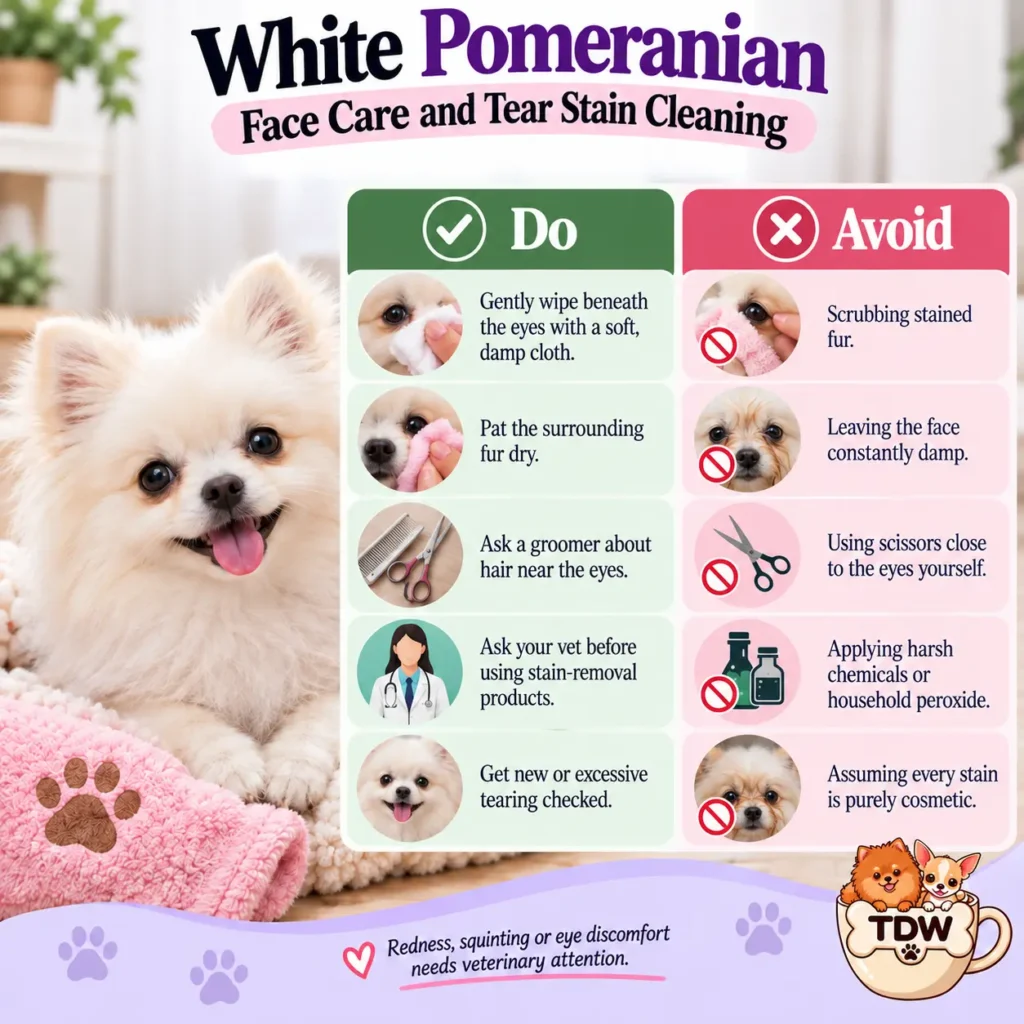
White Pomeranians often get reddish brown stains under their eyes. These are called tear stains.
Tears have a natural color in them. When tears dry on white fur, they leave a red brown mark. Veterinary Partner explains that yeast can also grow in fur that stays wet.
Tear stains are usually just a looks problem. But VCA says lots of tears can sometimes mean an eye problem or allergies. See your vet if the tears are new or heavy, or if your dog squints or has red eyes.
How to clean Pomeranian tear stains safely:
- Wipe under the eyes every day with a soft, damp cloth.
- Then pat the fur dry. Keeping the face dry is the key.
- Let a groomer trim the hair near the eyes. Don’t do it yourself.
- Be careful with tear stain removers. A vet warns that some have hydrogen peroxide, which can hurt the eyes. Ask your vet before using any.
- Ask your vet before trying tear stain powders or pills.
Red paws on a white Pomeranian can mean your dog licks their feet a lot. Spit has the same color as tears. Lots of licking can mean itchy skin, so ask your vet.
More tips for white Pomeranians:
- Wipe the bottom and back legs between baths to stop yellow stains.
- Use a whitening shampoo only if it is made for dogs.
[INTERNAL LINK OPPORTUNITY: article about Pomeranian tear stains]
Pomeranian Puppy Grooming
Is your puppy’s fur suddenly thin and patchy? Don’t panic. This is usually normal.
Pomeranian breeders say puppies start losing their puppy fur at about 3 to 6 months old. The adult coat can keep growing until age 2 or 3. People call this stage the “puppy uglies.”
Don’t shave your puppy to make the coat look even. Just keep brushing gently. If you see red, itchy skin or growing bald spots, see your vet.
Start good habits early, one small step at a time:
- Let your puppy sniff the brush, then give a treat.
- Next, touch your puppy with the brush for a second, then give a treat.
- Slowly build up to a minute or two of soft brushing.
- Touch your puppy’s paws, ears and mouth every day, with a treat each time.
- Let your puppy hear the dryer from far away before using it on them.
- Keep baths short and warm.
Never scold or punish a puppy for being scared. Just go back a step and try again later.
If your dog suddenly hates being touched in one spot, it may be sore there. Ask your vet to check.
Ask your vet when it’s safe for your puppy to visit a groomer. Make the first visit short, like a quick nail trim.
Pomeranian Grooming at Home vs a Professional Groomer
The best plan is to do both.
At home, you can brush, clean teeth, wipe eyes and check the skin. A groomer is great for baths, haircuts, bad mats and anything you’re unsure about. The AKC says grooming at home also helps you spot health problems early.
Grooming at home saves money over time. And when you brush often, groomer visits are faster and easier.
Questions to Ask a Pomeranian Groomer
Before you book, ask:
- Do you shave Pomeranians? (The best answer is no, unless the coat is badly matted.)
- How do you dry small dogs? (Hand drying or cool air is safest. Grooming experts say heated drying cages need extra care with very young or old dogs.)
- Will my dog ever be left alone on the table?
- Have you groomed many tiny dogs before?
- How do you hold small dogs still?
- What does the grooming visit include?
- How long will my dog stay with you?
Also tell the groomer about any mats, sore spots or things your dog doesn’t like.
How Kids Can Help With Pomeranian Grooming
Kids love to help. Just give them safe jobs.
| Age | Safe jobs | Adults only |
|---|---|---|
| Under 7 | Give treats, sit calmly with the dog | Picking up the dog |
| 7 to 11 | Gently brush the back, wipe paws (with an adult) | Baths, nails |
| 12 and up | Help with baths and teeth brushing | Nails, scissors, dryer |
Family safety rules:
- One adult holds the dog. Kids give treats or pass the tools.
- Kids always sit on the floor with the dog.
- Never put the dog on a high bed or table to groom.
- Stop if the dog growls, pulls away or yawns a lot. These mean “I’m done.”
Common Pomeranian Grooming Mistakes
Avoid these mistakes:
- Brushing only the top of the coat
- Bathing before brushing out mats
- Letting the coat air dry
- Using human shampoo
- Shaving your Pomeranian in summer
- Cutting mats out with scissors
- Cleaning healthy ears too often
- Long grooming sessions with a tiny puppy
- Using harsh tear stain products near the eyes
- Forgetting to brush the teeth
Pomeranian Grooming Problems: Groomer or Vet?
Grooming is a great time to check your dog’s health. But some problems need a groomer, and some need a vet. Use this table to decide.
| What you see | Who to call |
|---|---|
| You need help brushing, drying or trimming | Groomer |
| Tight mats or lots of mats | Groomer |
| Mats with red or sore skin underneath | Vet |
| Hair falling out on both sides of the body, or dark skin | Vet |
| Hair not growing back 3 to 4 months after a cut | Vet |
| Red, smelly or painful ears | Vet |
| Squinting, cloudy eyes or lots of new tears | Vet |
| New lumps, bad breath, red gums or loose teeth | Vet |
| A honking cough | Vet |
| Lots of paw licking | Vet |
| Shaking, weakness or wobbling in a tiny puppy | Vet, right away |
Pomeranian Grooming FAQs
Do Pomeranians shed a lot?
Yes. Pomeranians shed a little all year and a lot in spring and fall. Brushing a few times a week, and daily in shedding season, keeps loose hair under control.
Can I use baby shampoo on my Pomeranian?
It’s better to use shampoo made for dogs. The AKC recommends dog products because they are made for dog skin. If your Pomeranian has itchy skin, ask your vet which shampoo to use.
How often should a Pomeranian go to the groomer?
The AKC suggests every 4 to 6 weeks if you don’t care for the coat fully at home. Keep brushing at home between visits.
At what age can a Pomeranian puppy go to the groomer?
Ask your vet. Most want your puppy to have enough vaccines first. Start with a short, gentle visit.
Why is my Pomeranian’s hair not growing back?
After a shave, hair can grow back slowly. Some Pomeranians also have skin problems like Alopecia X. If the hair hasn’t grown back after 3 to 4 months, see your vet.
Final Thoughts
Pomeranian grooming is all about small, steady habits. You don’t need hours of work or fancy tools. A few calm minutes each day and a longer session a few times a week will keep your dog’s coat soft, clean and free of mats.
Every day, brush your Pomeranian’s teeth and do a quick check behind the ears and under the legs. If your dog is white, wipe under the eyes and pat the fur dry. After walks, take a quick look at the paws.
Two to three times a week, give the whole coat a full brush and comb, working in small sections down to the skin. This is also a good time to check the skin and ears for anything new. In spring and fall, when your dog sheds the most, brush every day.
Every few weeks, give your dog a bath and dry the coat all the way to the skin. Trim the nails when you hear them click on the floor, and clean the ears only when they look dirty. A visit to the groomer every 4 to 6 weeks keeps the coat neat. Just remember to ask for a scissor trim, not a shave.
Keep every session short, warm and fun, and your Pomeranian will soon learn to enjoy this time with you. If you ever see something that worries you, like sore skin, hair that won’t grow back or a sudden change in how your dog acts, call your vet.

The TeacupDogWorld Editorial Team researches and creates practical guides about small and teacup-sized dogs, including breed characteristics, grooming, nutrition, health, training, and everyday care. Our content is developed using reputable veterinary, breed-club, and animal welfare sources to help dog owners make better-informed decisions.