
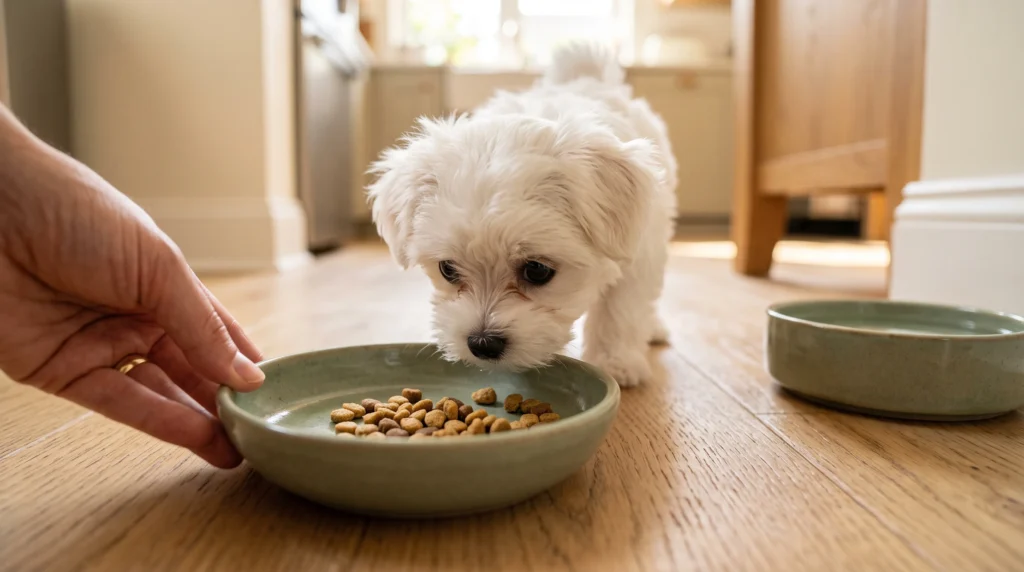
You just brought home a tiny puppy. Maybe a little white Maltese or a white toy Poodle. Then you walk into the pet store and see a wall of food bags. The breeder said one thing, the bag says another, and the internet says ten more things.
Take a breath. Picking the best dog food for teacup dogs is easier than it looks once you know what to check. Tiny dogs do have special needs, but they are simple to meet.
In this guide, you’ll learn what to look for on a food label and which type of food suits a tiny dog. You’ll also get a puppy feeding schedule and learn how to keep your dog at a healthy weight. We’ll cover which treats and human foods are dangerous, and the warning signs that mean it’s time to call the vet.
What Is the Best Dog Food for Teacup Dogs?
The best dog food for teacup dogs is a “complete and balanced” small breed or toy breed food made for your dog’s age. It should have tiny kibble or a soft texture. It should come from a company that openly shares how it makes its food. Feed it in small, frequent meals.
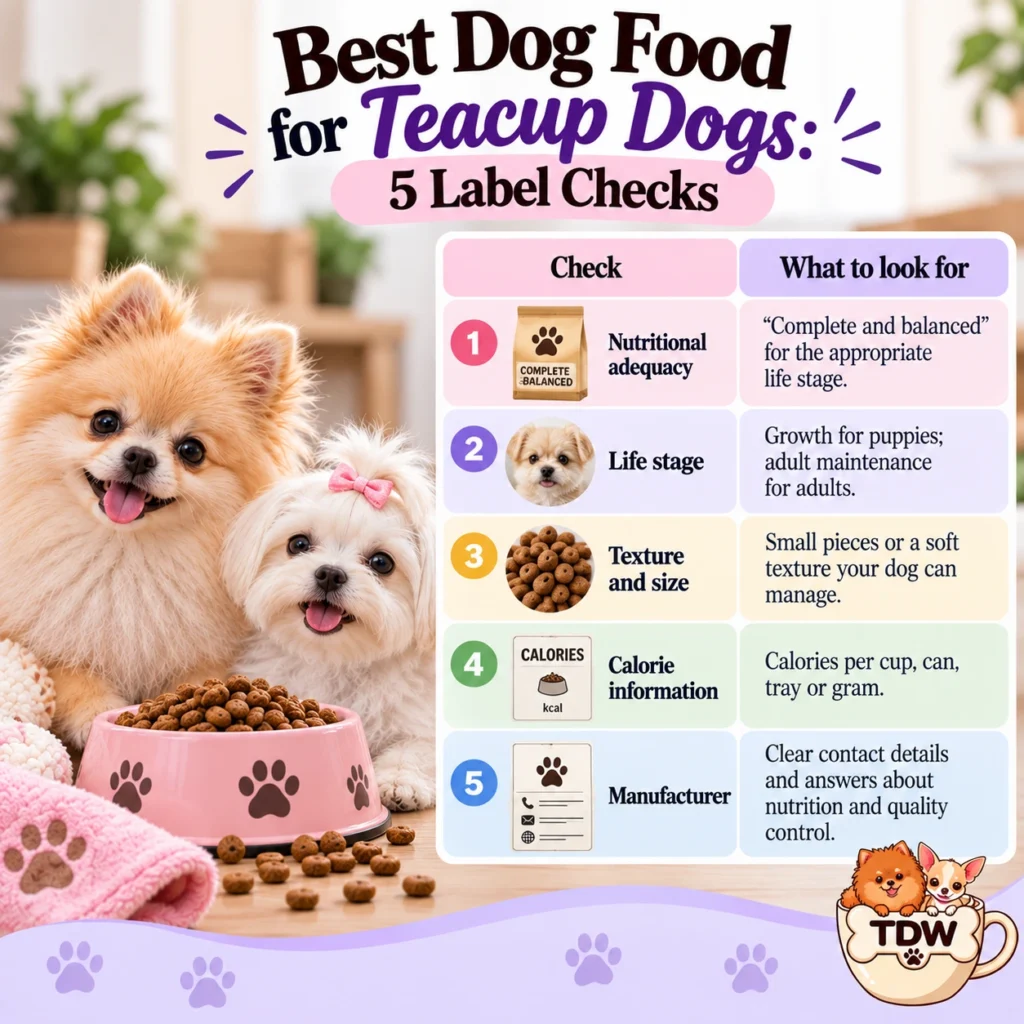
There is no single magic brand. Instead, use this quick checklist when you shop.
| Check | What to look for |
|---|---|
| Label | The words “complete and balanced” |
| Age | “Growth” for puppies, “adult maintenance” for grown dogs |
| Size | Tiny kibble or soft food a small mouth can chew |
| Calories | Calories per cup or can, so you can measure the right amount |
| Company | Easy to contact, and willing to answer questions about who makes the food |
And one more check that no label can do for you: your dog has to actually like the food and eat it well.
Why Teacup Dogs Need Special Food
First, a quick fact. “Teacup” is not an official size or breed. It is a nickname for dogs bred to be extra small, and US breed clubs don’t recognize it. The Chihuahua Club of America even says it does not support using the word “teacup” at all.
Most teacup dogs are simply very small members of toy breeds, like the Maltese, toy Poodle, Pomeranian or Chihuahua. So you don’t need a special “teacup” food. You need a good food that fits your dog’s size and age.
Being so small does change how they eat. Here’s why.
Tiny Stomachs and Fast Energy Use
A teacup dog’s stomach is very small, so it can only hold a little food at a time. But tiny dogs burn through energy fast. That means they need food often, in small amounts, to keep going.
Low Blood Sugar in Teacup Puppies
Very small puppies can get low blood sugar. The medical name is hypoglycemia. It happens when a puppy’s body runs out of the sugar it needs for energy.
Veterinary Partner, a vet-written resource, explains that tiny toy puppies also have trouble staying warm. When they get cold, they eat less, and eating less makes their blood sugar drop even more.
Watch for these signs:
- Very sleepy or hard to wake up
- Weak or wobbly
- Shaking or trembling
- Seizures or passing out
Low blood sugar can be an emergency. If you see these signs, call your vet right away. Don’t assume your puppy is just tired.
Small Mouths and Late Baby Teeth
Tiny toy puppies often get their baby teeth late. That can make hard kibble tough to chew.
The fix is easy. Soften the kibble with a little warm water, or offer a canned puppy food. If your puppy can’t chew the food, they won’t eat enough of it.
Watch your puppy eat instead of just checking the empty bowl later. If a little Maltese puppy keeps dropping pieces, the food may be too hard or too big. If chewing seems painful, ask your vet to check.
How to Choose the Best Dog Food for Teacup Dogs
Most people look at the pictures and the first ingredient on the bag. But those don’t tell you much. Here’s what actually matters.
Look for “Complete and Balanced” on the Label
In the US, a group called AAFCO sets the nutrition standards for pet food. Look for a small sentence on the bag called the nutrition statement. It will say the food is “complete and balanced” for a certain life stage.
“Complete and balanced” means the food has all the nutrients your dog needs to live on it alone.
If a bag says “for intermittent or supplemental feeding only,” that food is not a full meal. Veterinary Partner explains that these products are meant as extras, like toppers, broths or treats, not as your dog’s main food.
There are two kinds of “complete and balanced” statements:
- “Formulated to meet” means the recipe was designed to meet the nutrient standards.
- “Animal feeding tests” means real dogs ate the food in a trial, and it passed.
Both are allowed. The feeding test version gives you a little more proof.
Match the Food to Your Dog’s Age
The nutrition statement also tells you the life stage:
- Growth is for puppies.
- Adult maintenance is for grown dogs.
- All life stages covers both.
A growing puppy needs growth food. Adult food should not be a puppy’s only food.
NC State’s veterinary hospital recommends feeding a food made for your dog’s life stage. “All life stages” foods meet the higher puppy levels, which may be more than a grown dog needs.
Here’s a tip: always read the small nutrition statement, even if the front of the bag says “small breed.” Those words alone don’t tell you if the food is for puppies or adults.
Check Kibble Size and Calories
For a teacup dog, kibble size really matters. Big pieces are hard to chew and can even be a choking risk. Look for foods labeled “small breed,” “toy breed” or “extra small.”
Also look for “calories per cup” on the bag. You may see it written as “kcal,” which is just the label word for calories. Foods can differ a lot. One scoop of a new food may have many more or fewer calories than a scoop of your old food. So whenever you change foods, check the new amount instead of using the same scoop.
Ask the Food Company These Questions
A group of vet nutrition experts called WSAVA has a list of questions to ask pet food companies. You can email or call any brand and ask:
- Do you have a qualified pet nutrition expert on staff?
- Who makes your food, and where?
- What quality checks do you do?
- Can you send me the full nutrient details of this food?
WSAVA says to be careful with any brand that can’t or won’t answer these questions.
WSAVA also warns that the ingredient list can be misleading. It says what’s in the food, but not how good those ingredients are. A fancy ingredient list does not always mean a better food.
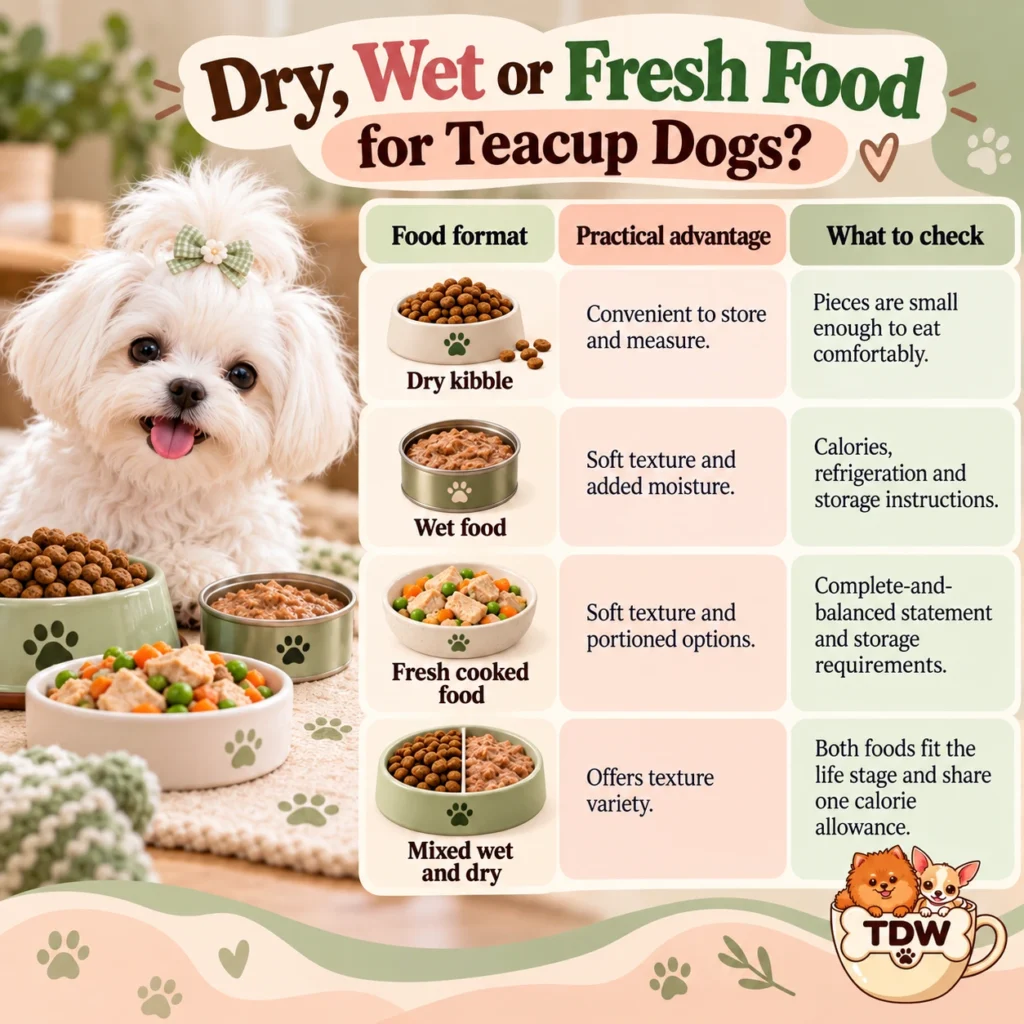
Dry, Wet, Fresh or Raw Food for Teacup Dogs
All four types are sold for dogs. Here’s how they compare for tiny dogs.
| Food type | Good points | Things to watch | Fit for teacup dogs |
|---|---|---|---|
| Dry food (kibble) | Easy to store and measure | Must be tiny and may need softening | Good if the kibble is small |
| Wet food (canned) | Soft, tasty, easy to chew | Spoils once opened; can be easy to overfeed | Great for young puppies and picky eaters |
| Fresh cooked food | Soft and tasty | Must be complete and balanced, not just a topper | Fine if the label says complete and balanced |
| Raw food | Some owners like it | Germ risk for pets and people | Vets and the FDA warn against it |
Remember, the type of food doesn’t make it complete. A fancy fridge meal still needs the same label check as a bag of kibble.
Is Grain Free Dog Food Good for Teacup Dogs?
Being tiny is not a reason to pick grain free food. Grain free food isn’t better or worse just because it has no grains. The real question is about some grain free foods that are full of peas, lentils and similar plants called pulses.
In 2018, the FDA started looking into reports of a heart disease called DCM (dilated cardiomyopathy) in dogs. Many of these dogs ate grain free foods with lots of peas, lentils or potatoes.
Here’s where things stand now. The vet nutrition team at Tufts University shared an update in June 2026. They say the problem doesn’t seem to come from a lack of grains. Pulses seem to be involved, but the exact cause is still unknown.
At the same time, an 18 month study of healthy adult dogs found that complete and balanced grain free foods and grain foods both kept hearts working normally.
So what does that mean for you? The science is not settled. There is no need to panic, and no reason to pick grain free food just because it sounds healthier. If you’re unsure, talk to your vet before choosing a food heavy in peas or lentils.
Why Vets Warn Against Raw Food
The FDA advises against feeding raw pet food. In one FDA study, 32 out of 196 raw pet food samples had Listeria, a germ that can make people and pets sick. Some samples also had Salmonella.
This matters even more in a family home. Germs from raw food can spread to hands, bowls, floors and counters. Young kids touch all of those. A tiny puppy’s small body also handles illness poorly. For most families with a teacup dog, cooked food is the safer choice.
Best Food for Teacup Puppies
The best food for teacup puppies is a complete and balanced puppy or toy breed puppy food, with tiny or softened kibble, fed in small meals many times a day.
Before you bring your puppy home, ask the breeder three simple questions:
- What food does the puppy eat right now?
- How much does the puppy actually eat each day?
- When did the puppy last eat?
Write down the answers and take them to your first vet visit. Keep feeding the same food at first, so your puppy isn’t dealing with a new home and a new food at the same time.
How Often to Feed a Teacup Puppy
Tiny puppies need to eat often. Veterinary Partner says young toy breed puppies may need to eat 4 to 6 times a day.
Here is a simple guide. Your vet will fine tune it for your puppy.
| Stage | How often to feed | Tips |
|---|---|---|
| Young puppy (first few months home) | 4 to 6 small meals a day | Soften kibble if needed; watch every meal |
| Older puppy | Fewer, slightly bigger meals, as your vet advises | Keep weighing your puppy |
| Adult dog | Usually 2 or more small meals a day | Measure every meal |
Also ask your vet how long your puppy can safely go overnight without food. A daytime schedule doesn’t cover the night, and tiny puppies may need a late snack or an early breakfast.
In a busy family, it’s easy to lose track of who fed the puppy. A simple meal log on the fridge helps. Write down the time, who fed the puppy, and whether the puppy ate it all.
Should You Leave Food Out All Day?
Many breeders tell families to leave dry food down all the time so a tiny puppy can nibble. Their goal is good: they don’t want the puppy to go too long without food.
But there’s a catch. When food sits out all day, it’s hard to know how much your puppy really ate. A puppy could look like it’s eating while barely touching the bowl.
Vet advice focuses on small, frequent meals that you can watch. That way, you notice right away if your puppy stops eating. If your puppy likes to graze, measure the whole day’s food first, then offer it in small portions through the day. Don’t keep topping up the bowl without measuring. Ask your vet which plan is best for your puppy.
High Calorie Paste: Backup, Not a Meal
Some breeders send puppies home with a sweet, high calorie paste and say to give it every day. It is usually a malt flavored paste with sugar and vitamins.
Veterinary Partner explains that vets and breeders use this paste as a backup. If a puppy seems weak or sleepy, the first step is to offer tasty food. If the puppy won’t eat, a little paste can help.
So think of the paste as a tool for emergencies, not a meal. It can’t replace real food, and it should never hide the fact that your puppy isn’t eating. Ask your vet ahead of time which product to keep at home and when to use it.
Most important of all, the paste never replaces a vet visit. If you think your puppy has low blood sugar, call your vet right away, even if the paste seems to help. Very low blood sugar may need treatment only a vet can give.
When to Switch to Adult Dog Food
Some breeders say teacup dogs are fully grown at six months. That’s only partly true.
VCA Animal Hospitals says small dogs usually reach their adult body size at around 6 to 8 months. But the American Kennel Club says toy and small breeds can switch to adult food between 8 and 12 months.
So most teacup dogs switch to adult food somewhere between 8 and 12 months. Don’t switch just because your puppy turns six months old. Your vet can tell you the best time based on your puppy’s growth and body shape.
Feeding an Adult Teacup Dog
Once your dog is grown, the goal changes. You are no longer feeding growth. You are keeping your dog at a healthy weight.
How Much Food Does a Teacup Dog Need?
There is no single amount that fits every tiny dog. Start with the feeding guide on the food bag. Then adjust with your vet’s help, based on your dog’s weight, body shape and activity.
Here’s something many owners miss. The amount on the bag is usually for the whole day, not for each meal. So if your dog eats twice a day, split that amount in half.
A few simple tips help a lot:
- Ask your vet to write down the daily amount in grams. Then use a kitchen scale instead of guessing tiny parts of a cup.
- Weigh your dog often. A kitchen or baby scale works better than a bathroom scale for a tiny dog.
- Split the daily food into at least two meals.
Even a few extra pieces of kibble a day add up for a dog this small.
Keeping a Fluffy Dog at a Healthy Weight
Many dogs in the US are too heavy. A 2022 survey by the Association for Pet Obesity Prevention found that 59% of dogs were overweight or obese.
The same survey said it’s harder to judge the weight of dogs with long or thick fur. That’s a big deal for fluffy white dogs like the Maltese and Pomeranian. The coat can hide extra weight, so a photo won’t tell you much.
Use your hands, not just your eyes:
- Gently run your hands along the ribs. You should feel them easily without pressing hard.
- From above, you should see or feel a little waist behind the ribs.
- Ask your vet to show you how to do this check at your next visit.
Treats and Human Foods for Teacup Dogs
Treats are a big part of training and bonding. But for a dog this small, a few extra snacks from different family members can quickly become too much.
The 10% Treat Rule
Vets use a simple rule. VCA and the UC Davis vet school both say treats should be no more than 10% of your dog’s daily calories. The other 90% should come from complete and balanced food.
Here’s an easy example from UC Davis. If a dog needs 100 calories a day, only 10 of them should come from treats.
Remember that everything extra counts: training treats, dental chews and bits of table food.
Two tricks make this easier for families:
- Use a few pieces of your dog’s regular kibble as treats. Just take them out of that day’s food so you don’t overfeed.
- Keep one small treat jar for the day. When it’s empty, treats are done, and everyone can see it.
Foods That Are Dangerous for Tiny Dogs
Some people foods can poison dogs. For a tiny dog, even a small amount can be serious. The ASPCA warns about these:
- Xylitol: a sweetener in gum, candy and some other foods. It can cause low blood sugar and liver damage.
- Grapes and raisins: can damage the kidneys.
- Onion, garlic and chives: can damage red blood cells.
- Chocolate and coffee: can cause vomiting, a racing heart and seizures.
- Alcohol and raw bread dough: can make a dog very sick.
Milk and dairy are a different kind of problem. They aren’t poisons, but dogs can’t digest milk sugar well, so dairy can cause diarrhea and an upset stomach.
What about yogurt? Some breeders suggest vanilla yogurt for puppies. It’s best to skip it. Dairy can upset a small stomach. Also, the ASPCA’s pet insurance team notes that xylitol can hide in some yogurts and peanut butters. Always read labels.
If your dog eats something harmful, call your vet or the ASPCA Animal Poison Control Center at 888-426-4435 right away.
Does Dry Food Clean a Teacup Dog’s Teeth?
Not really. Many people believe crunchy kibble cleans teeth, but ordinary kibble is not a replacement for brushing. Most dogs crunch it quickly or swallow it whole, and it doesn’t reach under the gumline.
This matters because small dogs have crowded mouths and often get tooth problems.
The best plan is to brush your dog’s teeth with dog toothpaste, daily if you can. Some dental chews and special foods carry a seal from the Veterinary Oral Health Council (VOHC), which means they were tested to help reduce plaque or tartar. These can help, but they still don’t replace brushing. And remember, dental chews count toward the daily treat budget.
How to Switch Your Teacup Dog’s Food
A sudden food change can upset a tiny stomach. So switch slowly. The vet nutrition team at Tufts University recommends mixing in more of the new food over at least one week.
- Start with mostly old food and a little new food.
- Every day or two, add a bit more new food and a bit less old food.
- Move to half and half, then mostly new food, then all new food.
- Watch your dog’s poop and appetite along the way.
Tufts notes that a little soft poop can happen during a switch. If that happens, slow down and stay at the same mix for a day or two.
For a tiny puppy, go even slower, and make sure they keep eating well. If your puppy eats less, vomits or has diarrhea, call your vet instead of pushing on. Don’t switch foods while your dog is sick unless your vet tells you to.
When to Call the Vet About Eating Problems
With tiny dogs, don’t wait and see. Call your vet if you notice:
- A young puppy skipping a meal or refusing food
- Weakness, sleepiness or wobbly walking
- Shaking or trembling
- Vomiting or diarrhea, especially in a tiny puppy
- Weight loss or weight gain
- Trouble chewing or pain while eating
Seizures, passing out or collapse are emergencies. Get your puppy to a vet right away.
One important safety rule: never force food or water into the mouth of a puppy that is having a seizure, has passed out or can’t swallow. It could choke. Call the emergency vet for instructions while you get ready to go.
If your dog keeps having eating problems or weight changes, book a checkup instead of trying bag after bag of new food.
Best Dog Food for Teacup Dogs: FAQs
Can teacup dogs eat regular dog food?
Yes, if it’s complete and balanced for their age and the kibble is small enough to chew. Many regular foods have large pieces, so a small breed or toy breed formula is usually easier. The nutrition statement on the back matters more than the words on the front.
Can I mix wet and dry food?
Yes, many families do. The key is to count both foods as part of the same daily amount. If you add a full can of wet food on top of a full meal of kibble, your dog gets too many calories. Make sure both foods are complete and balanced for your dog’s age.
Can my teacup puppy eat yogurt or baby food?
It’s best not to. Neither one is a complete puppy food. Dairy can upset a small stomach, and some human foods contain xylitol, onion or garlic, which are harmful to dogs. If your puppy won’t eat their normal food, call your vet instead.
Does food cause tear stains in white teacup dogs?
There isn’t strong proof that any food causes or cures tear stains. The reddish brown color comes from natural pigments in tears called porphyrins, and it shows up more on white fur. Keeping the face clean and dry helps most. If the tearing is new or heavy, see your vet.
How much water does a teacup dog need?
Keep fresh, clean water out at all times. Use a small, shallow bowl that a tiny dog can reach easily, and wash it every day. If your dog suddenly drinks much more or much less than usual, check with your vet.
Is expensive dog food always better?
No. A high price doesn’t prove a food is better. Check the nutrition statement, the life stage and whether the company answers your questions. Then make sure your dog likes the food and that you can keep buying it. A food your dog eats happily every day is worth more than a fancy bag.
Final Thoughts: Your Teacup Dog Feeding Checklist
Feeding a tiny dog can feel scary at first, but it comes down to a few simple habits. The best dog food for teacup dogs is a complete and balanced food made for your dog’s age, with small or soft pieces your dog can easily eat. Look past the pretty pictures on the bag and check the nutrition statement instead.
For puppies, small meals many times a day are the key. Watch every meal so you know your puppy is eating, keep them warm, and use a meal log so the whole family stays on track. Treat any high calorie paste as an emergency backup, not a meal. Switch to adult food somewhere between 8 and 12 months, when your vet says the time is right.
For grown dogs, focus on a healthy weight. Measure meals, keep treats to 10% of the day’s calories, and feel under that fluffy coat to check your dog’s shape. Keep dangerous foods like xylitol, grapes, onions and chocolate out of reach.
Most of all, make your vet your partner. Before your next visit, take a photo of the nutrition statement and calorie information on your dog’s food. Bring it along with your feeding schedule, and agree on daily portions, meal times and what to do if your puppy stops eating. To learn more about caring for tiny breeds, read our guide to the teacup Pomeranian.
The TeacupDogWorld Editorial Team researches and creates practical guides about small and teacup-sized dogs, including breed characteristics, grooming, nutrition, health, training, and everyday care. Our content is developed using reputable veterinary, breed-club, and animal welfare sources to help dog owners make better-informed decisions.