
You’ve seen the photos. A puppy so small it fits in a coffee mug, and now your whole family has fallen in love with the idea. But when you start searching, things get confusing fast. Every website says “adopt,” prices are all over the place, and some listings just feel off.
You’re right to slow down. Learning how to adopt a teacup puppy the safe way protects your money, your family, and the puppy itself.
This guide shows you where to look, how to check a rescue and its listings, and what questions to ask before you say yes. You’ll also learn what paperwork to collect and how to prepare for your puppy’s first week. Along the way, you’ll get an honest look at whether a very tiny dog is the right fit for your home.
Quick Answer: How to Adopt a Teacup Puppy
- Learn the difference between adopting and buying.
- Make sure your family is ready for a fragile, high care dog.
- Search shelters and breed rescues by breed name and size.
- Check that the rescue and the listing are real.
- Apply, ask questions, and meet the puppy.
- Collect the health records and ask what the fee covers.
- Take your puppy to a vet within the first few days.
What “Adopting a Teacup Puppy” Really Means
Before you start looking, it helps to understand two words that cause a lot of confusion: “teacup” and “adopt.”
Teacup Is a Size Label, Not a Breed
“Teacup” isn’t an official breed. It’s a label for dogs bred to be much smaller than normal for their breed. You may also see words like “micro” or “pocket.” These are marketing terms, not official sizes.
Most teacup puppies are extra small members of toy breeds, such as the Chihuahua, Yorkshire Terrier, Maltese, Pomeranian, and Toy Poodle. Our guides to the Teacup Pomeranian and the Teacup Maltese explain more about specific breeds.
Here’s the important part. Veterinary experts at PetMD warn that buying a teacup puppy can support unethical breeding and lead to serious health problems. That’s one big reason adoption is worth considering first.
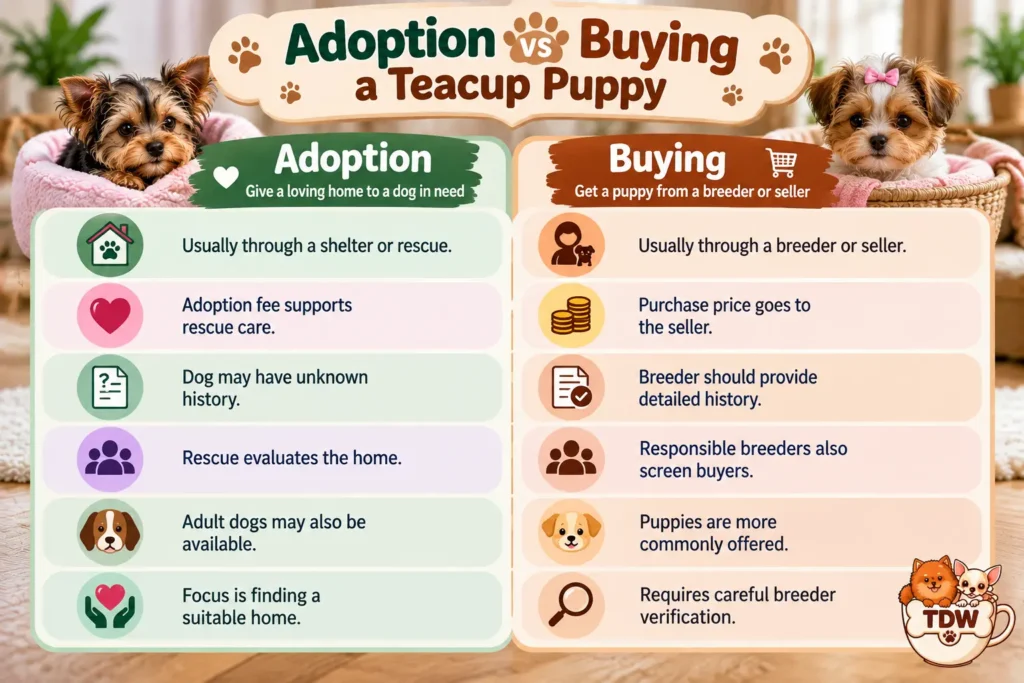
Adopting vs Buying: Why Sellers Say “Adopt”
This guide focuses on adoption through shelters and rescue groups. With a rescue, you usually pay an adoption fee that helps cover the dog’s care.
Many breeders and online sellers also use the word “adopt.” They may call their sales contract an “adoption agreement.” But if you’re paying a seller for a puppy, it’s a purchase, and it comes with different risks and checks. See the short section on buying below.
Is a Teacup Puppy Right for Your Family?
A teacup puppy can be a loving companion, but it isn’t the right dog for every home. Be honest with yourselves before you start the search.
| Question | Good fit if | Think twice if |
|---|---|---|
| Time for care | Someone can feed small, frequent meals through the day | Everyone is out for long stretches |
| Children | Kids are older and can follow gentle handling rules | You have toddlers or very young children |
| Other pets | Your pets are calm around small animals, you can supervise every introduction, and you can keep them apart when needed | Your pets get rough or excited, or you can’t separate them from the puppy when no one is watching |
| Vet care | You can plan for regular vet visits and surprise bills | A big vet bill would be very hard to manage |
| Commitment | You’re ready to care for this dog for many years | You want a low maintenance pet |
Tiny dogs can be badly hurt by a fall from someone’s arms or by being stepped on. In a busy home with little kids, that risk is real every single day.
Health Risks to Know Before You Commit
According to PetMD, teacup dogs can have serious health problems linked to poor breeding. These include:
- Dental problems, because their tiny mouths can crowd their teeth.
- A higher risk of collapsing trachea, which means the windpipe can flatten and make breathing hard.
- Degenerative mitral valve disease, a heart valve problem that PetMD says is very common in teacup dogs.
PetMD also notes that tiny dogs can get dangerously cold, and teacup puppies seem to get sick faster than bigger dogs.
To be fair, PetMD points out that many of these problems show up in small breeds in general, not only teacups. Still, the smaller the dog, the less room there is for error.
Where to Look for a Teacup Puppy to Adopt
The Federal Trade Commission suggests considering a local rescue or animal shelter, where you can usually adopt for a small fee.
Search by Breed and Size, Not Just “Teacup”
Since “teacup” isn’t an official term, rescues won’t always use it in their listings. Search by breed name too, like “Chihuahua rescue” or “Maltese rescue.” Try size words like “small puppy” or “toy breed” as well.
Places to Check
- Local shelters. Visit in person or check their websites often, since listings change.
- Adoption websites. Sites like Petfinder and Adopt a Pet let you filter by size, age, and breed.
- Breed rescues. A breed rescue is a group that focuses on one breed, such as the Chihuahua or Maltese.
Some rescues keep a waitlist or will contact you when a small dog comes in. Ask each group how they let people know about new dogs.
The AKC Rescue Network is a great place to find breed rescues. It’s the largest network of dog rescue groups in the country, covering 160 breeds with more than 450 groups. Many of these groups place dogs in foster homes first. The foster volunteers can tell you a lot about each dog’s history, health, and personality.
Consider a Small Adult Dog Too
If you can’t find a tiny puppy, think about a small adult dog. An adult dog’s size is easier to assess than a puppy’s future size. The rescue can often tell you about the dog’s health history and personality, too. For many families, especially those with kids, a calm small adult dog is an easier and safer start.
How to Check a Rescue and Its Listings
Before you send money or personal details, make sure the rescue and the puppy are real. Puppy scams are common, and popular small breeds are a favorite target.
The Better Business Bureau reported a big rise in pet scam reports in 2025 compared with the year before. In one Texas region, the BBB said puppy scam losses from December 2025 through February 2026 more than doubled compared with the same months a year earlier.
No single check proves a listing is real, so use several together:
- Find the rescue on your own. Look up the group’s website and phone number yourself, then confirm the listing belongs to them.
- Search the group’s name. Add words like “review,” “scam,” or “complaint” and see what comes up.
- Check the photos. A reverse image search shows where else a photo appears online. Rescues may post the same dog on several sites, so a repeat photo isn’t proof of a scam by itself. But if the same puppy shows up under a different name, place, or group, ask about it and be careful.
- Ask for a live video call. A video call is a useful check, but it doesn’t prove the person owns the puppy or that the group is real. Use it alongside the other checks.
- Watch how they want to be paid. The FTC says only scammers say you must pay by gift card, payment app, cryptocurrency, or wire transfer.
- Watch for surprise fees. Sudden requests for extra money for shipping, special crates, or “insurance” are a common scam pattern.
- Check where the puppy is coming from. The CDC says all dogs coming into the US must be at least six months old, microchipped, and healthy. A very young puppy said to be coming “from overseas” is a major red flag.
The safest choice is to meet the puppy in person before you pay. The FTC’s advice on avoiding pet scams has more tips. If you think you’ve been scammed, report it at ReportFraud.ftc.gov and to the BBB Scam Tracker.
The Rescue Adoption Process
Every rescue has its own rules. The steps below are common, but your rescue may skip some or add others. Ask each group exactly what they need from you.
| Step | What may happen |
|---|---|
| Application | You answer questions about your home, family, pets, and schedule |
| References | The rescue may call your vet and personal references |
| Home visit | Some rescues require a visit, in person or by video, and others don’t |
| Meet and greet | Your family meets the dog to see if it’s a good match |
| Contract and fee | You sign an adoption contract and pay the adoption fee |
How long it takes depends on the group, which dogs are available, and what the application involves. Ask the rescue when you can expect to hear back.
Don’t take the questions personally. A rescue that asks a lot is trying to make a match that lasts.
Questions to Ask the Rescue
The questions go both ways. Before you say yes to a dog, ask the rescue or foster family about these things:
| Topic | What to ask |
|---|---|
| Age and size | How old is the puppy, and how much does it weigh now? Is the adult size known or just a guess? |
| Vet care | What vet visits, vaccines, and treatments has the puppy had? What still needs to be done? |
| Health | Does the puppy have any health problems or take any medicine? |
| Food | What does the puppy eat, how often, and has eating ever been a problem? |
| Behavior | How does the puppy act with people, kids, and other pets in the foster home? |
| Background | What do you know about where the puppy came from? |
It’s okay if the rescue doesn’t know everything, especially about a puppy’s past. What matters is that they answer honestly and tell you what they don’t know.
Paperwork to Get Before Your Puppy Comes Home
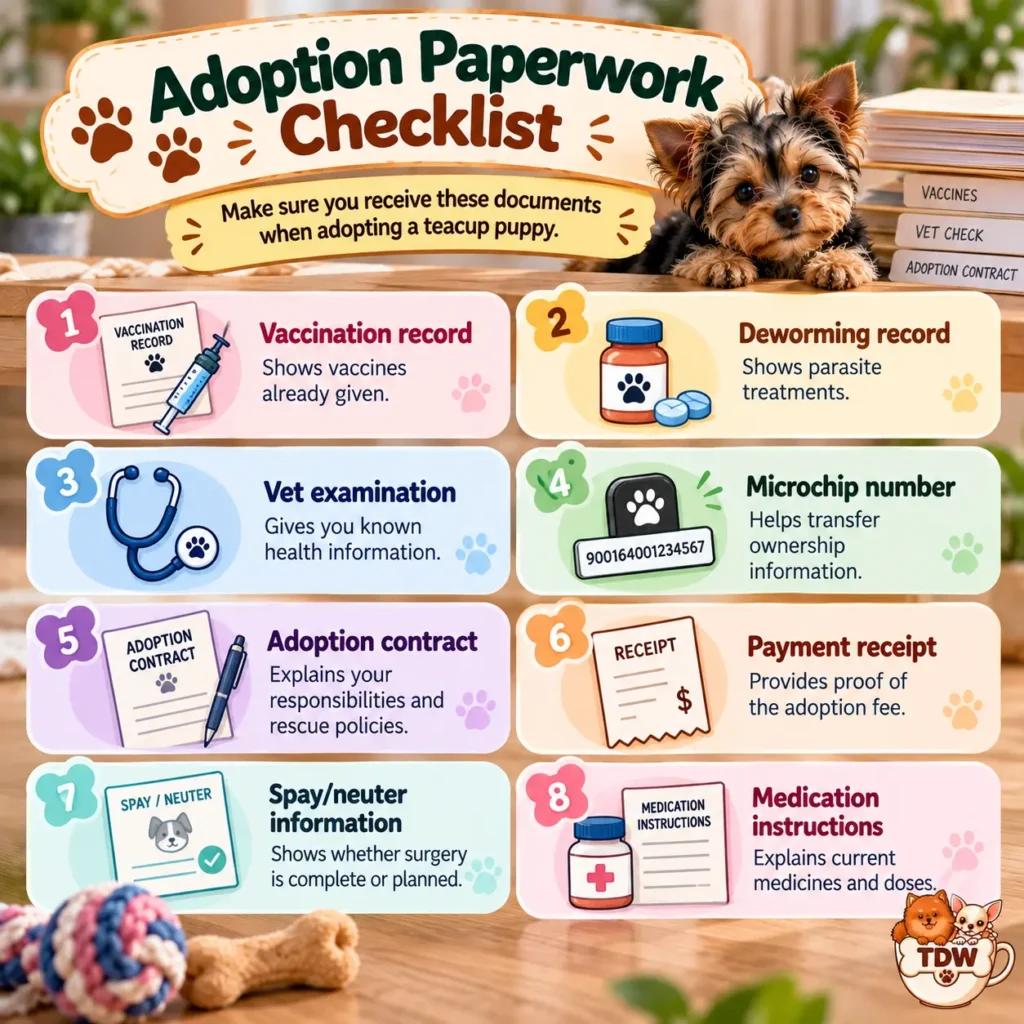
Ask for these papers before you take your puppy home:
- Vaccine record. Humane World for Animals says it should show the expiration date and lot number for each vaccine.
- Deworming record. This shows which treatments the puppy has had.
- Vet exam record. Include the vet’s name and phone number.
- Microchip number. Ask whether it’s registered and how to put it in your name.
- Adoption contract. Read it fully, including what happens if you can no longer keep the dog.
- A receipt. Keep a written record of anything you paid.
What the Adoption Fee Covers
Before you pay an adoption fee, ask exactly what it covers. Fees usually help pay for the care a dog got while in rescue, but every group is different. Go through this list with the rescue:
- Vet exam
- Vaccines given so far, and which ones are still due
- Deworming and flea or tick treatment
- Microchip
- Spay or neuter, or a plan for when it will happen
- Any medicine the puppy is taking now
For anything that isn’t included, ask what still needs to be done and who pays for it. This helps you plan for known upcoming costs.
Buying Instead of Adopting? Know the Basics
Buying a puppy is a different process with different risks. Here are the most important things to know.
Humane World for Animals warns that most puppies sold through pet stores or websites come from puppy mills. A puppy mill is a large breeding operation that puts profit ahead of the dogs’ health and care.
Humane World also says a responsible breeder won’t sell to the first person with cash in hand. They want to meet you. Always visit in person, see where the puppies are raised, and meet the puppy’s mother. Its guide to finding a responsible breeder explains what to look for.
Don’t be swayed by a “USDA licensed” badge. Under federal rules, many breeders who sell puppies online without the buyer seeing them first need a USDA license. But Humane World notes that this license only means the breeder met minimum federal standards. It isn’t a sign of quality.
Pickup Day and Your Puppy’s First Week
Get your home ready before pickup day. Block off stairs and gaps with baby gates. Plan where the puppy will sleep, and keep it low to the ground. Agree on family rules too, like sitting on the floor whenever someone holds the puppy.
Ask the rescue exactly what and when the puppy has been eating. Keep that same routine at first. Very small puppies are prone to hypoglycemia, which means low blood sugar, so they need small, frequent meals.
Book a vet visit within the first few days. Your vet can check the puppy’s health and review its records. They can also plan the rest of its vaccines.
Watch for warning signs of low blood sugar, such as weakness or low energy, vomiting, seizures, or fainting. If you see any of these, call your vet or an emergency vet right away.
FAQs About Adopting a Teacup Puppy
How long does rescue approval take?
Timing varies by organization, availability, and application requirements. Ask the rescue when to expect a reply and what else they need from you. Having your vet’s details and your references ready can help things move along.
Can you adopt a teacup puppy for free?
Sometimes. Some shelters lower or waive adoption fees during special events. But a free dog still needs food, supplies, and vet care, so plan for those costs. Be careful with online ads that offer a “free” puppy if you just pay for shipping. That’s a common scam.
Can we adopt from a rescue in another state?
Often, yes, but it depends on the rescue. Many groups only place dogs within a certain area, so ask before you apply. Also ask how the meet and greet and pickup will work. Your vet can tell you if any travel paperwork is needed.
What if a rescue turns down our application?
Don’t give up. Ask the rescue, politely, if they can share why. Sometimes the dog just needs a different kind of home, like one without small children. Other rescues may have a dog that fits your family better.
Final Thoughts
Learning how to adopt a teacup puppy safely comes down to a few simple rules. Take your time. Start with shelters and breed rescues, and search by breed and size, not just “teacup.” Check every rescue and listing carefully before you pay, and get the health records in writing.
Most of all, choose a dog whose care needs your family can realistically meet, rather than choosing by size alone. When you’re ready, talk to your vet about the next steps for your new family member.

The TeacupDogWorld Editorial Team researches and creates practical guides about small and teacup-sized dogs, including breed characteristics, grooming, nutrition, health, training, and everyday care. Our content is developed using reputable veterinary, breed-club, and animal welfare sources to help dog owners make better-informed decisions.