
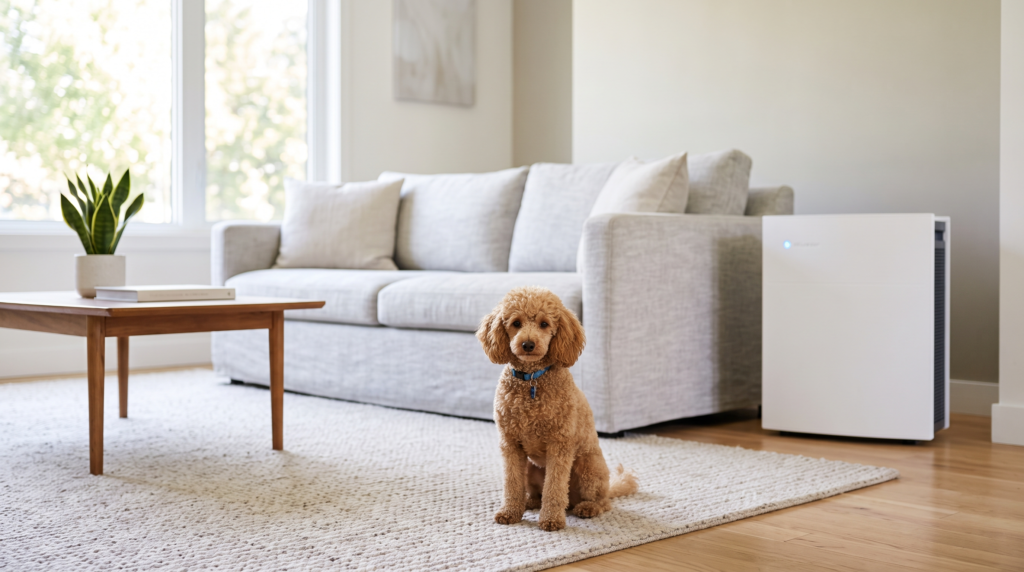
Somebody in your house reacts to dogs, your family still wants one, and every list you have found promises that a tiny non shedding breed will solve it.
Here is the honest answer. Hypoallergenic teacup dogs are not a real category. No dog breed is hypoallergenic, allergy organisations say so plainly, and researchers have measured it. Teacup is not a recognised size either.
That is not the end of the conversation though. Plenty of allergic people do live well with dogs, and the things that make that work have almost nothing to do with breed.
This guide covers what you are actually allergic to, what happened when scientists measured allergen levels in so called hypoallergenic breeds, why the sex of the dog may matter more than the breed, and what genuinely reduces symptoms at home.
Are Hypoallergenic Teacup Dogs Real?
No. The phrase puts two marketing claims on top of each other, and neither one holds up.
The Asthma and Allergy Foundation of America states it directly: there is no such thing as a hypoallergenic pet. And teacup is a seller’s word, not a size used by any major kennel club. The dogs sold under it are small examples of small breeds.
So a puppy advertised as a hypoallergenic teacup is making you two promises, and neither is backed by anything.
Now the part that matters more. That does not mean an allergic family can never have a dog. It means breed is the wrong lever to pull first. There are better levers, and the rest of this guide is about them.
Why No Dog Breed Is Hypoallergenic
What You Are Actually Allergic To
Not fur. This is the single fact that undoes the whole category.
The things people react to are proteins, and allergists explain that they come from the dog’s skin, saliva and urine. The main one has a short scientific name, Can f 1. Dander is just the everyday word for the tiny flakes of skin a dog constantly sheds, and those flakes carry the protein with them.
Fur matters, but only as a delivery system. Hair picks up the proteins, then drops them on your sofa, your carpet and your clothes. A dog with no fur at all still makes them.
That is why a hairless breed is not an allergen free breed, and why a coat type can never be the whole answer.
What the Research Found
This part surprises most people.
In 2012, researchers published a study in the Journal of Allergy and Clinical Immunology that measured the main dog allergen in the coats of breeds marketed as hypoallergenic, including Poodles and Labradoodles, and compared them with Labrador Retrievers and a mixed control group.
The hypoallergenic group had higher allergen levels in their coats, not lower. The paper’s own conclusion was that there is no evidence for calling any breed hypoallergenic.
Two caveats belong here, because leaving them out would make this sound more dramatic than it is.
First, those coat differences did not translate into higher allergen levels inside the home. The point is not that Poodles are worse for allergy sufferers. The point is that the label predicts nothing in either direction.
Second, and this is the useful bit, the differences between breeds were small compared with the differences between individual dogs of the same breed. Two Poodles can be very different from each other. The breed is simply not where the variation lives.
A separate study reached the same place from a different angle. Researchers in Detroit collected dust samples from 173 homes that each had one dog, sorted the breeds into hypoallergenic and non hypoallergenic groups using four different classification systems, and found no difference in allergen levels between the two groups under any of them.
Low Shedding Is Not the Same as Low Allergen
These two ideas get used as if they mean the same thing, and they do not.
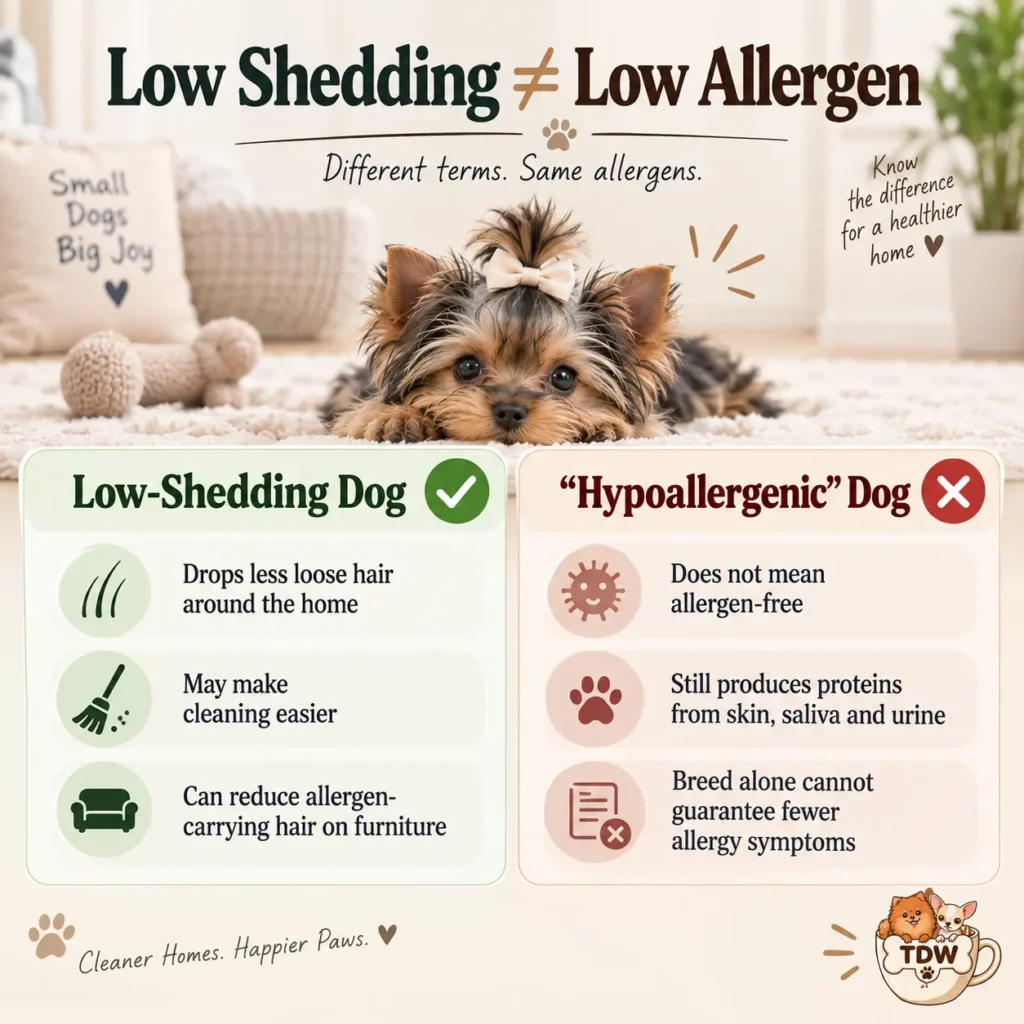
A low shedding coat keeps loose hair in the coat until it is brushed or clipped out, instead of dropping it around your house. That is a real advantage. Less allergen carrying hair ends up in the carpet and on the furniture, which means less for you to breathe in and less cleaning to keep on top of.
What a low shedding coat does not do is change how much allergen the dog produces. Non shedding is a housekeeping benefit, not a medical one.
So if a breeder tells you a breed sheds very little, they may well be right. If they tell you that makes the dog hypoallergenic, they have jumped from a fact to a claim that is not supported.
The Question That Matters More Than Breed: Male or Female?
Here is something almost no breed list mentions, and it is far more useful than any of them.
People do not react to dogs in general. They react to specific proteins, and there are several. One of them, called Can f 5, is made in the prostate gland. That means only male dogs produce it, and the amount drops after a male dog is neutered.
Now the finding. Some people react to that protein and to none of the others. In a randomised controlled trial, children in that group reacted to allergen extract from male dogs and tolerated extract from female dogs.
For those people, the sex of the dog mattered and the breed did not.
Read the limits carefully before you act on this. It applies to people who react to that one protein alone. Most dog allergic people react to several proteins, and for them a female dog changes nothing at all. Nobody can tell which group they are in by how they feel around dogs, because the symptoms look the same either way.
The only way to find out is a blood test, and the next section covers what to ask for.
Why the Teacup Part Adds a Second Problem
Teacup is not a size recognised by the American Kennel Club or any other major registry. The dogs sold under that word are usually small examples of breeds that were already small.
But there is something specific to very small dogs that is worth thinking about here, and it cuts against what most people assume.
Teacup, Toy and Miniature Are Not the Same Thing
This is worth untangling, because two of those three words are real.
Toy and Miniature are genuine size classes inside real breed standards. The American Kennel Club recognises Standard, Miniature and Toy Poodles. The Miniature Schnauzer is a recognised breed in its own right. Those words mean something you can look up.
Teacup is not one of them. There is no fourth Poodle size below Toy, and no separate teacup variety of the Yorkshire Terrier.
So here is a genuinely useful redirect. If you have been searching for a teacup Poodle, the dog you actually want is a Toy Poodle, and it is already very small. If you have been searching for a teacup Yorkie, look up the Yorkshire Terrier standard, which caps adult weight at seven pounds. You get a recognised size, a written standard, and breeders who can be held to it.
The breeds’ own clubs are blunt about this. The Yorkshire Terrier Club of America tells its members that their advertising must not use terms such as teacup, tiny specialists or doll faced. When the people who care most about a breed ban a word from their own adverts, that tells you what the word is for.
A Tiny Dog Is Held, Carried and Slept With
Think about how people actually live with a four pound dog compared with a forty pound one.
The tiny dog gets carried. It sits on laps, gets held up near faces, travels in a bag, and is far more likely to end up on the sofa and in the bed. Those are exactly the behaviours and exactly the fabrics that allergy organisations tell allergic households to avoid.
So even if a smaller dog produced less allergen overall, which has not actually been demonstrated in any study I could find, the way people live with small dogs works against you. The allergen goes where the dog goes, and a lap dog goes straight onto the soft surfaces you spend most of your time on.
This is not a reason to rule out a small dog. It is a reason to be realistic about whether your household will keep the rules once the puppy arrives.
The Health Risks That Come With Extreme Small Size
One more thing, briefly, because families choosing a dog on allergy grounds often have not thought about it.
Very small puppies can suffer dangerous drops in blood sugar in their first months. They are easily hurt by short falls and by being stepped on. Small jaws mean crowded teeth and a higher chance of dental problems later.
None of that is caused by allergies, but you take it on at the same time.
Breeds Commonly Sold as Hypoallergenic Teacup Dogs
You will meet the same names on every list. The useful question is not whether they are hypoallergenic, because none are, but what is actually true about each one.
Toy Poodle
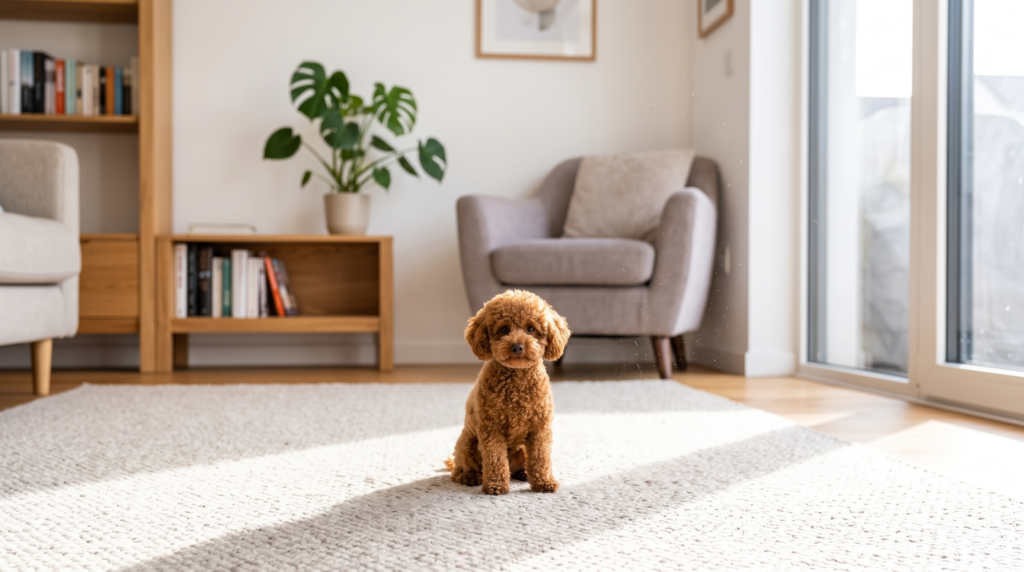
Toy is a genuine recognised Poodle size, so this is the breed to look up if you have been searching for a teacup Poodle. The curly coat sheds very little into the home, which is a real advantage for keeping allergen out of your carpets.
Worth knowing: it was also among the breeds with the highest measured coat allergen in the 2012 study, and a tiny Poodle is still a clever, busy dog that needs training and exercise.
Maltese

Already one of the smallest recognised breeds, so most families looking for a teacup Maltese are describing a normal one. The long silky coat is single layered and drops very little hair.
Worth knowing: that coat tangles, and a full length one needs brushing most days. Many owners end up keeping it clipped short instead.
Shih Tzu
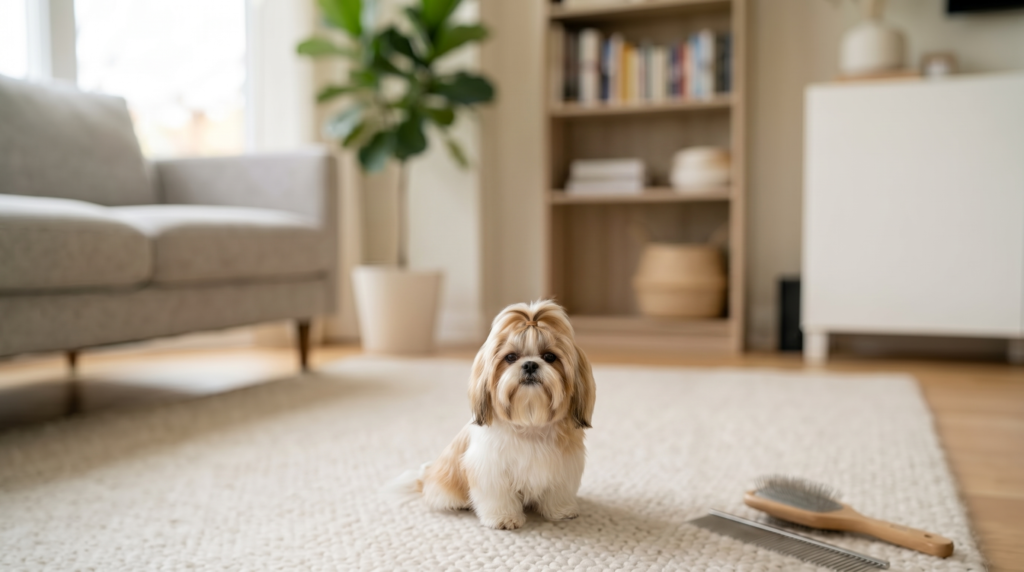
The coat grows continuously rather than shedding in seasons, which is where the low shedding reputation comes from, and it is accurate as far as it goes.
Worth knowing: continuous growth means constant grooming, and the dog produces exactly as much dander and saliva as any other.
Yorkshire Terrier

Fine hair that behaves more like human hair than typical dog fur, and a genuinely tiny dog without needing any teacup label. The breed standard caps adult weight at seven pounds.
Worth knowing: a Yorkie lives on laps, sofas and beds, which affects your exposure more than the coat does. And this is a terrier, so expect confidence and opinions rather than a quiet ornament.
Affenpinscher
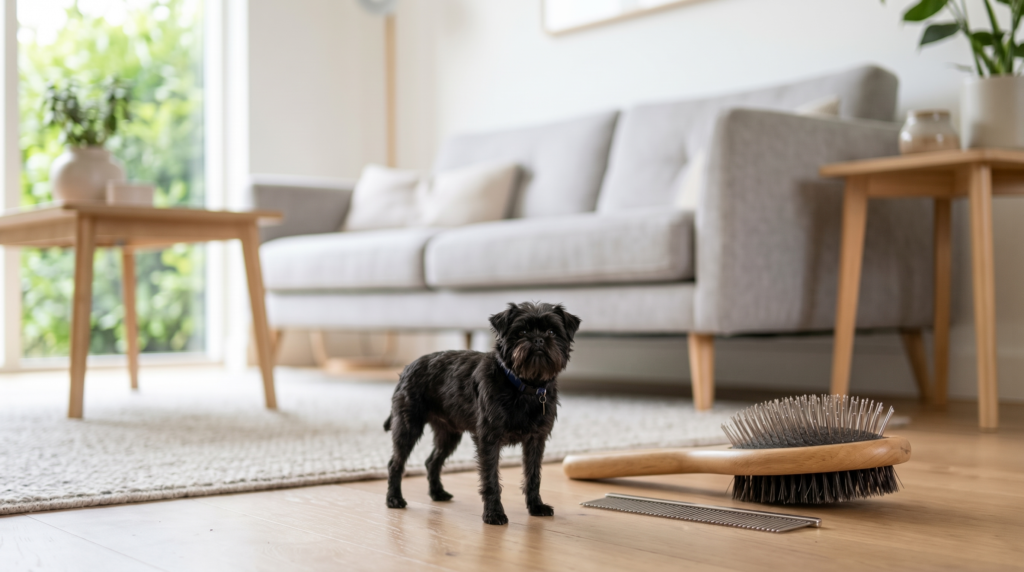
The Affenpinscher is a tiny Toy breed with a confident personality packed into a small body. Adults are usually around 9.5–11.5 inches tall and have a wiry coat that sheds very little. They are playful, curious, and affectionate with their families, but their coat still needs regular brushing and trimming. For allergy-sensitive homes, the Affenpinscher may be worth considering, although no dog can be guaranteed to be completely hypoallergenic.
Chinese Crested
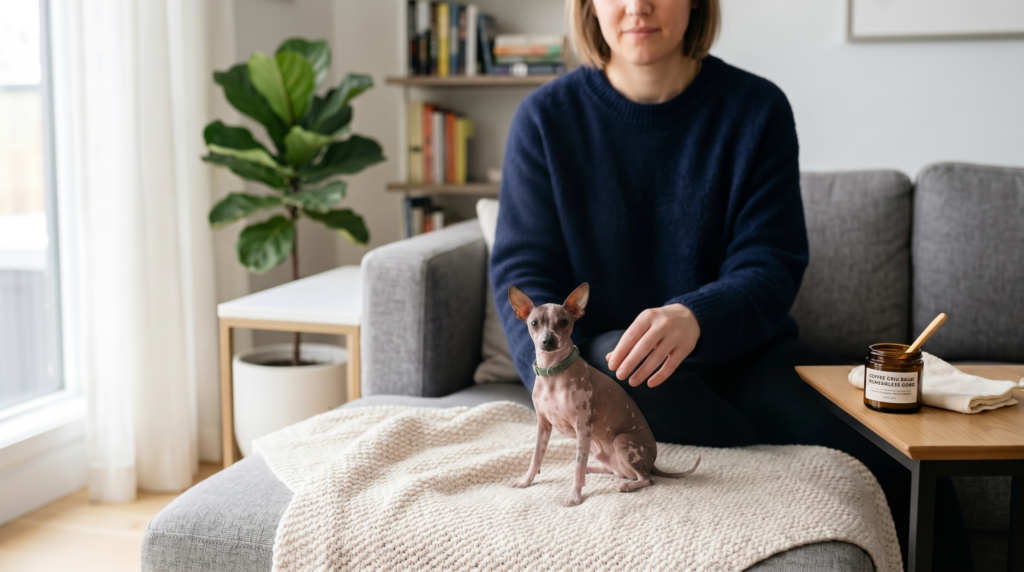
The Chinese Crested is a small Toy breed available in two varieties: Hairless and Powderpuff. The Hairless variety has very little body hair, which means far less loose hair around the home, but it can still produce allergens through its skin and saliva. These dogs are usually affectionate, people-oriented companions and enjoy staying close to their families. Hairless dogs also need regular skin care, so less hair does not mean no maintenance.
Miniature Schnauzer
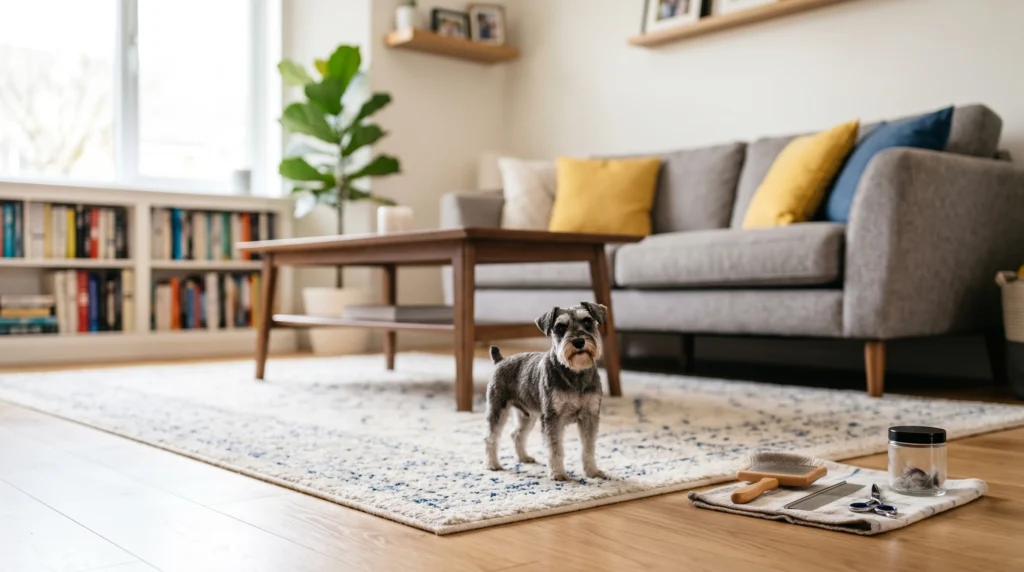
The Miniature Schnauzer is a sturdy small dog known for its expressive eyebrows, beard, and lively personality. Its wiry double coat sheds very little, making it a popular option for people looking for a low-shedding family companion. Miniature Schnauzers are intelligent, alert, and usually enjoy being involved in family activities. Their coat needs regular brushing and professional grooming, and despite the name “Miniature,” there is no officially recognized Teacup Schnauzer variety.
Two things to take from those eight.
The Poodle pairing is worth sitting with. It is the breed at the centre of every hypoallergenic list, and it was also among those with the highest allergen levels measured in the coat. That is not an argument against Poodles. It is an argument against trusting the label.
And notice how often the honest answer is about grooming rather than allergies. Low shedding does not mean low maintenance. It usually means the opposite, because hair that does not fall out has to be brushed and clipped out instead. The trade you are making is less hair on the sofa in exchange for more time on grooming, and that is a fair trade only if your household will actually do it.
One thing you will not find here is a ranking of which breed is best for allergies. The research does not support one. The differences between individual dogs were bigger than the differences between breeds, so any ranking would be made up.
Test Your Allergy Before You Buy, Not After
This is the practical heart of the whole topic, and it is the step most families skip.
What to Ask an Allergist For
A standard allergy test tells you whether you react to dogs. That is useful, but it is not the whole picture.
There is a more detailed kind of testing, called component resolved testing, that shows which specific dog proteins you react to rather than just whether dogs are a problem. That is what reveals whether you are in the group who react only to the male dog protein. A 2021 review in the same allergy journal describes how this kind of testing is used.
Ask an allergist about it by name. They order the test and they interpret the result, and interpreting it is genuinely their job rather than something to work out from a website.
If somebody in your house has asthma, see the allergist before you do anything else. That is the point where this stops being a shopping decision.
Spend Time With the Actual Dog
Whatever the test says, spend real time with the specific dog before you commit.
Not one short meeting. Several visits, ideally in the home where the dog lives, because the allergen is in the house as well as on the animal. Sit on the floor with it. Let it climb on you.
Then pay attention for the rest of that day and the next one. Reactions do not always show up while you are still in the room.
If symptoms appear, believe them. Buying anyway and hoping the allergy settles down is how dogs end up being rehomed a few months later, which is hard on the family and much harder on the dog.
What Actually Reduces Dog Allergens at Home
This section is for everyone, including the many readers who already have the dog and are looking for help right now.
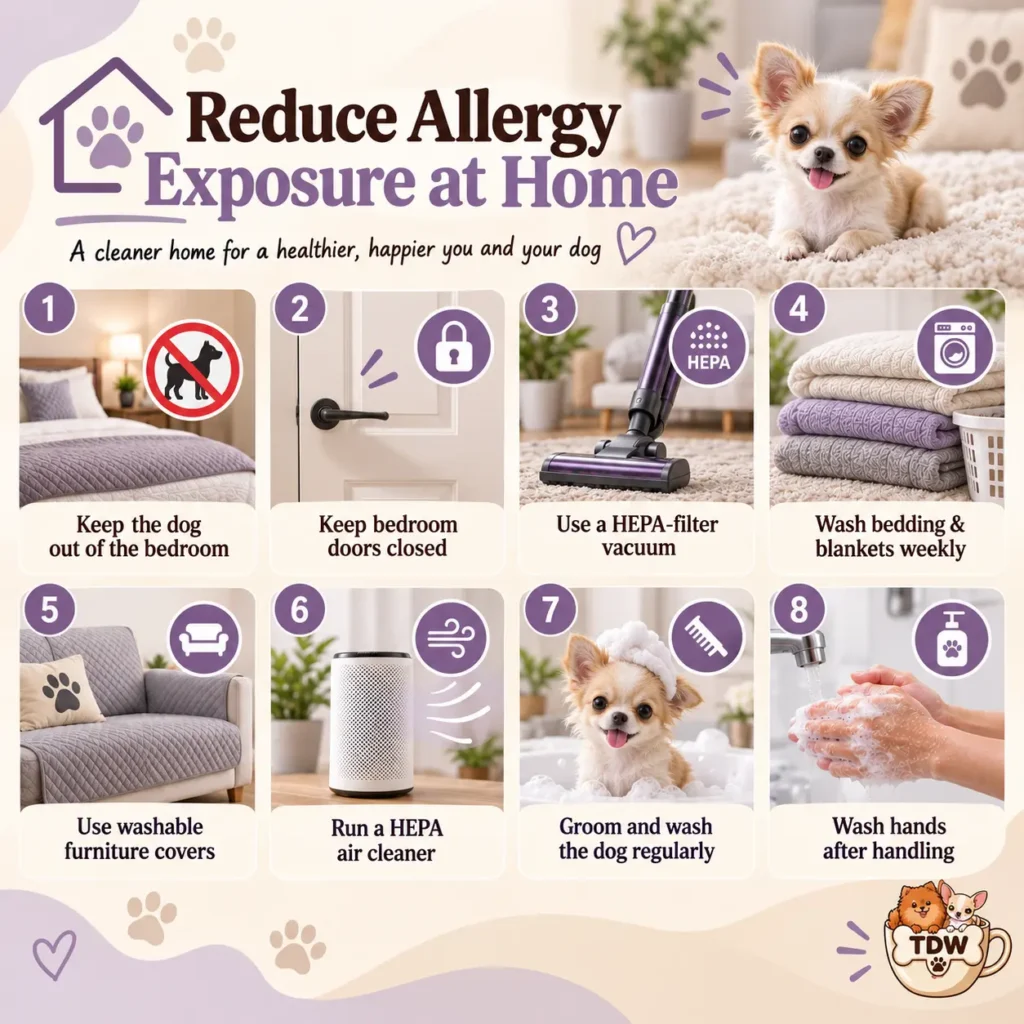
These measures come from allergy organisation guidance. They reduce your exposure. They do not eliminate it, and they work far better together than one at a time.
- Keep the dog out of the bedroom and keep the door closed. You spend about a third of your life in there.
- Do not assume that restricting the dog to one room keeps the allergen in that room. Allergists say plainly that it does not. It spreads.
- Choose hard flooring over carpet where you can. Where carpet stays, vacuum weekly with a machine that has a HEPA filter, which is a filter designed to trap very small particles.
- Wash bedding, blankets, throws and the dog’s own bed weekly in hot water.
- Cover sofas and chairs with something washable. For a small dog that lives on the furniture, that fabric is where the allergen builds up.
- Run a HEPA air cleaner in the rooms you use most.
- Wash the dog regularly, and have somebody without the allergy do the brushing, outdoors if the weather allows.
- Wash your hands after handling the dog, and try not to rub your eyes before you do.
If you are doing all of this and still struggling, that is information rather than failure. Take it back to your allergist.
Buying Safely: Red Flags in a Hypoallergenic Teacup Listing
The Better Business Bureau’s puppy scam research reports that more than half of pet scams start on a website found through a search engine or social media, which is probably how you found the listing you are looking at. The BBB also lists the word teacup in an advert as a warning sign in its own right.
On this topic there are extra signals worth knowing.
- A seller who calls a puppy hypoallergenic with no qualification at all.
- A health guarantee that covers allergies. Nobody can promise how your immune system will behave.
- A claim that a particular bloodline is allergy free.
- A seller who discourages you from visiting, which conveniently removes your only chance to test your own reaction.
- The puppy must be shipped, and shipping is arranged by somebody else.
- Payment only by bank transfer, gift card or a payment app.
- New fees appearing after you pay a deposit.
- Photos that turn up elsewhere in a reverse image search.
- Puppies offered before eight weeks old.
The most important thing you can do before paying anybody is sit in a room with the dog. A seller who will not allow that has told you something, whatever the reason they give.
Is a Hypoallergenic Teacup Dog Right for Your Family?
This may work if you have been tested and know what you react to, you have spent real time with the specific dog without symptoms, nobody in the house has asthma that is poorly controlled, your household will actually keep up the home measures long term, and you are choosing the dog on health, temperament and breeder quality rather than on a size label.
Think harder if somebody has asthma that is not well controlled, you have not been tested, you are relying on a seller’s hypoallergenic claim, you have reacted around dogs before and are hoping this one will be different, or nobody has met the dog yet.
And it is worth saying once, gently. For some households the honest answer is a different kind of pet, or waiting until a child is older and their allergies have been properly assessed. That is a real option rather than a failure, and an allergist can help you think it through.
Hypoallergenic Teacup Dog FAQs
Are hypoallergenic teacup dogs real?
No. Allergy organisations state that no pet is hypoallergenic, and teacup is not a size recognised by any major kennel club. What is being sold is a small dog from a low shedding breed, with an allergy promise attached that no breed can keep.
What is the most hypoallergenic teacup dog?
There is no answer to this, and any site that gives you one is inventing it. When researchers measured allergen levels, the differences between individual dogs of the same breed were larger than the differences between breeds.
Do teacup poodles trigger allergies?
They can. Poodles shed very little, which helps with housekeeping, but the 2012 study found some of the highest coat allergen levels in Poodles. Low shedding and low allergen are two different things.
Are hairless dogs better for allergies?
Not reliably. The proteins people react to come from skin, saliva and urine, so a hairless dog still produces them. It spreads less allergen through loose hair, but it is not an allergen free dog.
Can you be allergic to only male dogs?
Some people are. One dog allergen is made in the prostate, so only male dogs produce it. People who react to that protein alone tolerated female dogs in a randomised trial. A blood test from an allergist is the only way to know if that applies to you.
Does a smaller dog mean fewer allergy symptoms?
There is no study showing that smaller dogs produce less allergen. And small dogs tend to be carried, held and allowed on beds and sofas, which increases your contact with the allergen rather than reducing it.
Do air purifiers help with dog allergies?
They are part of the answer rather than the whole answer. Allergy organisations recommend HEPA air cleaners alongside keeping the dog out of the bedroom, hard flooring, and regular washing of bedding and soft furnishings.
Will my allergy get better if I live with a dog?
Do not count on it. Some people find symptoms settle and others find they worsen, and there is no way to predict which will happen to you. If you are hoping exposure will fix it, talk to an allergist rather than testing it on your family.
How do I know if I will react before buying a puppy?
Get tested first, then spend time with the specific dog on more than one occasion, ideally in its own home. Watch how you feel for the next day or two, not just during the visit.
What should I do if I am already allergic to my dog?
Start with the home measures in this article, all of them together rather than one at a time, and give it a few weeks. Then see an allergist about your symptoms. There are treatment options worth discussing, and rehoming is not the only route.
Conclusion
No breed and no size solves a dog allergy. The proteins come from skin, saliva and urine, they turn up in every home with a dog, and the research that tested the hypoallergenic claim found no support for it.
What does change the outcome is finding out exactly which proteins you react to, meeting the individual dog before any money changes hands, and running your home properly afterwards.
If you take one action from this page, make it the first one. Book the allergy test before you start looking at puppies, not after.

The TeacupDogWorld Editorial Team researches and creates practical guides about small and teacup-sized dogs, including breed characteristics, grooming, nutrition, health, training, and everyday care. Our content is developed using reputable veterinary, breed-club, and animal welfare sources to help dog owners make better-informed decisions.