
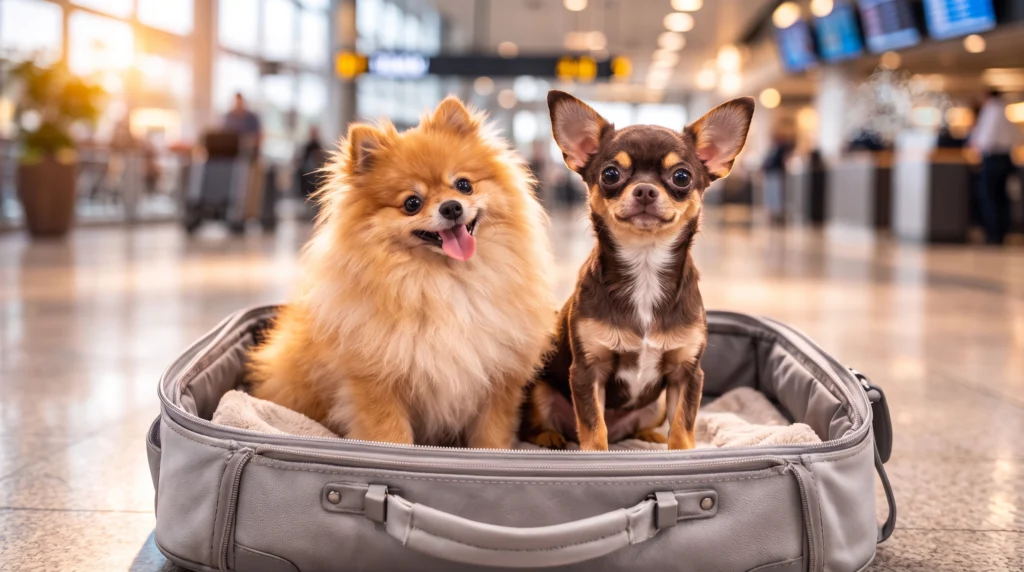
One may be sleek or softly feathered. The other looks like a walking puff of cotton. If your family keeps flipping between a Chihuahua and a Pomeranian, this guide lays out how they really differ.
Here is the first thing to know. A teacup Chihuahua and a teacup Pomeranian are not separate breeds or official sizes. “Teacup” is a seller’s word, so the real choice is between a Chihuahua and a Pomeranian.
The short answer: a smooth-coated Chihuahua generally needs less coat maintenance, while a Pomeranian requires more attention to its double coat. For either breed, assess the individual dog’s temperament and comfort with your family. Below, you will see how they compare on size, grooming, personality, health, daily care and cost, plus how to buy safely.

| Chihuahua | Pomeranian | |
|---|---|---|
| AKC group | Toy Group | Toy Group |
| Breed standard weight | Not more than 6 pounds | 3 to 7 pounds (4 to 6 ideal for show) |
| Official teacup size? | No | No |
| Coat | Smooth coat or long coat | Thick double coat |
| Shedding | Yes, moderate | Yes, more visible, with seasonal heavy sheds |
| Grooming time | Low for smooth coats, moderate for long coats | High: frequent brushing, often a groomer |
| Typical personality | Alert, confident, often very attached to one person | Lively, outgoing, curious |
| Barking | Can be vocal; training matters | Can be vocal; training matters |
| Best with | Adults and calm, older kids | Adults and calm, older kids |
| Shared health watch-outs | Kneecaps, windpipe, teeth | Kneecaps, windpipe, teeth |
| Breed-specific watch-out | Soft spot on the skull (molera) | Coat loss condition (alopecia X) |
| Lifespan | Small breeds tend to live long; no teacup-specific estimate in these sources | Small breeds tend to live long; no teacup-specific estimate in these sources |
What “Teacup” Means for Chihuahuas and Pomeranians
Neither breed has a teacup size. The American Kennel Club (AKC) breed standards for both dogs describe one breed each, with no teacup, mini or pocket variety.
The Chihuahua Club of America is very direct about this. In its statement on teacup labels, the club says words like teacup, pocket size and tiny toy are incorrect and misleading. It also warns that the labels make puppies seem rarer and more valuable than they are. The only official split in the Chihuahua is coat type: smooth coat or long coat.
The Pomeranian picture is similar. The breed standard already allows dogs as small as 3 pounds, so a puppy sold as a “teacup Pomeranian” is usually just a Pomeranian at the small end of normal, or one a seller hopes will stay small.
You may also see “toy Chihuahua” or “toy Pomeranian.” Toy describes their AKC group; it does not identify a smaller variety.
So what does the teacup label actually tell you? Very little. It does not tell you how big the dog will grow, how it was bred, or how healthy it is. The club does note that very small puppies can be perfectly healthy but may need extra care, which we cover in the health section. If you are leaning Pomeranian, our teacup Pomeranian guide goes deeper on that breed.
Teacup Chihuahua vs Teacup Pomeranian: Size and Build
The two breeds are closer in size than most people think. Their weights can overlap, although the Chihuahua standard gives an upper limit rather than a full range.
The AKC Chihuahua standard says an adult should not weigh more than 6 pounds. The AKC Pomeranian breed standard sets a range of 3 to 7 pounds, with 4 to 6 pounds as the ideal for show dogs. It also says overall quality matters more than size.
So why does a Pomeranian often look bigger? Mostly the coat. A Pomeranian’s thick double coat stands away from the body, which makes the dog look round and full. A smooth-coated Chihuahua shows its true outline, so it can look much smaller at the same weight.
The bodies feel different too. Chihuahuas are often finer boned, with large eyes and ears. Pomeranians are compact little dogs with a plumed tail that curls over the back. Neither breed should look fragile or sickly, whatever a seller calls it.
If an exact adult size matters to your family, remember that puppies grow at different rates. Meeting adult parent dogs gives you useful context, and an adult dog is the only one whose size is already settled.
Coat, Shedding and Grooming

If grooming time matters to your family, coat type is where these dogs differ most. A smooth-coated Chihuahua is usually the simplest to keep tidy, a long-coated Chihuahua needs more brushing, and a Pomeranian needs the most regular, hands-on coat care.
Both breeds shed, though. That surprises a lot of people who expect a short-coated dog to leave no hair behind.
Chihuahua Coat Care
Chihuahuas come in two coats. A smooth coat is short and glossy, and a quick brush about once a week keeps it neat. A long coat is soft and flat or slightly wavy, with feathering on the ears, legs and tail. It needs brushing a few times a week so the fine hair behind the ears and on the legs does not tangle.
Either way, the coat is the easy part. The jobs that matter more are regular nail trims and tooth brushing, since small mouths are prone to dental trouble.
Pomeranian Coat Care
The Pomeranian has a double coat: a soft, dense undercoat under a longer, harsher outer coat. This is the coat that gives the breed its fluffy ruff around the neck. It comes from the breed’s spitz ancestry, the same family as larger northern breeds.
The AKC says this coat should be brushed frequently. If home care is hard to keep up with, it recommends a professional groomer every four to six weeks. Brush down to the skin, not just the top layer, because mats can form close to the body where you cannot see them.
Expect heavier shedding at times, when the undercoat comes out in clumps. Ask a groomer before shaving a Pomeranian short, since a double coat does not always grow back the same way.
Temperament and Personality

Both breeds are bright, affectionate companions with big personalities in small bodies. The difference is mostly in style, and individual dogs vary a lot within each breed.
Pomeranians tend to be outgoing and curious. Their breed standard calls them extroverts, and the AKC describes them as lively, friendly and intelligent. Many love meeting new people and being the center of attention.
Chihuahuas tend to be alert and confident, with what their standard calls a “terrier-like” sense of self-importance. Many bond very closely with one person. Some are wary of strangers or rough handling, so early, gentle socialization helps a Chihuahua grow into a relaxed adult.
Neither breed should be treated like a toy. Both are sensitive dogs that do best with calm, kind people and plenty of time together.
Barking and Alertness
The sources used here do not establish a dependable barking winner. Both are alert little dogs that often bark to tell you someone is at the door.
How much a dog barks depends a lot on training, routine and how much attention and exercise it gets. If your home has thin walls or close neighbors, plan to teach a “quiet” cue early, and reward calm behavior when visitors arrive.
Training and Housetraining
Both breeds are smart and learn best with praise, treats and short, upbeat sessions. Harsh corrections tend to make sensitive small dogs nervous.
Housetraining is often the hardest part for both. The AKC notes it can be a real challenge with Pomeranians. Tiny bladders mean frequent potty breaks, so keep a steady schedule, take puppies out after meals, naps and play, and reward every success. Patience matters more than speed.
Which Is Better With Kids and Other Pets?
Neither breed is ideal for a home with toddlers or rough young children. Both can be lovely family dogs with calm, older kids who know how to be gentle.
The AKC says Pomeranians tend to be a better fit for families with older children who understand the difference between a small dog and a toy. It describes Chihuahuas as too small for rough kids. The reason is size, not temperament. A tiny dog can be hurt by a fall from a child’s arms, and a frightened dog may nip to protect itself.
With other pets, both breeds often get along well with dogs and cats they are raised with. The main risk is a big size difference. A large, playful dog can injure a tiny one by accident, so keep early meetings slow and supervised.
Safety Rules for Tiny Dogs and Children
If you have kids at home, set these rules from day one:
- Children sit on the floor to hold the dog. No standing or walking while carrying it.
- Young children never pick up the dog without an adult.
- Give the dog a quiet rest area, behind a baby gate, where kids do not follow.
- Teach gentle play: soft toys, no chasing, no tug of war.
- An adult supervises every play session with younger children.
Health and Lifespan Compared
This research does not establish that either teacup-labeled group is healthier. The two breeds share several problems common in very small dogs. Some additional concerns deserve breed-specific attention.
On lifespan, both are small breeds, and small breeds tend to live longer than large ones. A 2024 study of more than 580,000 UK dogs in Scientific Reports found that large breeds faced a higher risk of shorter lives. The Chihuahua Club of America says a healthy, well cared for Chihuahua can live well into its teens. The sources cited here do not establish a separate lifespan estimate for dogs marketed as teacups, so be wary of any seller who gives you one.
Health Concerns Both Breeds Share
- Slipping kneecaps (patellar luxation). The kneecap can slip out of its normal position. You might notice your dog skip a step or briefly hold up a back leg.
- Collapsing windpipe (tracheal collapse). A weakened windpipe can cause a dry, honking cough. VCA Animal Hospitals lists both breeds among those prone to it and advises a harness instead of a collar.
- Dental disease. Small mouths can crowd teeth. In a UK study of Chihuahuas in veterinary care, gum (periodontal) disease was the most common specific disorder recorded. That finding comes from one UK population, not from teacup dogs in particular, but regular tooth care matters for both breeds.
- Heart valve disease. The AKC’s Chihuahua health statement notes this heart condition is common in many older small dogs.
Pomeranian Health Watch-Outs
One condition associated with Pomeranians is alopecia X. The coat thins and falls out, often on the body and tail, and the skin underneath can darken. A University of Minnesota veterinary dermatology text notes that Pomeranians are over-represented and that it usually starts between one and three years of age. It is mainly a cosmetic problem, but hair loss has many possible causes, so see your vet to rule out other conditions first.
Chihuahua Health Watch-Outs
Many Chihuahua puppies are born with a soft spot on top of the skull called a molera. The Chihuahua Club of America says it is common in the breed, and it cites veterinary sources showing that a molera by itself does not mean a dog has a fluid build-up on the brain. Still, a soft spot cannot be judged from how it looks alone. Ask your vet to examine it and talk it through with you during the puppy’s veterinary checkup.
Chihuahuas can also keep some of their baby teeth after the adult teeth come in. The same UK study found this was common. Your vet can check for retained teeth during puppy visits and remove them if needed.
Extra Care for Very Small Puppies
This is where the teacup label can matter, because it often goes with very small, very young puppies. Young toy-breed puppies can be vulnerable to low blood sugar (hypoglycemia), especially when they are not eating well, are stressed, or get cold.
Unusual lethargy, weakness, wobbliness or trembling warrants prompt veterinary advice. Collapse or seizures require emergency care. These signs can have different causes, and VCA Animal Hospitals notes that weakness, collapse, disorientation, tremors and seizures can all be signs of low blood sugar. Before your puppy comes home, ask your vet for an emergency plan made for your puppy.
A few habits help every tiny dog:
- Feed several small meals a day while the puppy is young, as your vet advises
- Hold the puppy while sitting on the floor, and use pet stairs for sofas and beds
- Use a harness, not a collar, on walks
- Keep the puppy warm and out of drafts
Exercise, Apartments and the Workday
Both breeds can do well in an apartment. Short daily walks and indoor play usually cover their exercise needs, though each dog’s age, health and energy level should guide how much.
The AKC notes that Pomeranians enjoy short walks, runs and outdoor play, and that they can be escape artists, so check fences and doors. Very small dogs of either breed can get chilled in cold weather, so a sweater and shorter winter walks may help, depending on the dog.
Before choosing either breed, plan who covers the working day. A young puppy needs several small meals and frequent toilet breaks, and both breeds are companion dogs that do best with company for much of the day. Decide who feeds the puppy and takes it out while adults are at work or kids are at school, who keeps it company, and who steps in as backup when plans change. That could be a family member, a trusted neighbor or a dog walker. If no one can cover those hours, an adult dog with an established routine may be the better fit.
Cost of Owning Each Breed
Grooming is one predictable difference to consider in your budget. A Pomeranian is more likely to need regular professional grooming, while many smooth-coated Chihuahua owners handle coat care at home.
Both need the same broad categories of care, but actual expenses vary:
| Cost area | Chihuahua | Pomeranian |
|---|---|---|
| Getting your dog | Breeder price or adoption fee; varies widely | Breeder price or adoption fee; varies widely |
| Grooming | Usually low; home care is often enough | Higher; frequent brushing and often a groomer |
| Dental care | Important; regular cleanings may be needed | Important; regular cleanings may be needed |
| Routine vet care | Vaccines, checkups, parasite prevention | Vaccines, checkups, parasite prevention |
| Unexpected costs | Kneecap or windpipe problems, emergencies | Kneecap or windpipe problems, emergencies |
A higher price does not mean a healthier dog, and the teacup label does not make a puppy worth more. Many families set aside an emergency fund or look into pet insurance while their dog is young.
How to Choose a Healthy Puppy of Either Breed
The goal is to check records, not trust promises. A careful breeder expects questions and is happy to answer them.
A trustworthy breeder will usually:
- Let you see the puppy, its mother where possible, and where the puppies are raised
- Give you both parents’ registered names and registration numbers
- Share the parents’ health test results and the puppy’s vet records
- Provide a written contract that explains what happens if a health problem appears
- Avoid promising an exact tiny adult size
Health Tests to Ask For
The national breed clubs for both the Chihuahua and the Pomeranian recommend the same three tests for breeding dogs, according to the AKC’s list of recommended health tests:
- A kneecap (patella) evaluation
- A heart exam
- An eye exam by a veterinary eye specialist
Ask for the actual results for both parents, then look the dogs up by name in the Orthopedic Foundation for Animals (OFA) public database. One detail matters here: OFA explains that a CHIC number does not mean every test result was normal. It only shows that the required tests were done and the results were made public. Check the actual results and the test dates.
If you are adopting from a rescue, parent records may not be available at all. In that case, review whatever history the rescue has, and arrange an individual veterinary assessment of the dog before or soon after adoption.
Warning Signs in Teacup Ads
A few warning signs mean you should slow down or walk away:
- You are pressured to pay fast, or to use payment methods that are hard to reverse, such as wire transfers or gift cards
- You cannot verify the puppy’s identity or see the puppy
- The seller promises an exact tiny adult weight
- New fees keep appearing after you pay
Our guide to teacup puppy adoption scams covers more warning signs and how to check a seller.
Teacup Chihuahua or Teacup Pomeranian: Which Should You Choose?
There is no single winner. The better dog is the one that matches your family’s time, home and kids.
- A Chihuahua may suit you if you want simpler coat care (smooth coat), or can brush a long coat a few times a week.
- A Pomeranian may suit you if you can maintain regular home brushing and budget for professional grooming if needed.
Whichever breed you choose, some needs are the same. An adult should supervise children and give the dog a quiet rest area. The individual dog you meet should be relaxed and comfortable with your family and visitors. Someone also needs to cover meals, toilet breaks and company during the workday, with doors and gates kept secure.
FAQs
Is Either Breed Hypoallergenic?
No. No dog breed has been proven to be hypoallergenic. A 2012 study in the Journal of Allergy and Clinical Immunology found no evidence that so-called hypoallergenic breeds lead to fewer allergens in the home. If someone in your family has allergies, talk with an allergist before you commit.
Are These Breeds Good for Travel?
Their small size makes both breeds easy to carry, but travel still takes planning. Use a secure, well-ventilated carrier, check your airline’s pet rules early, and remember that not every trip suits a small, sensitive dog.
Should We Consider an Adult Dog Instead?
Often, yes. With an adult Chihuahua or Pomeranian from a breeder or breed rescue, you can meet the dog and review its vet history. You have more information about current size and observed behavior, although health and behavior in a new home remain uncertain.
Final Thoughts
The teacup label does not decide this for you. The real choice is between two lively, loving toy breeds with very different coats.
For most families, it comes down to coat care time, the individual dog’s temperament, who covers the workday, and the ages of your kids. Whichever you lean toward, check health records before you pay, and talk to your vet about caring for a very small puppy. Still comparing? Browse our teacup dog breed guides to see more small breeds side by side.

The TeacupDogWorld Editorial Team researches and creates practical guides about small and teacup sized dogs, including breed characteristics, grooming, nutrition, health, training, and everyday care. Our content is developed using reputable veterinary, breed club, and animal welfare sources to help dog owners make better informed decisions.