
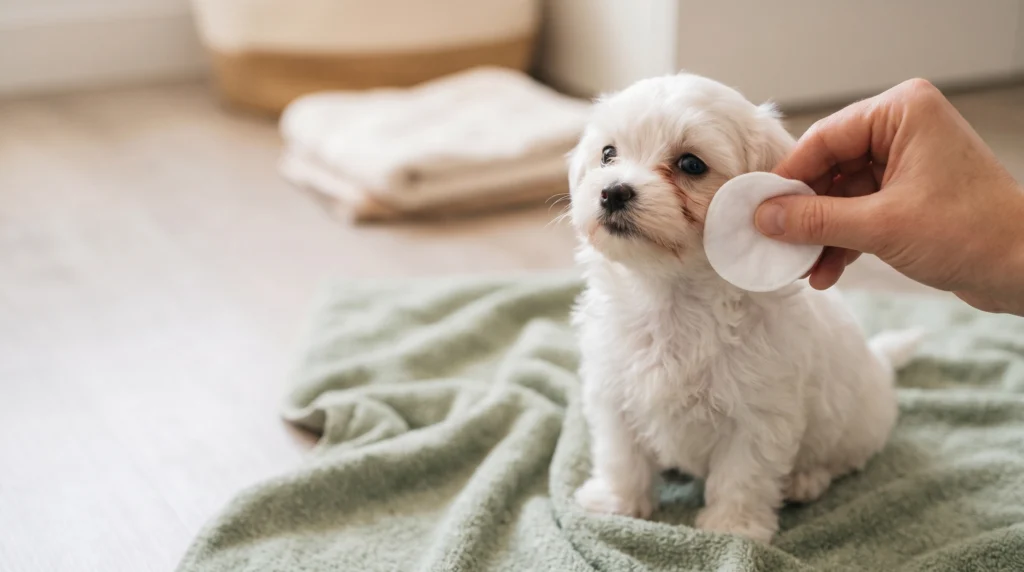
You lean in to kiss your tiny dog and notice them again: rusty brown streaks running down from the corners of the eyes. Maybe your kids spotted them first and asked if the dog is sick.
Here is the honest answer. Teacup dog tear stains are often just a change in fur color. But new tearing, heavy tearing or any sign of discomfort can point to an eye or tear duct problem, and that needs a vet before any stain remover.
This guide covers the warning signs to check first, why tiny dogs stain, a gentle cleaning routine the whole family can follow, and which products are better left on the shelf.
What Are Teacup Dog Tear Stains?
Tear stains are reddish brown marks in the fur under and beside a dog’s eyes. They form when tears keep soaking the same patch of hair. Tears carry a natural pigment called porphyrin, and when that fur stays damp, the pigment slowly tints it a rusty color.
Porphyrins are iron containing molecules the body makes when it breaks down old red blood cells. Dogs clear them out through tears, saliva and urine, so every dog has some in its tears, as MedVet’s tear staining guide explains. Vets call watery eyes and tears spilling onto the face epiphora. The word describes the overflow, not the reason behind it.
It helps to separate three things that often get mixed up:
- Staining is fur that has changed color.
- Watering is tears running onto the face.
- Discharge can be watery, sticky or thick. Its appearance alone does not identify the cause.
They can happen together, but they do not mean the same thing. Brown fur on its own cannot tell you whether the eye is healthy.
When Teacup Dog Tear Stains Need a Vet

Check this first, before you buy any cleaner. How fast you act depends on what you see.
Warning Signs and How Fast to Act
| What you notice | What to do |
|---|---|
| Old, unchanged staining that a vet has already checked | Keep up your cleaning routine and watch for changes |
| New staining, or an eye that has started to water | Call your vet to book a check |
| Squinting, holding an eye shut, pawing at the face, a red or cloudy eye, swelling near the inner corner, or yellow or green discharge | Get prompt vet care. Stop cosmetic cleaning until then |
| Red, sore, itchy or bald skin under the eye, or a bad smell | Get a vet check for a skin infection |
| A badly injured eye, or an eye that looks pushed out of its socket | Go to an emergency vet right away |
If you are unsure where your dog fits, call your clinic and describe what changed. With a dog this small, asking early is always better than waiting to see.
What Stain Color and Smell Can and Cannot Tell You
Color and smell are clues, not a diagnosis. Use them to decide whether to call, not to guess the cause.
| What you see | What it may mean |
|---|---|
| Rust colored fur, dry skin, and a comfortable dog | May be cosmetic, but looks alone cannot confirm the cause |
| Fur that is always wet, smells bad, or has sore skin under it | Needs a check for skin irritation or infection |
| Yellow or green discharge, or sudden watering | Needs a vet visit, not a stain remover |
VCA Animal Hospitals explains that constant moisture under the eye lets bacteria grow in the fur, which can lead to odor and skin infection. That is why a damp face matters even when the eye itself seems fine.
What the Vet May Check
Your vet will look closely at the eyelids, lashes, the surface of the eye, the skin under it, and the tear drainage. Which tests follow depends on what they find. Common ones include:
- Tear test. A small paper strip under the lower eyelid measures how many tears the eye makes.
- Dye test. A drop of harmless dye shows scratches on the eye’s surface. If it reaches the nose after a few minutes, the tear duct is open.
- Duct flush. If a blockage is likely, the vet may rinse the duct with saline. Some dogs need sedation for this.
To make the visit more useful, note when the change started, whether one or both eyes are affected, any rubbing or squinting, and any products you have already tried. Clear photos taken over a few days help too. If the problem is complex, your vet may refer you to a veterinary ophthalmologist, a vet who specializes in eyes.
Why Teacup Dogs Seem to Get Tear Stains
Teacup dogs are not a medical group of their own. Many are tiny versions of breeds with light coats and long facial hair, which makes staining easy to see. Each dog’s own eyelids, tear ducts and coat matter far more than its size.
“Teacup” Is an Informal Label
Teacup is a marketing word for a dog bred to be smaller than average, not an official size or breed. The Royal Kennel Club does not recognize any teacup breed and will not register a dog as teacup.
Most dogs sold as teacup are very small Chihuahuas, Yorkshire Terriers, Pomeranians, Maltese or Toy Poodles. Vets often name the Maltese and Poodle among breeds that stain. If you share your home with one of these breeds, our Teacup Maltese guide and Teacup Pomeranian guide cover their wider care.
Eyelids, Hair, and Tear Drainage
Tears are supposed to drain through two tiny openings at the inner corner of each eye, then down a narrow tube called the tear duct into the nose. That is why your own nose runs when you cry.
In some small dogs, the inner corner of the lower eyelid sits snug against the eye or rolls inward a little. That can squeeze the drain opening, so tears spill onto the face instead. Hair growing at the inner corner can also touch the eye, irritate it, and hold moisture against the skin.
These eyelid and hair problems are not always harmless. In a small 2006 study of 23 dogs that needed surgery for constant tearing, most were Shih Tzus, and all had hair at the inner corner rubbing against the eye, an inward turning eyelid corner, or both. Other eye problems, such as inflammation and damage to the surface of the eye, were also reported. That is a good reason to let a vet look before you treat staining as cosmetic.
Light Coats Show Stains Clearly
White and cream coats show porphyrin clearly, which is why stains look so dramatic on a Maltese. Darker dogs have the same pigment in their tears. It simply blends into the coat.
Other Causes of Tear Stains in Small Dogs
Beyond eyelid shape, tear stains usually start in one of two ways. Either tears cannot drain away, or the eye makes extra tears because something bothers it. Sometimes both happen at once.
Blocked Tear Ducts
A few dogs are born without one of the tiny drain openings, which vets call an imperforate punctum. The Merck Veterinary Manual describes this as an uncommon cause of watery eyes in young dogs.
A duct can also block later in life. Swelling from an infection or inflammation, trapped debris, or rarely a growth can stop tears from draining. VCA Animal Hospitals explains that blocked tear ducts mostly cause watery eyes and staining, but the moisture can lead to skin infection. A vet can test whether the duct is open and often flush it clear.
Eyelash and Eyelid Problems
Some dogs grow extra eyelashes along the eyelid edge, a condition called distichiasis. Others have an eyelid that rolls inward, called entropion. These problems can irritate the eye and increase tearing, although not every dog with extra lashes has symptoms.
This is one reason cleaning alone sometimes fails. A wipe can tidy the fur, but it cannot stop a lash from scratching the eye. These problems need a vet.
Allergies, Irritation, and Infection
Anything that irritates the eye can make it water, including pollen, dust and smoke. Food allergies can cause watery eyes in some dogs too, often alongside itchy skin or ears.
Thick yellow or green discharge can occur with infection or other eye problems and needs a vet’s assessment. VCA notes that puppies with a respiratory infection may also sneeze, cough, have a runny nose, eat less or seem tired.
How to Clean Teacup Dog Tear Stains Safely
Once your vet has ruled out an eye problem, simple care works best. Plain warm water on a soft pad, or a wipe made for use around dogs’ eyes, is all most dogs need. You do not have to buy a special stain remover.
The aim is to keep the fur cleaner and drier, which can help reduce new staining. How often you clean depends on your dog. Some need a wipe once a day, others twice, so ask your vet what suits yours.

A Gentle Cleaning Routine
- Pick a calm moment. Hold your dog on your lap or on a towel on the floor, since tiny dogs can get hurt falling from a table.
- Let your dog sniff the cloth first, then wash your hands.
- Dampen a soft, clean pad or cloth with warm water.
- Wipe the fur under the eye gently, moving down and away from the eye. Never press on the eye or put anything into it.
- If there is dried crust, hold the damp pad on it for a few seconds to soften it. Do not pick or pull at crust that is stuck.
- Use a fresh pad for the other eye.
- Pat the area completely dry with a clean, soft towel.
- Finish with praise or a small treat. If your dog struggles or seems sore, stop and ask your vet for help.
If your dog uses eye drops or ointment from the vet, ask before using any wipe near the eyes.
Leave Eye Trimming to a Groomer
Short hair near the eyes dries faster and is less likely to poke the eye. Trimming also removes old stained hair over time.
On a teacup dog, though, the eye sits very close to the scissors, and one sudden wiggle is all it takes. Ask an experienced groomer or your vet team to do a face trim, especially if hair is rubbing the eye or getting matted.
A Daily Plan That Helps Prevent New Stains
You may not be able to stop the tears, especially in a dog with a tiny face. Steady care can still reduce buildup and keep new staining down:
- Each day: wipe and dry the face as often as your vet suggests, and dry the muzzle after drinks if water drips.
- Each week: look closely at the eyes, the skin under them and the hair length near the corners.
- As needed: arrange face trims based on how fast the hair grows and your groomer’s advice.
- Every year: keep up regular checkups so your vet can catch duct, lash or eyelid problems early.
Kids can help in safe ways. They can hold the treats, hand over the towel, and tell an adult if they notice anything new, like a red eye or a bad smell. The wiping near the eyes is a job for adults.
Tear Stain Products and Home Remedies to Avoid
The safest tools are the boring ones. Be careful with anything that promises to make stains vanish “from the inside,” and with strong remedies anywhere near the eyes.
Antibiotic Tear Stain Powders and Chews
Some tear stain powders and chews have contained an antibiotic called tylosin, which is not approved for dogs or cats. The American Veterinary Medical Association reported in 2014 that the FDA warned makers of these tear stain products, and the FDA sent a similar warning letter to another maker in 2017.
The practical takeaway is simple. Do not give antibiotics just to whiten fur. Vets save antibiotics for real infections, partly because using them when they are not needed can help germs become harder to treat. Read ingredient labels, skip any product that lists an antibiotic, and ask your vet before giving any tear stain chew or powder.
Peroxide, Essential Oils, and Homemade Mixes
You may see tips online for wiping diluted hydrogen peroxide under the eyes or mixing your own cleaner. The American Kennel Club’s guide to cleaning a dog’s eyes advises avoiding hydrogen peroxide, alcohol based products, essential oils, soaps and homemade remedies, because they can irritate or even damage the eye.
On a face as small as a teacup dog’s, one drip can easily reach the eye. A product called “natural” is not automatically safe there either. If you want to try anything beyond warm water, ask your vet first.
Why Advice on Contact Lens Solution Conflicts
If you have read mixed advice about contact lens solution, you are not imagining it. PetMD suggests some solutions can be used around the eye, never in it. MedVet, whose article was reviewed by a board certified veterinary ophthalmologist, advises against using contact lens solution near a dog’s eyes.
When trusted sources disagree, choose the gentlest option. Plain warm water, or a product your vet recommends, avoids the guesswork.
Do Diet, Water, or Supplements Help?
Sometimes, but there is no single answer. A food change can help when a vet finds a food allergy or another diet problem behind the tearing. When the stain comes mainly from eyelid shape or a blocked duct, food is unlikely to fix it.
Food allergies can cause watery eyes in some dogs, usually along with itchy skin, ear trouble or tummy upsets. If your vet suspects one, they can guide you through a food trial. Always switch foods slowly.
You will also see advice to use filtered water. Some sites suggest minerals in tap water play a part, but there is little evidence for this. Filtered water is harmless to try, just do not expect it to solve the problem on its own.
Supplement research is starting to appear. A 2026 study in the journal Animals split 40 Bichons Frises and Poodles into four groups for 28 days. Three groups ate a diet with one of three Chinese herbal extracts, and one group ate the same diet without them. The supplemented groups had less staining than the control group. The study was small and short, and three of its authors work for the company that made the test diets. It does not show that tear stain chews sold in stores work, or that they suit your dog.
Before you add any supplement or change food, ask your vet two questions: what problem are we trying to fix, and what evidence supports this option?
Teacup Dog Tear Stains FAQ
Will my teacup puppy grow out of tear stains?
There is no reliable promise that age alone will fix them. When staining comes from face or eyelid shape, it often continues into adulthood. Teething is often blamed for puppy tear stains, but there is no good evidence for that, so do not write off new staining as teething. Ask your vet to check your puppy’s eyes early, since problems like a missing tear duct opening tend to show up in young dogs.
How long until tear stains fade?
There is no set timeline. Stained fur rarely turns fully white again with cleaning, so the old hair usually has to grow out or be trimmed. To judge progress, look past the color and ask three things:
- Comfort: does your dog seem free of eye discomfort?
- Moisture: is the fur under the eyes staying drier?
- New growth: is the hair close to the skin coming in cleaner?
Those changes may suggest improvement, but they do not confirm that an underlying eye problem has resolved. Keep up your vet’s advice, and avoid hopping between remedies just because the fur has not lightened yet.
Do tear stains hurt my dog?
The stain itself does not hurt, but what is behind it can. Skin that stays wet can become red, itchy, smelly or infected, and an underlying eye problem, such as rubbing lashes or an inward eyelid, can be uncomfortable too. Squinting, pawing or rubbing at the face are signs your dog may be sore.
Why is only one eye stained?
Staining on one side does not point to a single cause. It can come from irritation, a scratch, something stuck in the eye, or a blocked duct on that side, and only an exam can tell them apart. New watering in one eye deserves a call to your vet, especially if the eye looks sore.
Can teacup dogs with dark coats get tear stains?
Yes. Dogs with dark coats have the same pigment in their tears. The stains are just harder to see, so check for damp fur and any smell around the eyes instead.
Conclusion
Tear stains on a teacup dog are often a coat color issue, but they can also signal an eye, eyelid or tear duct problem. If the staining is new, getting worse, or comes with squinting, discharge, swelling or a bad smell, call your vet now rather than reaching for a remover.
Once your vet has checked the eyes, gentle daily care with warm water and a dry towel, plus regular face trims, can help keep new staining down. Skip antibiotic powders and harsh home remedies.

The TeacupDogWorld Editorial Team researches and creates practical guides about small and teacup sized dogs, including breed characteristics, grooming, nutrition, health, training, and everyday care. Our content is developed using reputable veterinary, breed club, and animal welfare sources to help dog owners make better informed decisions.