
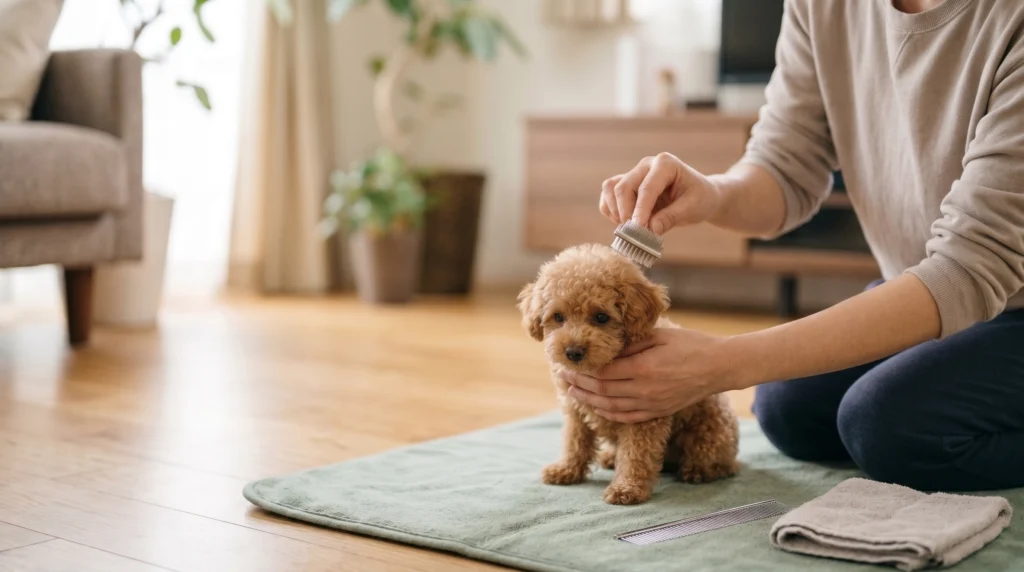
Teacup poodle grooming can feel like a lot. Your dog is tiny, but that curly coat never stops growing, and small tangles can turn into painful mats if they are not brushed out. On top of that, a dog this small can feel too fragile to handle.
The good news is that you do not need salon skills. You need a simple routine, a few small tools, and some safety habits made for a very little body.
This guide gives you exactly that. You will find a clear grooming schedule, a short tool list, and a step by step home routine. You will also learn how to keep a tiny dog safe, which haircuts are easiest, how to choose a groomer, and which problems mean it is time to call your vet.
What “Teacup” Means for Grooming
A teacup poodle is a very small Toy Poodle. “Teacup” is a sales label, not an official size or a separate breed.
The AKC Poodle breed standard recognizes three sizes: Standard, Miniature and Toy. The Toy is the smallest, standing 10 inches or under at the highest point of the shoulders. There is no teacup category, and no fixed weight that makes a dog a “teacup.” Sellers simply use the word for dogs at the small end of the Toy range.
So, what does that mean for grooming? Your dog’s coat is a normal Toy Poodle coat, so the basic toy poodle grooming routine applies. What changes is how you handle the dog. Very small dogs need particular care to avoid falls and chilling during grooming, and they usually do best with gentle, short sessions. This guide builds those extra safety steps into every part of the routine.
Want more background? Our Teacup Poodle guide covers size and health, and our Teacup vs Toy Dogs explainer breaks down the labels.
Teacup Poodle Grooming Schedule at a Glance
How often to groom a teacup poodle depends on the task and the length of the coat. Check the coat daily. Longer coats generally need daily brushing and combing, while a shorter trim may need less, so ask your groomer what your dog’s cut needs. Professional grooming is commonly scheduled every 4 to 6 weeks, and baths are usually planned around those visits, adjusted for dirt, coat condition and your vet’s advice.
Those timings come from VCA Animal Hospitals, which notes that most Toy Poodle owners book a professional clip about every six weeks, and from American Kennel Club (AKC) grooming advice.
| Task | Starting point | Adjust or ask |
|---|---|---|
| Check the coat and skin | Daily | Look more closely after outdoor play or getting dirty |
| Wipe the face and check the eyes | Daily | Use a soft, damp cloth |
| Brush and comb | Daily for a longer coat | Ask your groomer about a routine for a shorter trim |
| Brush teeth | Daily if you can | Use dog toothpaste only |
| Look at the ears | Weekly | Clean only when needed (see Step 6) |
| Nails | Based on growth; many dogs need a trim every few weeks | Ask for a demonstration before trimming at home |
| Bath | Usually at grooming visits, plus when dirty | Adjust for coat condition and vet advice |
| Professional groom | Commonly every 4 to 6 weeks | Depends on coat length, condition and style |
Treat this as a starting point. A dog in a longer cut, or one that loves muddy walks, may need more brushing or an extra bath.
Tools You Need to Groom a Teacup Poodle
You only need a small kit. Choose tools that suit your dog’s coat and size, and that feel comfortable in your own hands.
- Slicker brush: a flat brush with short, thin wire bristles that reaches down to the skin.
- Metal comb: used after brushing to find any tangles you missed.
- Dog shampoo and conditioner: made for dogs, not people.
- Soft towels: for blotting the coat dry.
- A dryer made for dogs: used on a cool or no heat setting, once your dog is comfortable with it.
- Dog toothbrush or finger brush and dog toothpaste.
- An ear cleaner your vet recommends, for the times cleaning is actually needed.
- Styptic powder: a powder that quickly stops bleeding if a nail is cut too short.
- A nonslip mat: gives your dog steady footing.
Clippers, scissors and nail trimmers take more skill. Scissors with rounded tips are not risk free near the eyes, paws or skin. Leave haircuts and close trims to a trained groomer, or ask a professional to show you how before trying them yourself. You do not need to give a full haircut to take good care of your dog at home.
How to Groom a Teacup Poodle at Home
Here is how to groom a teacup poodle in nine grooming tasks. You do not have to do them all in one sitting. Short, calm sessions work better for a tiny dog than one long one. Check the coat before bathing. Gently remove loose tangles, but have tight or painful mats assessed by a groomer or veterinarian before proceeding.
Step 1: Set Up a Safe, Warm Grooming Spot
Groom your dog on the floor or on a low, steady surface covered with a nonslip mat. Keep one hand on your dog at all times, and never walk away, even for a second.
Choose a warm room with no drafts. Have your tools and a few small treats within reach before you start, so you are never tempted to reach away from your dog.
Step 2: Brush and Comb Down to the Skin
A quick brush over the top of the coat is not enough. Poodles shed very little, so loose hair stays trapped in the curls instead of falling out. That is why tangles form close to the skin, and why you need to brush all the way down.
The easiest way is line brushing. Hold back most of the hair with one hand, brush a thin layer from the skin outward, then let down the next layer and repeat. Use light pressure, because a wire slicker brush can scratch delicate skin if you press hard.
When you finish an area, run the metal comb through it. If the comb glides from the skin to the tips, move on. If the comb catches, stop and inspect the area. Gently work through only loose tangles. If the hair is tightly matted, the skin moves with the knot, or your dog seems uncomfortable, ask a groomer for help instead of brushing the same spot again.
Give extra attention to the places where tangles form fastest: behind the ears, under the legs, the chest, the collar area and the base of the tail. Grooming time is also a good chance to check the skin for cuts, bumps, fleas or ticks, as the AKC suggests.
Step 3: Give a Quick, Gentle Bath
Check the coat first. Water makes tangles shrink and tighten, so gently work out loose tangles before the bath, and leave any tight mats for a groomer or vet.
Use lukewarm water and a gentle dog shampoo. Work it down to the skin, then rinse until the water runs clear, since leftover soap can irritate the skin. A conditioner made for dogs can make brushing easier afterward.
Keep shampoo and direct water spray away from the eyes, nose and ears, as the ASPCA’s grooming tips advise. Use a soft, damp cloth to clean the face.
Keep the bath short. A tiny dog gets cold quickly once wet, so have warm towels ready before you turn on the water.
Step 4: Dry the Coat Completely
A damp Poodle coat mats easily, and a small wet dog chills fast. VCA Animal Hospitals points out that a Toy Poodle’s small body makes it vulnerable to chilling.
Start by pressing the coat gently with a towel instead of rubbing, which creates tangles. If you use a dryer, the AKC recommends one made for dogs rather than a human hair dryer. Introduce it slowly, starting with it switched off, then letting your dog get used to the sound and airflow. Avoid heat, keep it moving, and keep the airflow away from the face and ears.
Groomers often use a method called fluff drying, which simply means brushing the coat while you dry it. This straightens the curls slightly and leaves the coat smooth and fluffy. Keep going until the coat is dry right down to the skin.
Never leave your dog alone near a dryer, and never place a tiny dog in an enclosed heated dryer box. You will read more about this in the groomer section below.
Step 5: Clean the Face and Eyes
Wipe the face once a day with a soft, damp cloth, moving gently away from the eyes. Keep hair trimmed or pulled back so it does not poke the eyes. VCA notes that stray hair or eyelashes can irritate the surface of a Poodle’s eye.
Many Poodles get tear stains, which are reddish brown marks under the eyes. The color comes from a natural pigment in tears called porphyrin. Excess tearing has a medical name, epiphora, and it can have several causes.
Mild, long term staining is often just cosmetic. But sudden heavy tearing, thick discharge, redness or squinting can mean pain or an eye problem, so see your vet.
For causes, cleaning tips and warning signs, read our guide to Teacup Dog Tear Stains.
Step 6: Check and Clean the Ears
Once a week, lift each ear flap, look inside and take a gentle sniff. Watch for changes: redness, swelling, a strong smell, discharge, or signs that touching the ear hurts.
Checking does not mean cleaning. Cornell’s College of Veterinary Medicine notes that healthy, normal ears only need cleaning when you see dirt or debris, and that cleaning too often can irritate them. Clean only when needed and as your vet advises, wiping just the part of the ear you can see. Never push cotton swabs into the ear canal, and avoid cleaners with alcohol or hydrogen peroxide. If an ear is red, painful or producing unusual discharge, contact your vet before cleaning.
Poodles grow hair inside their ears, and this is where expert advice differs. VCA says this hair may need to be plucked out or clipped. However, some board certified veterinary dermatologists say it depends on the dog and caution against routinely plucking hair from healthy ears, because it can irritate the canal. The safest choice is to ask your vet what your dog’s ears need.
Step 7: Trim the Nails
The AKC says most dogs need a nail trim about every 3 to 4 weeks, though it depends on how fast your dog’s nails grow and wear down. If you hear clicking on hard floors, the nails are likely too long.
Inside every nail is the quick, the living part with blood vessels and nerves. Cutting into it hurts and bleeds. On light nails the quick looks pink, and you trim only the tip in front of it. On dark nails, the quick is difficult to judge, so ask a groomer or veterinary professional to demonstrate before you try a trim yourself.
If you nick the quick, press a little styptic powder on the nail and stay calm. If the bleeding does not stop, call your vet.
If you feel nervous, the AKC’s chief veterinarian suggests asking your vet or a vet tech to show you how the first time. A grinder is another option, but your dog will need a gradual introduction to its sound and vibration.
Step 8: Brush the Teeth
Tooth care deserves a regular spot in the routine for tiny dogs. In a study of over 3 million dog records from a US veterinary hospital chain, extra small breeds were up to five times more likely to be diagnosed with gum disease than giant breeds.
Brush daily if you can, using a small dog toothbrush or finger brush and toothpaste made for dogs. Human toothpaste is not safe for dogs to swallow. Start slowly by letting your dog lick the paste, then brush a few teeth at a time.
Brushing helps, but it does not replace dental checkups. Your vet can tell you when a professional cleaning is needed.
Step 9: Tidy the Paws and Sanitary Area
Check the paw pads and the area under the tail for trapped dirt and tangled hair. The ASPCA warns that mats around the rear end can trap feces, so this area matters for comfort and hygiene.
Leave trimming close to the skin, between the pads or around the rear, to a trained groomer unless a professional has shown you how to do it safely.
Safety Rules for Grooming a Tiny Dog
Some risks need particular attention in very small dogs. These habits can help reduce them.
Prevent Falls
Small dogs can break a leg in a short fall. A review in the Canadian Veterinary Journal linked lower front leg fractures in small dogs mainly to falls, and the typical case was a small dog jumping out of its owner’s arms.
To keep your dog safe:
- Groom on the floor or on a low surface instead of a tall table.
- Hold your dog close against your body when you lift it, with one hand under the chest and one under the back end.
- Never leave your dog alone on a table, bed or sofa during grooming.
- Set your dog down before you reach for a tool.
Keep Them Warm and Fed
A small body loses heat quickly, especially when wet. Keep the room warm, dry your dog fully, and stop if your dog starts to shiver.
Very small puppies also have a real risk of low blood sugar, called hypoglycemia. VCA advises feeding Toy Poodle puppies often to help prevent it. Keep grooming sessions short for young puppies, and ask your vet how to time meals around grooming days.
If a puppy seems weak, wobbly, trembling or unusually sleepy, stop grooming and call your vet right away. This can be an emergency.
Protect the Neck
Nothing should pull on your dog’s neck while you groom. Toy breeds can be prone to tracheal collapse, a weakening of the windpipe, and VCA advises using a harness instead of a collar for dogs with this condition.
At home, steady your dog with your hands rather than a leash or loop around the neck. If your dog cannot remain comfortable with gentle handling, pause and ask a groomer to demonstrate an appropriate approach.
How Kids Can Help Safely
Children often love helping with a small dog, and grooming time can teach them gentle care. VCA notes that Toy Poodles are usually good with children, but very young or rough children can hurt them during play.
Safe jobs for kids include:
- Sitting on the floor while an adult holds the dog in their lap.
- Handing over treats as rewards.
- Gently brushing an easy spot like the back while an adult watches.
- Counting brush strokes or helping fetch towels.
Kids should never carry the dog during grooming, and they should never use scissors, clippers, nail trimmers or a hair dryer on the dog.
How to Handle Mats in a Teacup Poodle Coat

If a tangle is small and loose, you can usually work it out at home. If it is tight against the skin, it is a job for your groomer or vet.
That line matters because mats are more than a cosmetic problem. An ASPCA veterinarian warns that even mild mats can irritate the skin and lead to infected sores. Fleas and ticks can hide deep inside them. Mats near the rear end can trap feces, and severe mats can wrap so tightly around a leg that they cut off blood flow.
A tangle is a loose knot you can pull apart with your fingers. A mat is a tight, felted clump stuck close to the skin. When many mats join together into one sheet, groomers call it pelting.
For a small, loose tangle:
- Spray it lightly with a detangling spray made for dogs.
- Hold the hair near the skin so you do not pull on it.
- Tease the tangle apart with your fingers.
- Comb it out slowly, starting at the tips and working toward the skin.
Stop if your dog flinches or cries. Never cut a mat out with scissors. The ASPCA warns that a pet can jerk suddenly, causing a deep cut. A mat that will not brush out should be clipped off by a groomer or vet, and a badly matted dog may need a full short clip, sometimes with sedation given by a vet.
Prevention is easier than removal. A suitable brushing routine and a manageable trim help reduce matting.
Easy Teacup Poodle Haircuts for Busy Families

A short pet clip is often a practical choice for families wanting easier coat maintenance. VCA notes that most Toy Poodle owners choose a pet clip, where the hair is fairly short all over.
Names like “puppy cut” or “teddy bear cut” mean different things in different salons, so they are only a starting point. Bring a photo, and talk through the actual length you want on the body, legs, face and ears.
| What you want | Example names you may hear | What to clarify with the groomer |
|---|---|---|
| Short, practical trim | Short pet clip, puppy cut | Length on the body, face and legs |
| Fuller, rounded look | Teddy bear cut | Which areas stay longer and need extra brushing |
| Short body with fuller legs | Lamb cut | How to keep the longer leg hair free of tangles |
The fancy styles with pompons, like the Continental and English Saddle clips, are show ring trims described in the breed standard. They take a lot of work and are not needed for a family pet.
A shorter cut means less brushing, but it does not remove the rest of the routine. Nails, ears, eyes and teeth still need the same care.
Before you agree on a style, ask one practical question: “Can you show me the brushing this cut will need at home?”
Teacup Poodle Grooming From Puppy to Senior
The basic routine stays the same for life, but the focus shifts as your dog grows up and grows older.
Puppies
Teacup poodle puppy grooming is mostly about building trust. Start handling your puppy’s paws, ears and mouth gently from the first day home, so grooming feels normal later.
The AKC suggests a slow nail routine: let your puppy sniff the clippers, then touch them to the paws, then trim one tiny tip, with treats and praise at each step. You can use the same idea for the brush and dryer.
Keep sessions very short and follow the safety rules above, since young toy puppies are the most at risk of chilling and low blood sugar. There is no single right age for a first salon visit. Ask your vet when your puppy’s vaccinations make it safe.
Seniors
Older dogs often do best with a shorter, easier cut and shorter sessions. Give them a soft, nonslip surface and extra breaks.
Use brushing time to feel for anything new. Lumps, bumps, sores or skin changes are worth showing your vet, because you may notice them first.
How to Choose a Groomer for a Teacup Poodle
A good groomer for a tiny dog is experienced with very small breeds, dries dogs safely, and never leaves them unattended. It is worth asking a few questions before your first booking.
Here’s the important part: ask how your dog will be dried, and whether it is ever left alone in a dryer or kennel. A tiny dog should never sit unattended in an enclosed heated dryer. Rules for groomers vary by state, so it is up to you to ask.
Questions to ask:
- How much experience do you have with very small dogs?
- How do you dry small dogs? Do you ever use heated cage dryers?
- Is a dog ever left alone on a table or in a dryer?
- How do you handle a dog that needs breaks?
- What health information and vaccination records do you need?
- What happens if you find mats?
- Will you contact me before changing the agreed trim or adding charges?
- Can you show me the home care this cut needs?
- Do any of your staff hold a grooming certification?
What about cost? Prices depend on where you live, your dog’s coat condition and the services you choose. Matted coats usually cost more because they take longer and need extra care. Regular visits, plus good brushing at home, often keep each appointment simpler.
When to Call Your Vet
Grooming is often when families first notice a health problem. Call your vet if you see any of these:
- Red, raw, wet or broken skin, especially under a mat.
- A strong smell, discharge, redness or a lot of head shaking from the ears.
- Eye discharge, squinting, redness, or sudden heavy tearing.
- Bad breath, red or bleeding gums, or loose teeth.
- Limping or crying after a jump or fall.
- New lumps or bumps.
- Nail bleeding that will not stop.
- In a puppy, weakness, trembling, wobbliness or unusual sleepiness. This can be a sign of low blood sugar and needs urgent care.
Teacup Poodle Grooming FAQ
Can I groom my teacup poodle at home?
Yes. Most families handle brushing, baths, face cleaning, ear checks and tooth brushing at home, and many learn nail trims after a professional shows them how. Full haircuts are harder to do well on a tiny, wiggly dog, so many owners leave clipping to a groomer. Home care between visits keeps those appointments shorter and more comfortable.
Can I use human shampoo on my teacup poodle?
It is safest to choose a gentle shampoo made for dogs. One AKC article quotes a Poodle groomer who uses human shampoo, but many products for people are made for human skin and may be harsher than a small dog needs. If your dog has itchy or sensitive skin, ask your vet for a recommendation.
Should I shave my teacup poodle in summer?
A short clip can make hot weather care easier, but a close shave down to the skin is rarely needed. Ask your groomer to leave a little length so the skin is not fully exposed. On hot days, keep your dog in the shade, offer water, and skip long outings in the heat.
What if my Poodle will not tolerate grooming?
Pause instead of pushing through. Go back to an easier step, like a few seconds of gentle handling with a treat, and build up slowly. A groomer can help with gradual practice. If the resistance is new, or one area seems sore, see your vet first in case something hurts.
Final Thoughts
Teacup poodle grooming comes down to small, steady habits. Check the coat often, brush on the routine your dog’s cut needs, keep up with teeth and nails, and dry the coat fully after every bath.
Just as important, groom with a tiny body in mind. Stay low to the floor, keep your dog warm, keep sessions short, and never let anything pull on the neck.
If you are unsure about ears, eyes, mats or anything that seems off, ask your vet or a trusted groomer. Start with the schedule table above, try one short session this week, and build from there.

The TeacupDogWorld Editorial Team researches and creates practical guides about small and teacup sized dogs, including breed characteristics, grooming, nutrition, health, training, and everyday care. Our content is developed using reputable veterinary, breed club, and animal welfare sources to help dog owners make better informed decisions.