
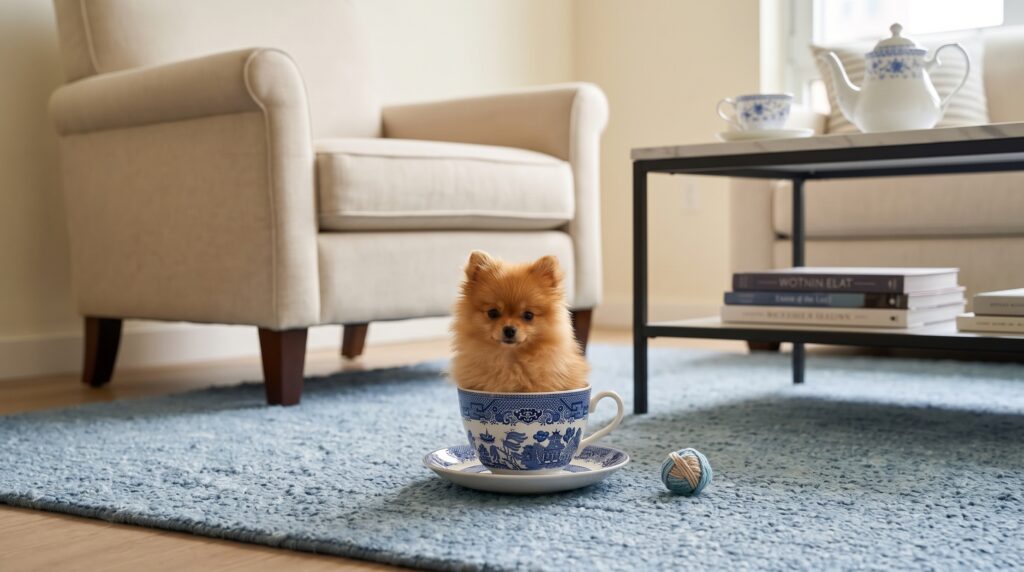
You live in an apartment, and you’d love a tiny dog to share it with. A small dog seems like the perfect fit. But then the questions start. Will it bark at every sound in the hallway? How do you handle potty breaks from the tenth floor? What happens while everyone is at work?
The good news is that many small dogs do well in apartments. But size is only part of the story.
This honest guide to teacup dogs for apartments covers whether tiny dogs really suit apartment life and what to look for before you choose. You’ll also find a shortlist of small breeds to compare, plus tips on safety, potty training, barking, workdays and renting with a dog. At the end, there’s a simple checklist to help your family decide.
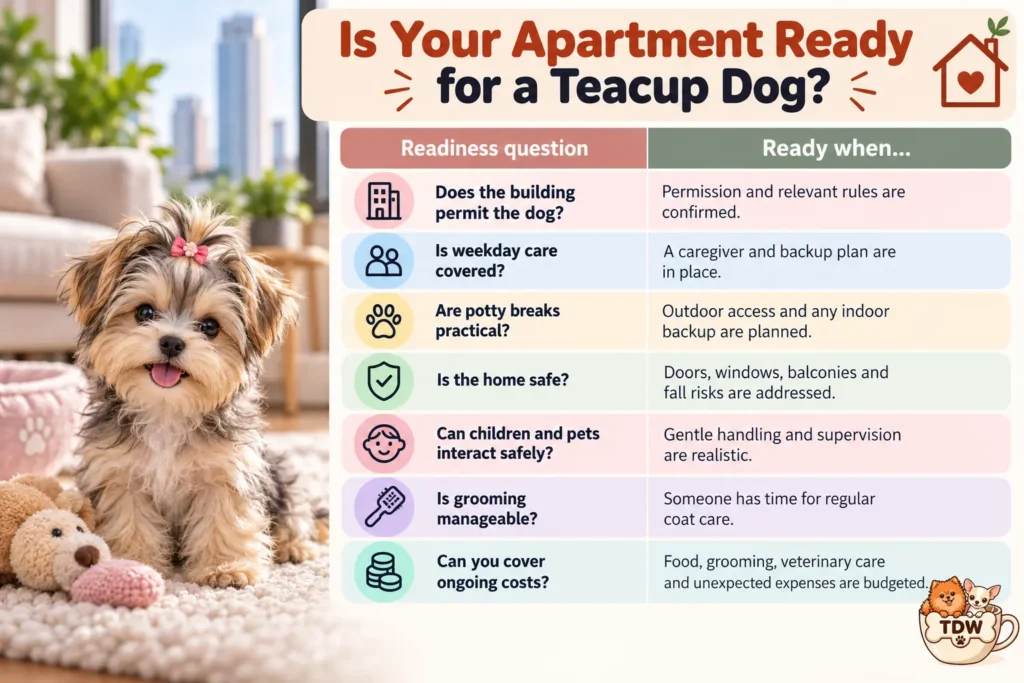
Are Teacup Dogs Good for Apartments?
Tiny dogs can be great apartment dogs because they need little space. But how much a dog barks, how well it handles time alone, how easy it is to potty train and how fragile it is matter far more than size. Often, a dog at the typical size for its breed is the safer choice.
The American Kennel Club (AKC) says the same thing in its guide for apartment dwellers. Space isn’t the only thing to think about. You also need a dog that won’t bark nonstop and can stay calm and polite around neighbors in elevators, stairwells and lobbies.
Before you look at breeds, ask your family three questions:
- Can someone care for the dog through a normal weekday?
- Can we handle a dog that reacts to hallway noise, visitors and other pets?
- Can everyone in our home handle a tiny dog gently?
What “Teacup” Really Means
“Teacup” is not a breed or an official size. It’s a sales word for dogs that are smaller than average.
The Royal Kennel Club in the UK explains that teacup breeders often breed from the very smallest dogs, sometimes the runts of the litter, and those dogs may not be the healthiest. Very tiny dogs can also have more health problems, such as low blood sugar in puppies.
This guide compares recognized small breeds that apartment owners may come across when searching for teacup dogs. These breeds are not officially recognized “teacup” varieties. A healthy dog at the normal size for its breed is already small, and often a better choice than one bred to be extra small.
What Makes a Tiny Dog a Good Apartment Dog
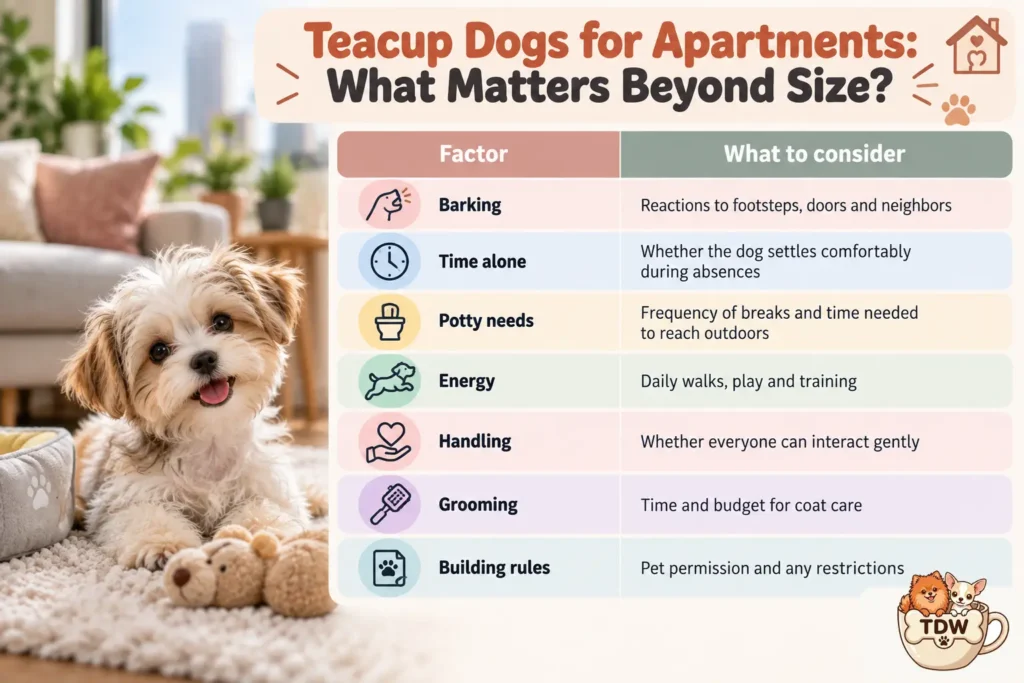
Before you look at breeds, think about how a dog will fit your building and your daily life. These are the things that matter most.
| What to look at | Why it matters in an apartment | What to ask |
|---|---|---|
| Barking | Neighbors hear everything through shared walls | Does this dog bark at every noise? |
| Energy | A bored dog may bark, chew or scratch doors | How much play and walking does it need? |
| Comfort alone | Some small dogs get very upset when left | How long can this dog be alone? |
| Trainability | Potty training in a high-rise takes patience | Does this dog learn routines easily? |
| Fragility | Tiny dogs get hurt by falls, doors and feet | Can our household handle a delicate dog? |
| Grooming | Long coats need regular brushing | Do we have time for coat care? |
| Building rules | Some buildings limit breeds, size or number of pets | What does our lease allow? |
Every dog is an individual, even within one breed. If you can, meet the actual dog you’re thinking about, or talk to people who own one, before you decide.
Small Dog Breeds to Consider for Apartments
This shortlist is not a ranking. It’s a way to compare the care each breed usually needs. Breed traits can’t promise how one dog will behave.
The sizes below come from each breed’s official standard, which is the official description of what the breed should look like. These are show guidelines, not a vet’s healthy weight for your pet, so a dog a little outside them can still be healthy.
| Breed | Official size | Coat | Apartment pluses | Things to watch |
|---|---|---|---|---|
| Chihuahua | Not more than 6 pounds | Short or long | Needs very little space | Can be barky, feels the cold |
| Yorkshire Terrier | Not more than 7 pounds | Long and silky | Small, lively, loyal | Can bark, needs coat care |
| Maltese | Under 7 pounds | Long, silky, mostly white | Gentle, loves to be close | Daily brushing, tear stains |
| Pomeranian | 3 to 7 pounds | Thick double coat | Lively, fun indoors | Can bark a lot, sheds |
| Toy Poodle | 10 inches or less at the shoulder | Curly | Smart, learns routines | Regular grooming |
| Papillon | 8 to 11 inches at the shoulder | Long and silky | Friendly, very trainable | Needs regular exercise and mental engagement |
Chihuahua
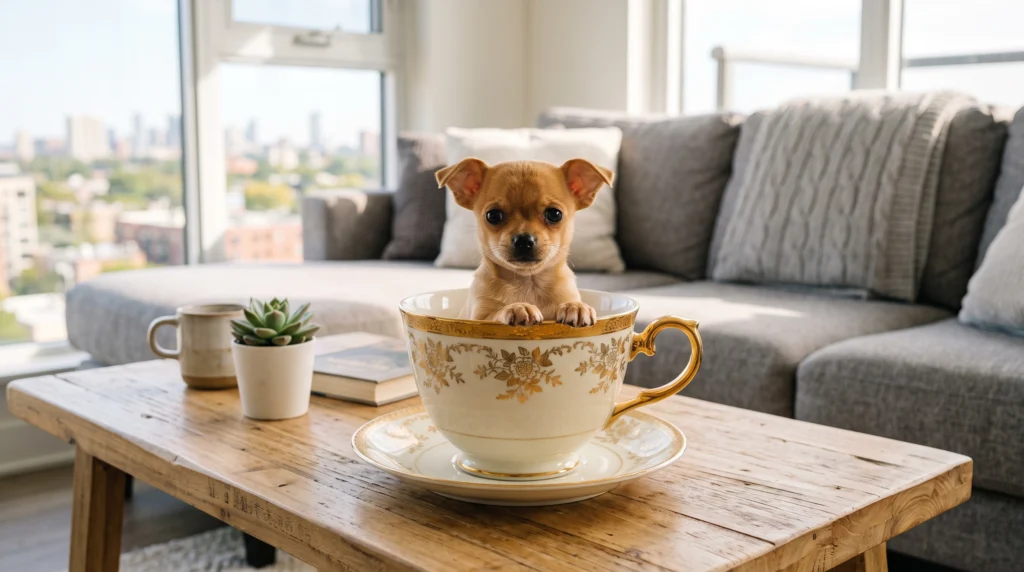
The Chihuahua is one of the smallest breeds of all. The official breed standard says it should not weigh more than 6 pounds.
A Chihuahua needs very little room. But many are bold and quick to bark at strangers and sudden sounds, and their tiny bodies are easy to hurt. They also feel the cold, so a warm sweater helps in winter. If grooming time is short, a smooth-coat Chihuahua needs less brushing than a long-coat one.
Read more in our teacup Chihuahua guide
Yorkshire Terrier
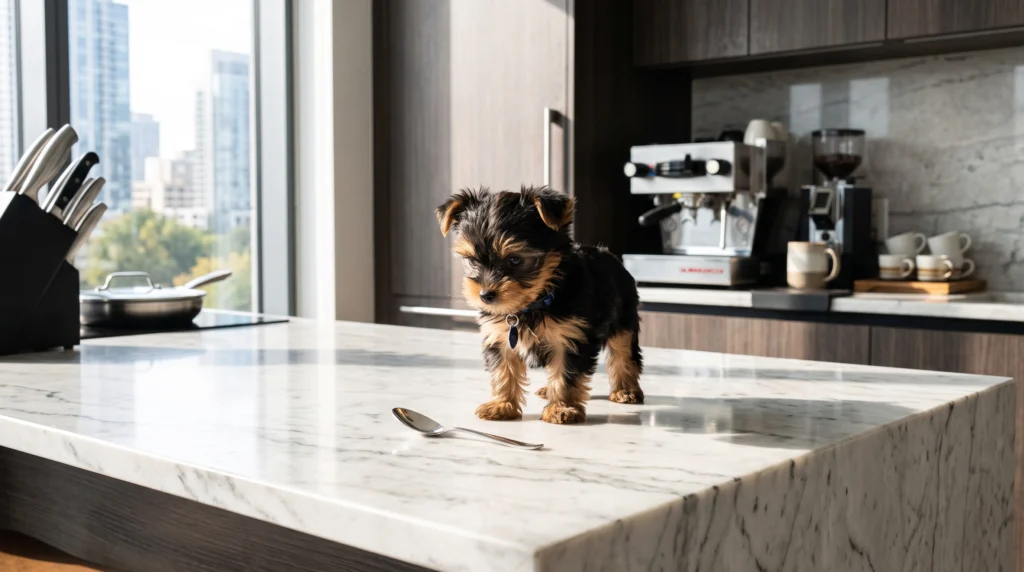
The AKC breed standard says a Yorkshire Terrier should not weigh more than 7 pounds. These little dogs are lively, loyal and full of confidence.
They’re also alert, so many will bark at sounds and visitors. Early training helps a lot in an apartment. Their long, silky coat needs regular brushing, and many owners keep it trimmed short to make care easier.
Family question: Does an active little dog fit our real evening routine?
Maltese

The AKC breed standard calls for a Maltese under 7 pounds. Most are gentle, affectionate dogs that love sitting close to their family.
That long coat is the main job. It tangles easily and needs brushing every day. A light-colored face also shows tear stains, so plan on a quick daily wipe.
Family question: Who will handle company and grooming on our busiest days?
Pomeranian
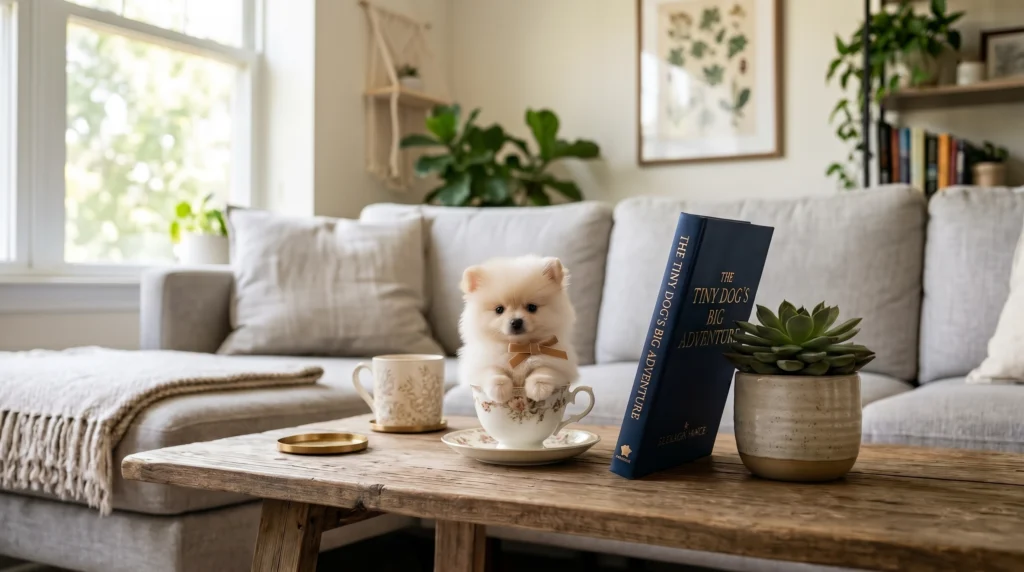
The Pomeranian standard describes a dog of 3 to 7 pounds. Pomeranians are lively, curious and fun to have around.
But many love to bark at sounds and visitors, so early training matters. Their thick double coat also sheds and needs regular brushing. Learn more in our guide to the teacup Pomeranian.
Family question: Can we keep up with both brushing and steady training?
Toy Poodle
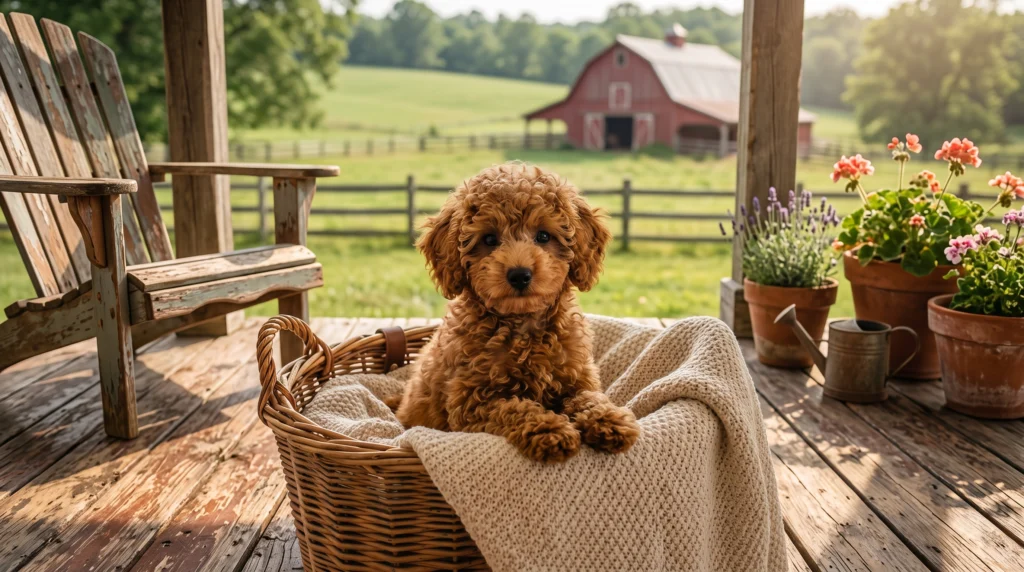
The Toy Poodle is the smallest Poodle, standing 10 inches or less at the shoulder. Poodles are known for being smart, and many learn house rules and routines quickly, which is a big help in an apartment.
But smart dogs need things to do. Plan for training games and puzzle toys, not just cuddles. Their curly coat keeps growing, so plan for regular grooming visits too.
Family question: Would we enjoy giving this dog games and training every day?
Papillon
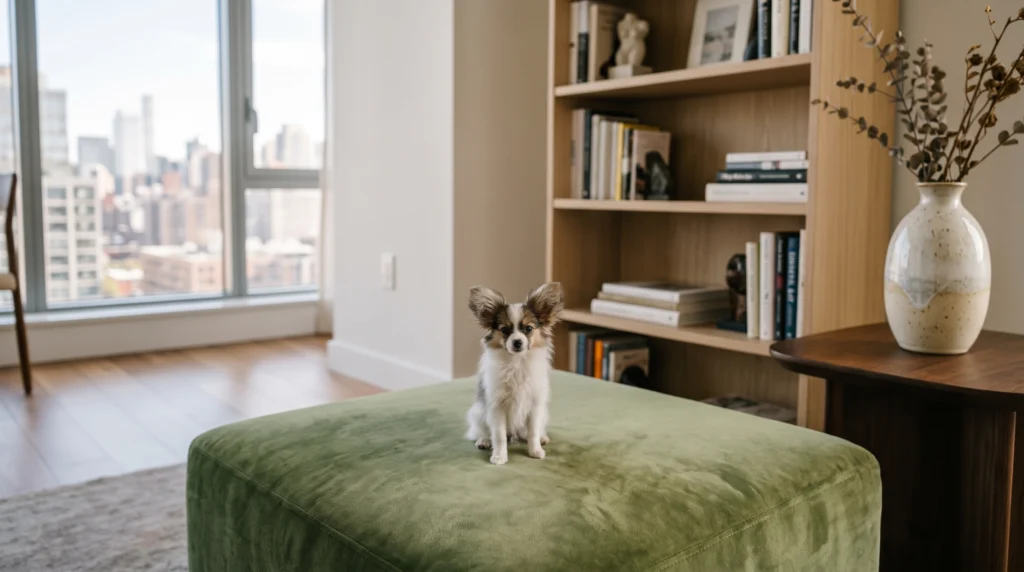
The Papillon breed standard calls for a dog 8 to 11 inches tall at the shoulder and describes the breed as happy, alert and friendly. Papillons are known for their big, butterfly-shaped ears.
They’re smart and easy to train, which helps with apartment manners. They are active little dogs that need regular exercise and mental engagement.
Family question: Do we have time for daily play and short training sessions?
Morkies and Other Small Mixes
Mixes like the Morkie (a Maltese and Yorkshire Terrier mix) are often sold as “teacup” dogs. With a mix, no one can promise the adult size. Ask to meet the parents and see their weights. A small adult mixed-breed dog from a shelter is also worth a look, because you can see its real size.
Slightly Bigger Breeds to Consider
If you worry about how fragile a very tiny dog is, look at small breeds that are a little sturdier:
- Shih Tzu: a friendly, people-loving lapdog. The AKC standard gives an ideal adult weight of 9 to 16 pounds. With a short face and heavy coat, Shih Tzus handle heat poorly, so keep your home cool in summer.
- Havanese: cheerful and social, with a soft coat.
- Bichon Frise: a happy dog with a curly, mostly white coat.
- Cavalier King Charles Spaniel: gentle and affectionate.
These options may be larger than the tiniest dogs on your shortlist. Check the individual dog’s size and care needs against your household and building requirements.
What about allergies? No dog is truly hypoallergenic. The AKC explains that every dog makes allergens, even low-shedding breeds. If someone in your family has allergies, talk to an allergist and spend time with the breed before you commit.
Apartment Safety for Teacup Dogs
A tiny dog can get hurt in ways a bigger dog never would. A few simple habits keep your dog safe at home and in shared spaces.
Doors, Hallways and Elevators
- Always use a leash in hallways, lobbies and elevators, or carry your dog.
- Watch closing doors. Elevator doors and heavy apartment doors can catch a tiny dog.
- Put a pet gate near your front door so your dog can’t slip out when someone comes in.
- Use a harness instead of a collar. VCA Animal Hospitals explains that small breeds can have a weak windpipe, and pressure on the neck can make coughing worse.
Outside, stay close. Some wild animals, like hawks and coyotes, may see a very tiny dog as prey.
Balconies
Balconies can be dangerous for small dogs. A vet quoted by PetMD says dogs can squeeze through balcony railings. Falls can cause broken bones and injuries inside the body, and a dog that falls may run off and get lost.
The AKC’s balcony advice suggests these steps:
- Cover railing gaps with plexiglass, netting or gates.
- Move chairs and tables away from the railing so your dog can’t climb up.
- Keep the balcony off-limits if your dog is a jumper or an escape artist.
And never leave your dog alone on the balcony.
Furniture, Floors and Small Hazards
- Use pet steps or ramps so your dog doesn’t jump off beds and couches.
- Put rugs on slippery floors to help tiny legs grip.
- Look down before you step. In a small space, a tiny dog is often right under your feet.
- Get down to your dog’s level and check for loose cords, medicines, small objects and open windows.
Potty Training a Teacup Dog in an Apartment
Potty training without a yard takes a little planning, but it works. The AKC has a helpful guide on potty training in a high-rise. Here’s a simple plan based on it:
- Set a schedule. Take your puppy out often, especially after waking up, after meals, after play and before bed.
- Be ready to go. Keep the leash and bags by the door so you can leave fast.
- Pick one potty spot inside. Put a pee pad or indoor dog potty in the same place every time, so your dog learns where to go.
- Try a grass patch. If you have a patio or balcony that’s safely enclosed, a patch of real or fake grass can work.
- Praise right away. Give a treat and happy words at the potty spot, not after you get back inside.
- Never punish accidents. Clean up with an enzyme cleaner so the smell doesn’t draw your dog back, and move on.
Keep the routine the same every day. Toilet needs vary with age, health and training. Young puppies need frequent opportunities, so account for elevator waits and the distance outside. An indoor potty spot can help, even if you plan to go outside most of the time. For young puppies still getting their vaccines, ask your vet where it’s safe to go outside.
If an adult dog who was fully trained suddenly starts having accidents, call your vet. It can be a sign of a health problem.
Barking, Neighbors and Time Alone
In an apartment, barking is often the biggest problem. Footsteps, doors and voices in the hallway can set off a small, alert dog.
How to Reduce Barking
- Watch for the trigger. Notice what sets your dog off, such as footsteps, dogs outside or you leaving. Knowing why helps you plan.
- Move the dog’s bed. Put its resting spot away from the front door.
- Block the view. If your dog barks at what it sees out the window, cover the lower part of the glass.
- Reward calm moments. When your dog hears a noise and stays calm, give a treat.
- Teach a routine. Train your dog to go to a mat or bed when someone knocks, and practice it the same way every time.
- Use rewards, not punishment. The American Veterinary Society of Animal Behavior supports reward-based training. Avoid harsh methods like shock collars.
If barking stays intense or hard to manage, ask a trainer who uses reward-based methods for help.
Workdays and Time Alone
Many small dogs love company and can get upset when left for long hours. Start with absences short enough for your dog to remain comfortable. Increase time gradually, and seek veterinary or qualified behavior support if your dog shows distress. VCA Animal Hospitals explains more about dogs that struggle when left alone.
A pet camera can show you whether your dog rests or gets upset while you’re gone. Barking alone doesn’t always mean a dog can’t cope, but it’s worth checking.
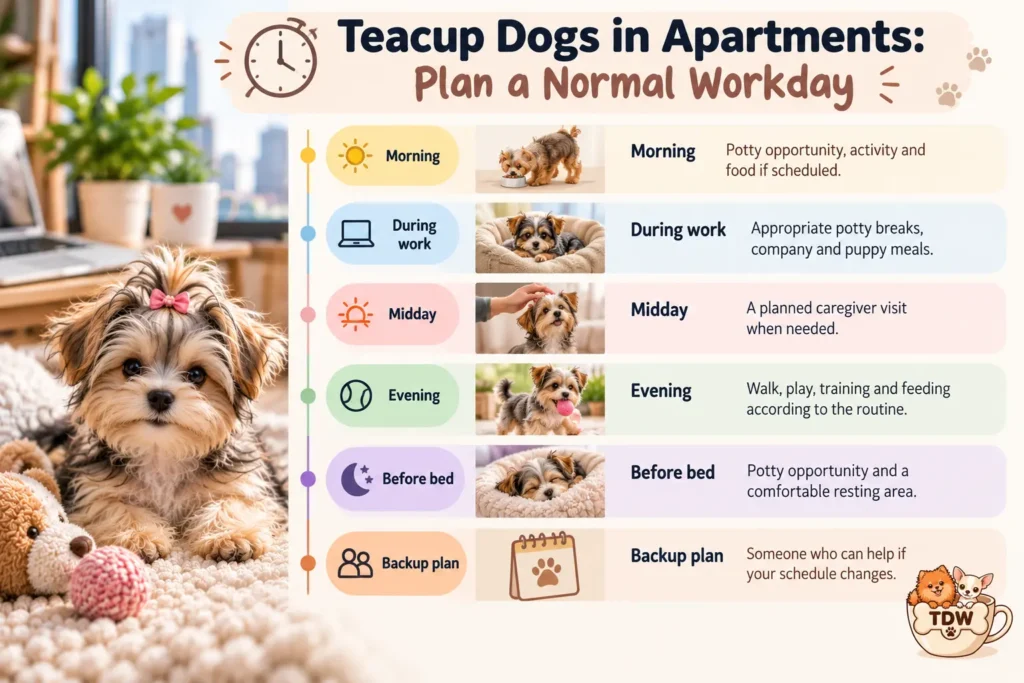
Before your dog comes home, plan a normal weekday:
| Part of the day | What your dog needs | Who will do it (plus a backup) |
|---|---|---|
| Morning | Potty break, play, and a meal if due | Name both people |
| Work hours | Potty breaks, meals for puppies, and company | Family, a dog walker or a neighbor |
| Evening | Walk, play and training | Decide who does each job |
| Night | Potty access and a quiet place to sleep | Plan for puppies needing night breaks |
A dog walker can cover potty breaks, but a dog that hates being alone may still need more company.
Kids and Other Pets
A tiny dog can be hurt by a squeeze, a fall or rough play, even from a loving child. Kids also need help learning how to act around dogs.
Simple house rules keep everyone safe:
- An adult always watches young children with the dog, even a dog they know well.
- Kids sit on the floor to hold or pet the dog. Only adults lift it.
- Leave the dog alone while it eats or sleeps.
- Give the dog a quiet resting spot where no one bothers it.
- Watch closely when other pets are around, and keep them apart when you can’t supervise.
Exercise and Play in a Small Space
Plan walks, play and training around your dog’s age, health and energy level. Adjust the routine with veterinary guidance when needed.
Easy ideas for apartment play:
- A slow sniffing walk, where your dog gets to explore
- Gentle fetch down a hallway
- Puzzle toys that hide treats
- Short training games, like “sit,” “down” and “come”
- Hide-and-seek with toys or treats
Choose toys that are the right size for a tiny mouth. Watch the weather too. Tiny dogs lose heat quickly in the cold and can overheat in summer.
Grooming, Feeding and Vet Care
Small dogs eat small meals, but their care still adds up. Before you commit, find out local prices for grooming, vet visits, dental care and a dog walker.
Grooming. Ask a groomer to show you how to care for your dog’s coat at home between visits.
Feeding. Ask your vet what food, how much and how often. Never cut back a puppy’s food to keep it small. Tiny puppies need small meals often. Veterinary Partner explains that very small toy puppies can run low on blood sugar between meals, especially when cold or stressed. Weakness, shaking, wobbling or a seizure needs a vet right away.
Teeth. Small dogs often have crowded teeth and need extra dental care. Ask your vet about brushing at home and regular checkups.
Renting With a Teacup Dog
Before you bring a dog home, check your lease. Even small dogs can break the rules.
Look for:
- Whether pets are allowed at all
- Breed limits
- Weight or size limits
- How many pets you can have
- Extra costs, such as a pet deposit or monthly pet rent
Always get permission in writing before your dog moves in.
Looking for a new place? The ASPCA suggests making a “pet resume” to show landlords your dog will be a good neighbor. Include:
- Friendly photos of your dog
- Any training classes or skills
- References from your vet, trainer, groomer or a past landlord
- Vet records, such as vaccines and checkups
Once you move in, be the neighbor you’d want next door. Keep barking down, clean up after your dog and use a leash in shared spaces.
Should You Get a Puppy or an Adult Dog?
With an adult dog, you can see its real size. Its current caregiver may also share useful observations about barking, handling and time alone, although behavior can change after moving. A puppy needs more care while it learns.
| Think about | Puppy | Adult dog |
|---|---|---|
| Size | Still growing, so the final size isn’t certain | You can see its real size |
| Potty training | Needs lots of breaks and teaching | May already be trained, but check |
| Behavior | Still learning | Ask how it acts alone, with visitors and when handled |
| Settling in | Needs help learning your home | May act differently after a move and still need training |
Whichever you choose, ask for vet records. For a puppy, also ask about health tests on the parents. Your vet can help you understand what the records mean.
Is a Teacup Dog Right for Your Apartment?
A tiny dog can be a wonderful family pet, but only in the right home. Use this checklist.
| Question | Good sign | Think twice if… |
|---|---|---|
| Is someone home much of the day? | Yes, or you can get a dog walker | Everyone is gone for long hours |
| How old are your kids? | Older, gentle kids, or no kids | You have toddlers |
| Do you have other pets? | None, or calm pets you can watch | You have a big, bouncy dog |
| Does your lease allow dogs? | Yes, in writing | You’re not sure |
| Is your balcony safe? | Guarded, or you’ll keep it closed | Railings have gaps you can’t fix |
| Can you handle grooming? | You have time for regular brushing | You want a low-care dog |
| Can you cover vet bills? | You have savings or pet insurance | A surprise bill would be hard |
If you love tiny dogs but worry about the risks, look for a healthy dog at the normal size for its breed, or consider an adult dog. If there’s a gap in care you can’t fill yet, it’s okay to wait. Waiting until you’re ready is often the kindest choice for your family and the dog.
Teacup Dogs for Apartments: FAQs
What is the quietest small dog for an apartment?
No breed is guaranteed to be quiet. Every dog barks sometimes, and dogs within one breed can be very different. Meeting the actual dog, and training it early and consistently, makes a bigger difference than the breed name.
Can a teacup dog live in a studio apartment?
Yes, if its needs are met. A tiny dog needs very little floor space. What it really needs is regular outings, play, a safe potty spot and people who spend time with it.
Are teacup dogs hypoallergenic?
No. No dog is truly hypoallergenic, including tiny, low-shedding breeds. Allergens come from dander, saliva and urine, not just hair.
Can a small dog stay alone during an 8-hour workday?
Don’t assume it can. Puppies need frequent meals and potty breaks, and many adult dogs struggle with long days alone. Count your travel time too, and plan for a dog walker or midday visit.
Can pee pads replace walks?
No. Pee pads give your dog a place to go potty, but they don’t give it exercise, fresh smells or new things to see. Your dog still needs outings and play that suit its age and health.
Final Thoughts
Teacup dogs for apartments can be a great match, but the best choice depends on the dog’s behavior and health, not just its size. A dog that handles noise and time alone well, and learns routines easily, is more likely to settle happily in a small space. A healthy dog at the normal size for its breed is often safer than one sold as extra tiny.
Before your dog comes home, check your lease and get approval in writing. Plan a normal weekday and decide who does each job. Set up a safe home with a pet gate, a guarded balcony, ramps and an indoor potty spot.
When you’re ready, talk to your vet about the breed you’re thinking about, and ask to meet the dog or its parents first. Then keep reading our guides on small breeds to help your new friend settle in happily.

The TeacupDogWorld Editorial Team researches and creates practical guides about small and teacup-sized dogs, including breed characteristics, grooming, nutrition, health, training, and everyday care. Our content is developed using reputable veterinary, breed-club, and animal welfare sources to help dog owners make better-informed decisions.