
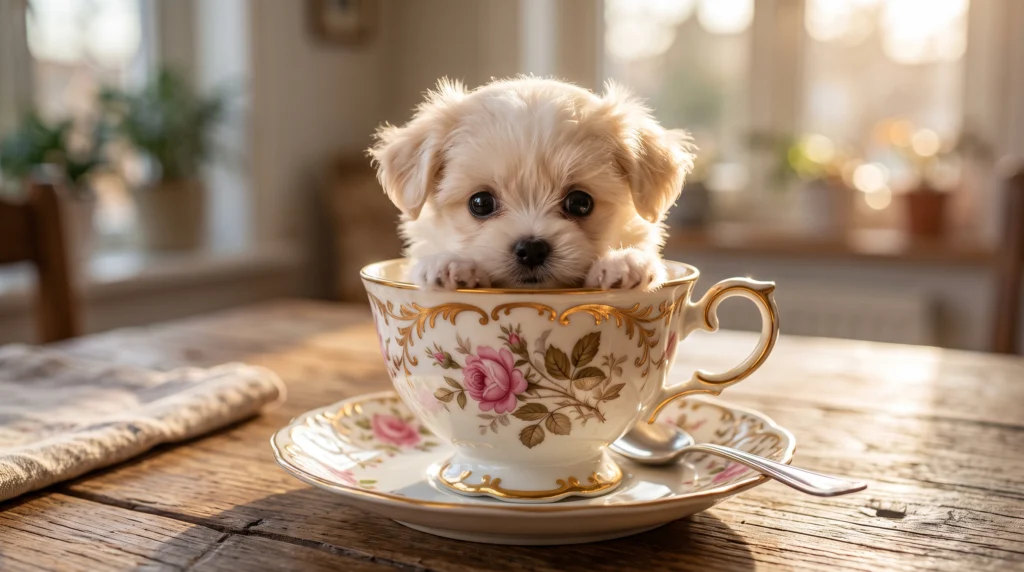
Those tiny puffballs you keep seeing online are hard to resist. A dog small enough to curl up in your lap, with a coat as soft as a cloud, sounds like the perfect family pet. But before you fall for a “teacup” puppy ad, there are a few things worth knowing.
This guide explains what families should know about fluffy teacup dogs. You will meet 13 small fluffy breeds, grouped by the kind of coat they have, so you can quickly see which ones shed, which need the most brushing, and which are sturdy enough for a busy home with kids. You will also learn what “teacup” really means, which health problems come with very tiny dogs, and how to find a healthy puppy without getting scammed.
What Are Fluffy Teacup Dogs?
Fluffy teacup dogs are very small dogs with soft, long, silky or curly coats that are sold as smaller than their breed’s normal size. “Teacup” is a selling word, not a real breed or size. The American Kennel Club does not recognize it for any breed.
There is also no official teacup weight. Sellers usually use the word for adult dogs that weigh about 4 to 6 pounds or less, and some are well under 4 pounds.
To get dogs that small, some breeders pair the smallest dogs they have, often the runts of earlier litters. That focus on size can carry health problems from parents to puppies. In its guide to finding a good breeder, the American Kennel Club warns that puppies sold as “teacup” can struggle to keep their blood sugar up, and that “teacup” is not a size in any breed it recognizes.
So what is the difference between a toy dog and a teacup dog? A toy breed, like the Maltese or Pomeranian, is a real breed that is naturally small. It has a written breed standard that gives an adult size reference. “Teacup” is an informal label sellers apply to very small dogs. It does not tell you how a dog was bred or how big it will be as an adult.
The good news is that many toy breeds are already tiny and fluffy at their normal size. That is why this guide gives each breed’s standard adult weight, not a shrunken “teacup” size.
Fluffy Teacup Dogs at a Glance
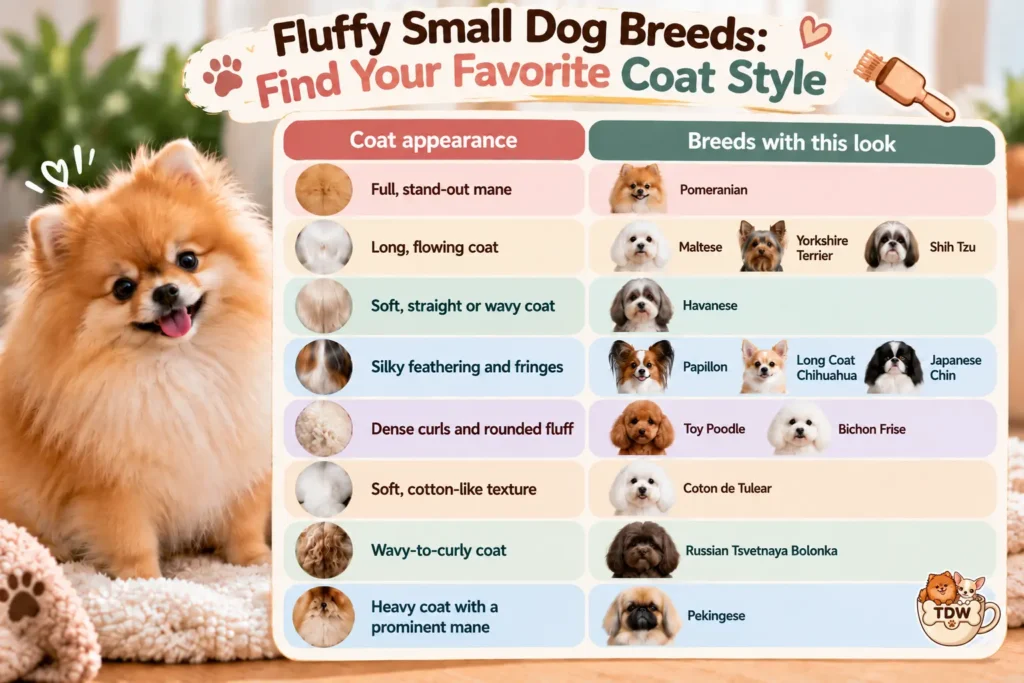
Here is a quick way to compare all 13 breeds by coat before you read about each one. Weights are the American Kennel Club’s adult weight references for each breed. They describe the breed, not a target every individual dog must hit.
| Breed | AKC adult weight reference (pounds) | Coat type | Shedding | Grooming needs |
|---|---|---|---|---|
| Pomeranian | 3 to 7 | Thick double coat | Moderate, seasonal | Medium |
| Long Coat Chihuahua | Up to 6 | Soft long coat | Moderate | Low |
| Maltese | Under 7 | Long silky hair | Low | High |
| Yorkshire Terrier | Up to 7 | Long silky hair | Low | High |
| Shih Tzu | 9 to 16 | Long double coat | Low | High |
| Havanese | 7 to 13 | Silky, soft coat | Low | Medium to high |
| Papillon | 5 to 10 | Silky single coat | Low | Low to medium |
| Toy Poodle | 4 to 6 | Tight curls | Very low | High (regular groomer visits) |
| Bichon Frise | 12 to 18 | Curly, fluffy coat | Very low | High |
| Coton de Tulear | 8 to 15 | Cotton soft coat | Low | Medium to high |
| Russian Tsvetnaya Bolonka | About 6 to 9 | Wavy, curly coat | Low | Medium to high |
| Pekingese | Up to 14 | Long double coat | Moderate to heavy | High |
| Japanese Chin | 7 to 11 | Long silky coat | Moderate | Low to medium |
Fluffy Breeds With Plush Double Coats
A double coat has two layers: a soft, thick undercoat close to the skin and a longer outer coat on top. That undercoat is what makes these dogs look so puffy. The trade off is shedding, especially when the undercoat comes out once or twice a year.
Pomeranian
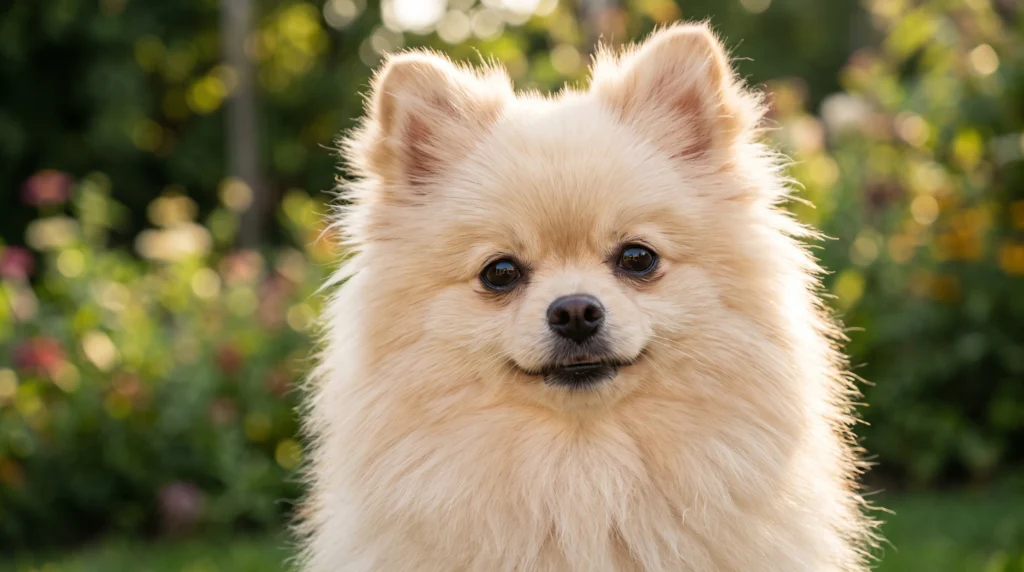
If you picture a fluffy little dog, you are probably picturing a Pomeranian. Its thick double coat stands out from the body and forms a lion like mane around the neck, which is why many people call it the fluffiest small breed of all.
The American Kennel Club lists an adult weight of 3 to 7 pounds. These dogs are bright, curious and full of personality, and they often love an audience. They can also be quite vocal.
Plan on brushing a few times a week, and more during shedding season. Groomers generally advise against shaving a double coat just for looks or to keep the dog cool, because it may grow back unevenly. Severe mats or a medical problem are different, and a groomer or vet may need to clip the coat short then. If your dog starts losing patches of fur for no clear reason, see your vet, because Pomeranians can develop a coat loss condition called Alopecia X.
A Pomeranian usually fits best with older, gentle children and a family that does not mind regular brushing. For size, color and care details, see our full Teacup Pomeranian guide.
Long Coat Chihuahua
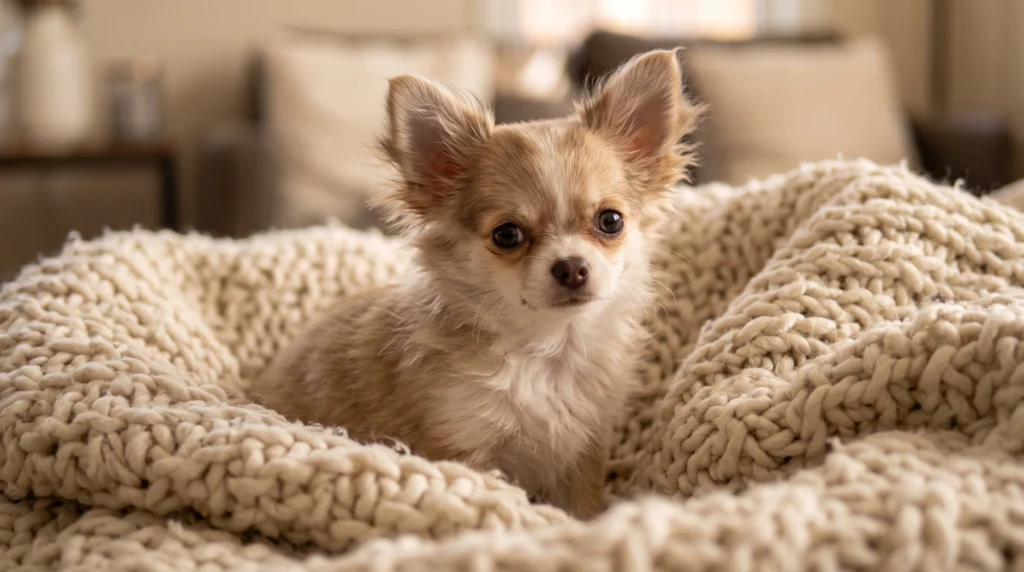
Many people forget that the Chihuahua comes in a long coat variety. It has soft, flowing fur on the ears, legs and tail, and a plumed tail that gives it a surprisingly fluffy look for such a tiny dog.
The breed standard calls for an adult weight of no more than 6 pounds, which already makes it one of the smallest breeds in the world. There is no need to shrink it any further.
The good news for busy families is that the long coat is easy to care for. A brush once or twice a week is usually enough. Chihuahuas tend to bond tightly with one person and can be wary of strangers, so early, gentle socializing matters.
A calm home with older children usually works best. Because Chihuahuas are so small, they feel the cold quickly and can be hurt by rough play.
Silky Coated Tiny Dogs
These breeds have long, smooth coats that feel more like human hair than fur. They usually shed very little, but that silky hair tangles easily. If you want this look, plan on brushing most days or keeping the coat in a short, easy “puppy cut”.
Maltese
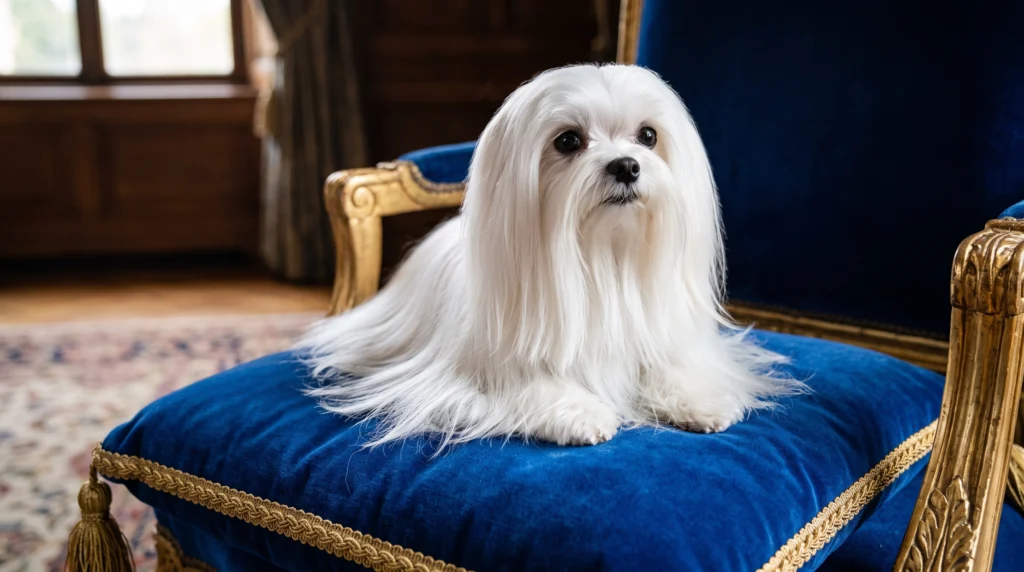
The Maltese is the classic white lap dog, with a long, pure white coat that can reach the floor when it is kept long. The breed standard calls for an adult weight under 7 pounds.
Maltese are gentle, playful and very attached to their people. They often do well in apartments and quieter homes. The coat sheds little, but it needs daily brushing and regular face cleaning to keep tear stains and mats away.
One health issue to know about is the liver shunt, which the Maltese is known to be prone to. We explain what that means in the health section below.
It is a lovely match for calm families who want a cuddly companion and do not mind daily grooming. You can learn more in our Teacup Maltese breed guide.
Yorkshire Terrier
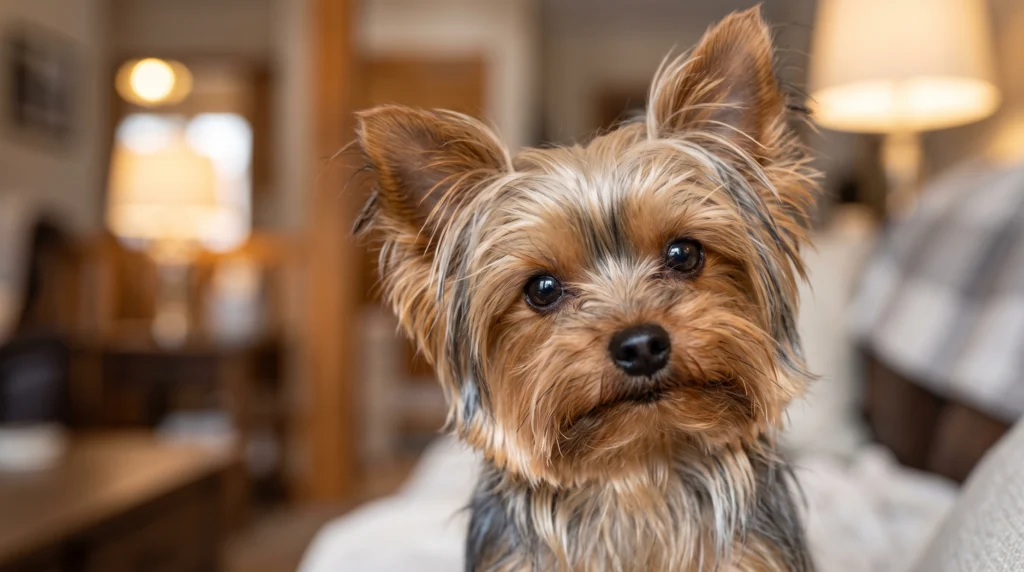
The Yorkshire Terrier has a glossy, silky coat in steel blue and tan. It is also a breed you will often see advertised as “teacup” online.
Its breed standard sets a top adult weight of 7 pounds. Underneath that elegant coat is a bold little terrier that is brave, curious and sometimes bossy.
The long coat needs daily brushing, or you can keep it trimmed short. Yorkshire Terriers are among the toy breeds more likely to have a weak windpipe and liver shunts, so ask any breeder about health checks on both parents.
Families with older kids tend to enjoy this spirited, confident little dog the most.
Shih Tzu
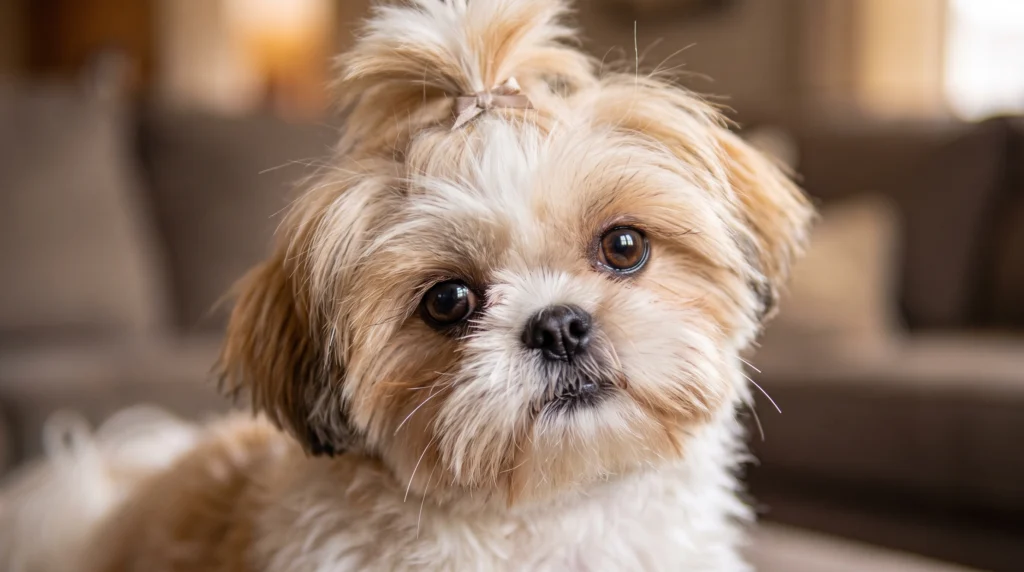
The Shih Tzu has a long, flowing double coat and a sweet, friendly nature. It was bred as a companion, and it still loves nothing more than being close to its family.
Here is something many “teacup” ads leave out: the Shih Tzu breed standard lists an adult weight of 9 to 16 pounds. That makes it one of the larger dogs in this guide, and a little sturdier for family life.
The coat sheds little but tangles quickly, so many owners choose a short trim. The Shih Tzu also has a short, flat face. In a 2026 University of Cambridge study, the Shih Tzus examined showed a moderate level of breathing problems linked to that face shape. Keep it cool in hot weather and avoid hard exercise.
If you want an easygoing, affectionate dog that is a bit more solid than the tiniest toy breeds, the Shih Tzu is worth a look.
Havanese
The Havanese is the only dog breed native to Cuba, and one of the most cheerful breeds you will meet. Its soft, silky coat can be wavy or straight, and it comes in many colors.
The American Kennel Club lists an adult weight of 7 to 13 pounds. These dogs are friendly, playful and eager to be part of everything you do. They often get along well with children and other pets when raised with them.
Brush daily if you keep the coat long, or less often with a short trim. Like the Maltese and Yorkshire Terrier, the Havanese is one of the breeds more prone to liver shunts, so health testing matters.
This breed suits social families who are home a lot, since many Havanese struggle when left alone for long stretches.
Papillon
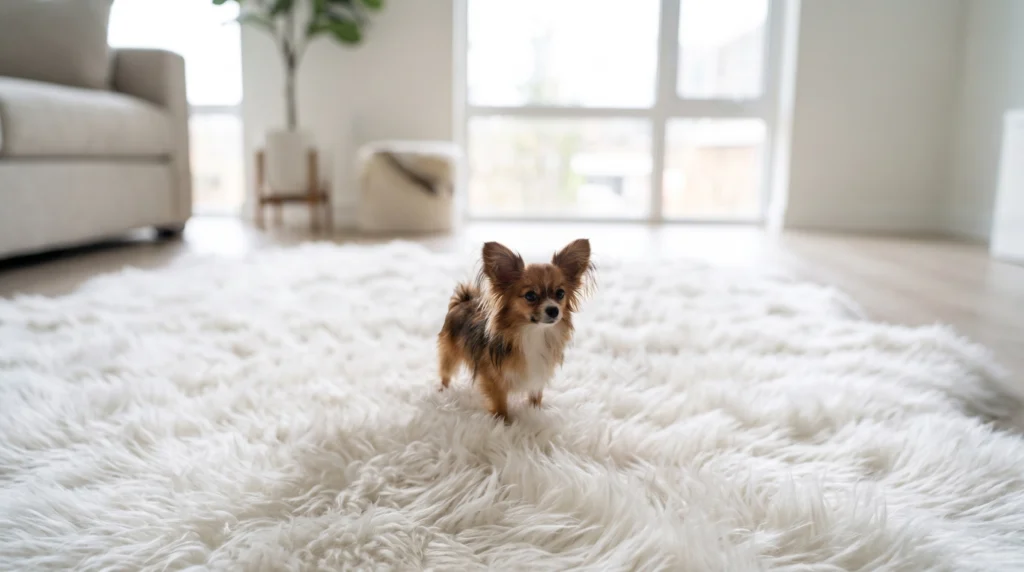
The Papillon is named after the French word for butterfly, thanks to its large, fringed ears. It has a long, silky coat with feathering on the ears, chest and tail.
Adults usually weigh 5 to 10 pounds, according to the American Kennel Club. These are lively, smart little dogs that love to learn tricks and play games.
Unlike many fluffy breeds, the Papillon has a single coat with no thick undercoat. That makes brushing easier, and once or twice a week is often enough. It also means the Papillon feels the cold, so a warm sweater helps in winter.
Active families who like teaching tricks often find the Papillon a joy.
Curly and Cottony Small Dogs
Curly and cotton soft coats hold on to loose hair instead of dropping it around the house, so these breeds shed very little. The catch is that the trapped hair forms mats unless you brush often, and most need regular trips to a professional groomer.
Toy Poodle
The Toy Poodle is the smallest of the three Poodle sizes, with dense, tight curls that keep growing. The American Kennel Club lists an adult weight of 4 to 6 pounds.
Poodles are known for being smart, quick to learn and eager to please, which makes training fun for kids and adults alike. They are playful and sensitive, and they usually want to be right where the family is.
The curly coat sheds very little, but it needs daily brushing if kept long, less with a short clip, and a professional groom every few weeks to stay comfortable and tangle free.
It is a smart pick for families who want a bright, trainable dog and can plan for regular grooming.
Bichon Frise
The Bichon Frise looks like a little white powder puff, with a soft, curly coat that stands up away from the body.
It is not a toy breed. The American Kennel Club places it in the Non Sporting Group, and it lists an adult weight of about 12 to 18 pounds. That extra size is a plus for families, because a sturdier dog copes better with normal family life.
Bichons are merry, friendly and usually love meeting new people. The coat sheds very little but needs frequent brushing and regular professional grooming to keep that rounded, fluffy look.
Families with children often like its mix of cheerfulness and sturdiness.
Coton de Tulear
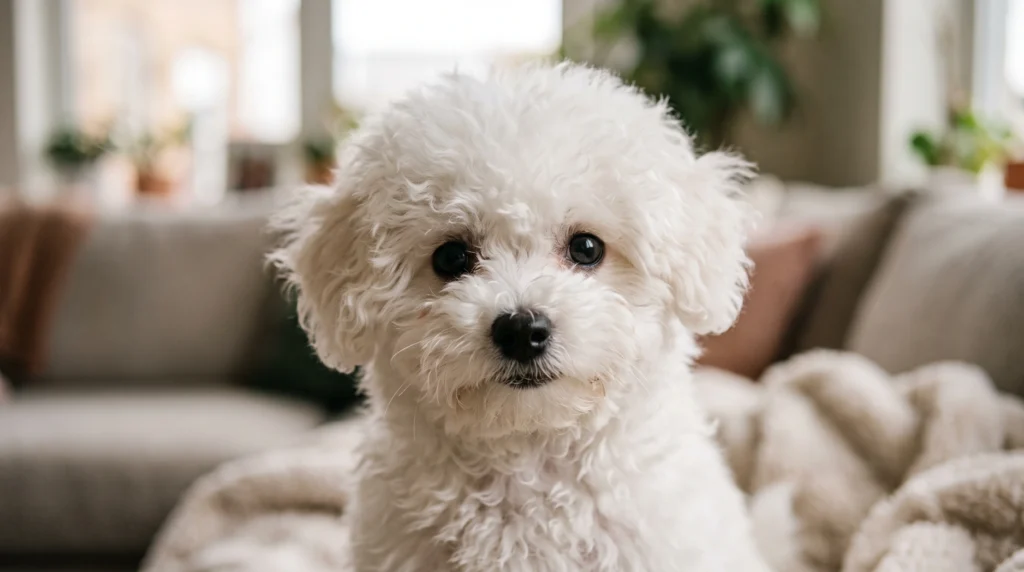
The Coton de Tulear comes from Madagascar, and its name comes from its coat, which feels like soft cotton. The coat is mostly white and can be straight or slightly wavy.
The American Kennel Club lists an adult weight of 8 to 15 pounds and a life expectancy of 15 to 19 years. That is a long life, so this is a dog that may grow up alongside your children.
Cotons are cheerful, clownish and devoted to their families. The coat sheds little but needs daily brushing when kept long to stop mats from forming close to the skin.
Choose a Coton if you want a sturdy, long lived companion with a gentle nature.
Russian Tsvetnaya Bolonka
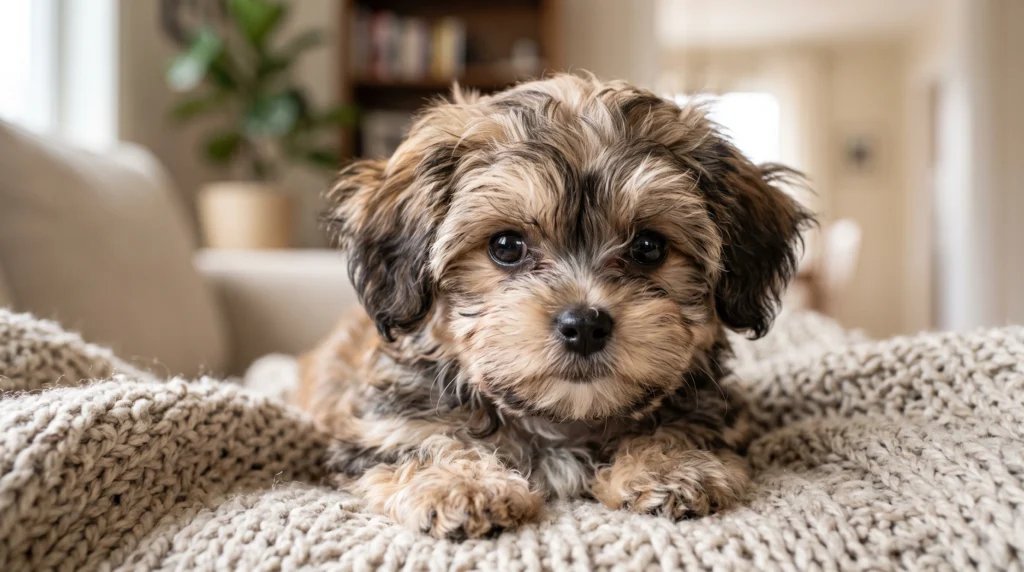
The Russian Tsvetnaya Bolonka became an officially recognized American Kennel Club breed on January 1, 2026, as a member of the Toy Group.
Its name means “Russian colored lapdog”. It has a soft, wavy to curly coat that comes in many colors, and the American Kennel Club lists an adult weight of about 6 to 9 pounds. The breed was developed in Russia as a friendly house pet for apartment living.
Bolonki (the plural of Bolonka) are known for being sweet, affectionate and playful. Their coat sheds very little, but it needs regular brushing to prevent mats, and many owners wash the face and beard often.
Because the breed is still uncommon in the United States, plan to find a breeder through the breed’s official club.
Flat Faced Fluffy Dogs That Need Extra Care
Some of the fluffiest small breeds also have very short, flat faces. That face shape can squeeze the nose and airways, which makes breathing harder. Vets call this problem BOAS, short for brachycephalic obstructive airway syndrome.
Pekingese and Japanese Chin
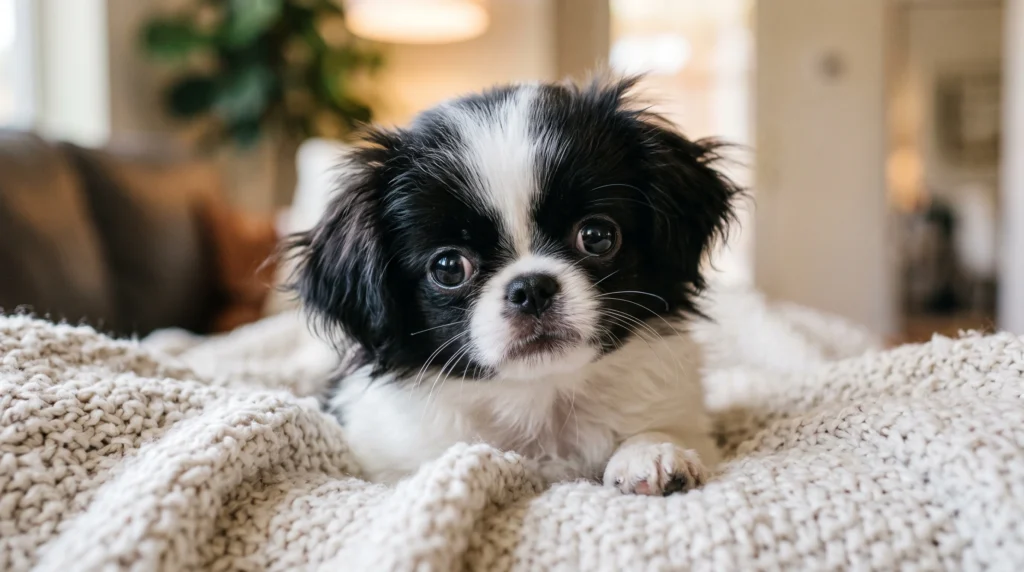
The Pekingese has a long, heavy double coat and a dignified, independent personality. Its breed standard sets a top weight of 14 pounds. The Japanese Chin is lighter, at 7 to 11 pounds, with a silky coat and a quiet, cat like way of moving around the house.
Both breeds are loving companions. But a 2026 University of Cambridge study of nearly 900 dogs found that 89% of the Pekingese and 82% of the Japanese Chins examined had some level of this breathing problem. Those rates are similar to Pugs and French Bulldogs. In the same study, the Maltese and Pomeranian had no dogs with clinically significant breathing disease.
The researchers also found that very flat faces, narrow nostrils and extra body weight made breathing problems worse.
What this means for your family:
- Watch for loud snoring, noisy breathing when awake, tiring quickly on walks, or struggling in warm weather.
- Keep these dogs cool, and skip hard play on hot or humid days.
- Keep them at a healthy weight.
- Ask any breeder whether the parents have open nostrils and easy breathing, and talk to your vet if you notice breathing that sounds like hard work.
This does not mean every dog of these breeds struggles. It does mean you should go in with your eyes open.
Health Risks of Teacup Sized Dogs
Are teacup dogs healthy? Some live long, happy lives, but the smaller a dog is bred to be, the more health risks it tends to carry. As veterinarian Jennifer Coates explains for PetMD, breeding for size alone can let problems pass from parents to puppies.
The most urgent one to know is low blood sugar (hypoglycemia). Tiny puppies store very little energy, so they can run low quickly if they skip a meal, get cold or feel stressed. Call your vet right away if your puppy seems unusually weak or sleepy, trembles, walks in a wobbly way or has a seizure.
Other problems that show up more often in very small dogs include:
- A weak windpipe (tracheal collapse), which causes a dry, honking cough
- Liver shunts, a blood vessel problem a puppy is born with
- Fragile bones that can break in a short fall
- Slipping kneecaps and crowded teeth
Tiny dogs also lose body heat fast, and their size can make surgery and dosing trickier. Instead of picking flea, tick or heartworm products off the shelf, ask your vet to choose ones that suit your dog’s age, weight and health.
Are Fluffy Teacup Dogs Good for Families With Kids?
They can be, but the smallest dogs are usually a better match for families with older, gentle children. A very tiny dog is easy to drop, step on or squeeze by accident, and its bones can break from a short fall.
That does not mean a small fluffy dog and young kids can never mix. It means size matters. Sturdier small breeds, such as the Coton de Tulear, Bichon Frise and Havanese, tend to handle family life better than a 4 pound puppy. Choosing a dog at its normal breed size, rather than a “teacup” version, also helps.
Whatever breed you pick, a few simple house rules keep everyone safe:
- Sit on the floor to hold the dog. No carrying it while walking around.
- An adult supervises all playtime with younger children.
- Play gently, with no chasing, grabbing or rough games.
- Let the dog rest when it walks away. A quiet bed or crate is its safe spot.
- Use pet stairs or a ramp so the dog does not jump off beds and sofas.
- Keep outside doors and gates closed, because a tiny dog can slip out in seconds.
The good news is that kids who learn these habits often become wonderful, caring dog owners. Talk the rules through before your puppy comes home, so everyone knows what to expect.
Grooming a Fluffy Toy Dog
That soft, fluffy look takes work. Every coat in this guide needs regular care, and skipping it leads to mats: tight knots of hair that pull on the skin and can hurt. Before you choose a breed, be honest about how much time your family can spend with a brush.
Shedding and the Hypoallergenic Myth
Many families want small fluffy dogs that don’t shed because someone has allergies. Here is the important part: no dog is completely allergy free. As the American Kennel Club explains, no dog is 100% hypoallergenic.
Dog allergies come from proteins in skin flakes (dander), saliva and urine, not just from loose hair. Low shedding breeds like the Toy Poodle, Bichon Frise and Maltese leave less hair around the house, and some allergy sufferers find them easier to live with. But they still make allergens.
If someone in your home has allergies, spend time with the breed before you commit, and talk to your doctor. That is much kinder than bringing home a puppy you may have to give up later.
Brushing and Grooming by Coat Type
VCA Animal Hospitals recommends daily brushing for long, silky or curly coats. Use the table below as a starting point, and ask your groomer how to adjust it for your dog’s coat length.
| Coat type | Breeds | Brushing at home | Professional grooming | Watch out for |
|---|---|---|---|---|
| Double coat | Pomeranian, Long Coat Chihuahua, Pekingese | A few times a week, more when shedding | Optional tidy ups | Avoid routine shaving; badly matted coats may need professional clipping |
| Silky hair | Maltese, Yorkshire Terrier, Shih Tzu, Havanese, Japanese Chin | Daily if kept long | Regular trims, or a short puppy cut | Tangles, tear stains, hair in the eyes |
| Silky single coat | Papillon | Once or twice a week | Rarely needed | Feels the cold |
| Curly or cottony | Toy Poodle, Bichon Frise, Coton de Tulear, Russian Tsvetnaya Bolonka | Daily for longer coats, down to the skin | Every few weeks | Mats hiding under the top coat |
A few habits help every fluffy dog. Brush in small sections all the way to the skin, not just over the top. Trim nails regularly. Brush teeth often, since small dogs are prone to dental problems. And start gentle handling while your puppy is young, so grooming becomes calm, normal time together.
How to Find a Healthy Fluffy Teacup Puppy
The healthiest path is a responsible breeder of normal sized dogs, or a breed rescue, rather than a seller who promises the tiniest puppy possible. Good breeders health test the parents, let you see the mother with her puppies, ask about your family and give you a written contract.
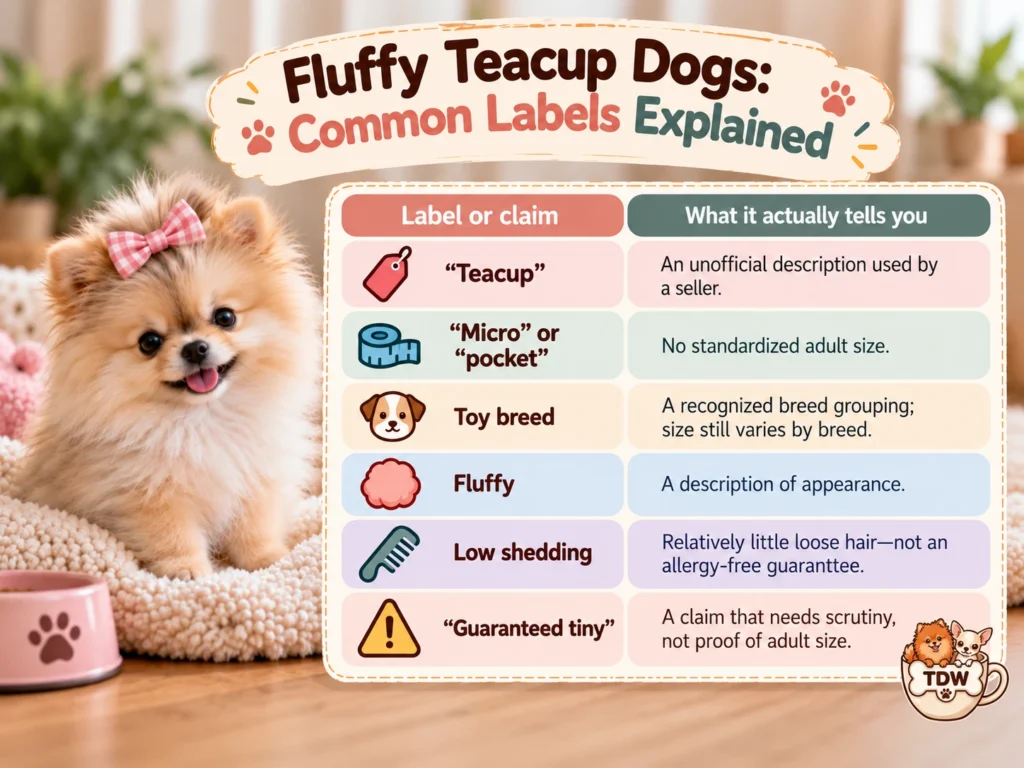
Walk away if you see:
- Puppies sold as “teacup”, “micro” or “pocket” as if that were a special size
- No health test results for the parents
- Toy puppies sent home very young. The American Kennel Club notes that toy breeders often keep puppies until about 12 weeks.
- Pressure to pay a deposit, shipping or “insurance” fee before you have seen the puppy
Buying online? A live video call and a visit in person are useful checks, but neither one proves a seller is honest. Pay with a method that offers buyer protection, and slow down if anything feels rushed.
Budget beyond the puppy, too. Fluffy coats mean regular grooming, and tiny dogs need steady vet and dental care. A puppy priced far below normal is a warning sign, not a bargain.
Fluffy Teacup Dogs FAQ
What is the fluffiest teacup dog breed?
The Pomeranian is usually called the fluffiest small breed, thanks to its thick double coat that stands out like a mane. If you prefer a soft, cottony feel instead, the Coton de Tulear and Bichon Frise are great choices, and both shed less than a Pomeranian.
How big do fluffy teacup dogs get?
It depends on the breed. The breeds compared here have AKC adult weight references from about 3 pounds (Pomeranian) to 18 pounds (Bichon Frise). The larger breeds are alternatives, not recognized teacup varieties. A “teacup” label is not a size promise, and many puppies sold that way grow bigger than expected. Ask to see both parents to get a better idea.
Do fluffy teacup dogs shed?
Some do and some barely do. Double coated breeds like the Pomeranian shed, especially once or twice a year. Silky and curly breeds like the Maltese, Toy Poodle and Bichon Frise shed very little. Remember that low shedding does not mean allergy free.
How long do fluffy teacup dogs live?
Many small breeds live long lives when they are healthy. The American Kennel Club lists 15 to 19 years for the Coton de Tulear, for example. But poor breeding for tiny size can bring health problems that shorten a dog’s life, so choosing a healthy puppy matters most.
Choosing Your Fluffy Little Companion
The best fluffy teacup dogs for families are not the tiniest ones. They are healthy dogs at their normal breed size, from breeders who care about health more than size.
Start by matching the coat to the time you have for grooming. Then match the dog’s size and sturdiness to the ages of your children. If allergies are a concern, meet the breed first. And whatever you choose, walk away from any seller who makes “teacup” the main selling point.
Ready to learn more about a favorite? Read our Teacup Pomeranian guide or our Teacup Maltese guide, and talk with your vet before you bring your new puppy home.
The TeacupDogWorld Editorial Team researches and creates practical guides about small and teacup-sized dogs, including breed characteristics, grooming, nutrition, health, training, and everyday care. Our content is developed using reputable veterinary, breed-club, and animal welfare sources to help dog owners make better-informed decisions.