

You saw a photo of a tiny Havanese puppy sitting in a coffee mug, and now the whole family wants one. That makes sense. These little dogs are fluffy, cheerful and very easy to love.
Here is the honest answer up front. A teacup Havanese is not a separate breed or an official size. “Teacup” is an informal sales term for a Havanese described as smaller than usual, and it has no agreed meaning.
This guide explains how size compares to the breed standard, what health and care needs to plan for, and whether a very small Havanese suits a home with kids. You will also learn what to budget, how to check a breeder’s records, and which warning signs to take seriously before you pay.
| Quick facts | |
|---|---|
| Breed | Havanese (AKC Toy Group) |
| Breed standard height | 8.5 to 11.5 inches at the shoulder |
| Teacup size | No standard range; ask the seller what they mean |
| Life expectancy | 14 to 16 years for the breed, per the AKC; no separate data for dogs sold as teacups |
| Coat | Long, silky and low shedding, but not allergy proof |
| Often suits | Families with calm, older kids and someone home most of the day |
What Is a Teacup Havanese?
“Teacup” is a word sellers use for a Havanese they describe as smaller than usual. The AKC breed standard has no teacup size, so different sellers can mean very different things by it. The label also does not tell you how a puppy was bred or why it is small. Some puppies are simply at the small end of normal, while others may be small for reasons a vet should look into.
The Havanese itself is a real, well loved breed. It is the only dog breed native to Cuba, and the American Kennel Club (AKC) places it in the Toy Group. That group name causes confusion. “Toy” is the official group for small companion breeds. It does not mean there is a smaller version of the Havanese.
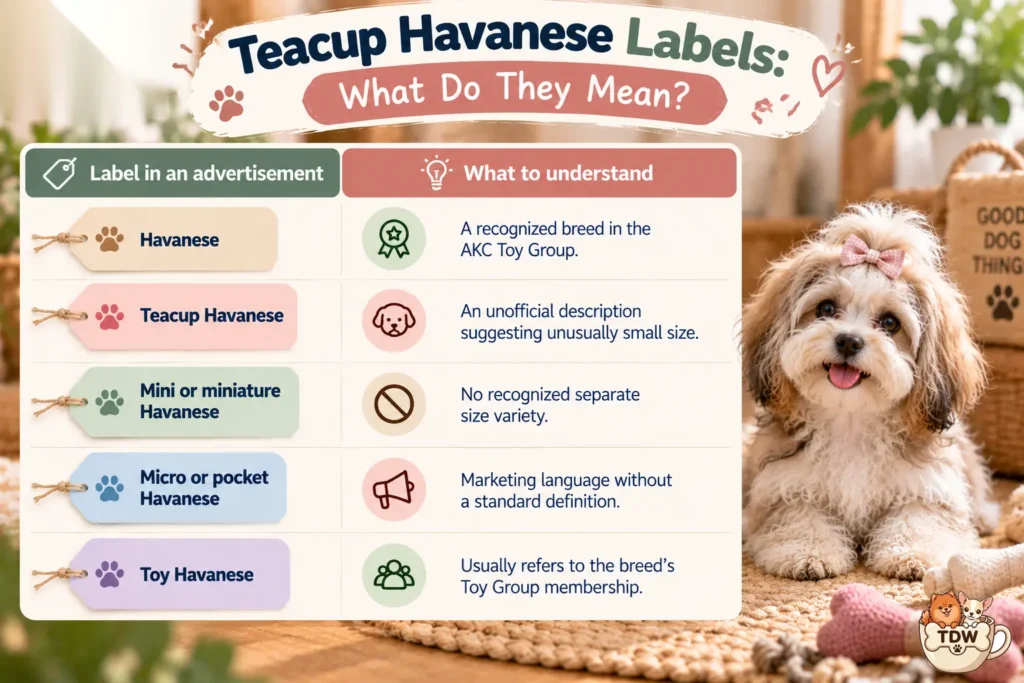
| Other labels you may see | What they tell you |
|---|---|
| Mini or miniature Havanese | The same idea as teacup, with no set size |
| Pocket or micro Havanese | The same idea, also with no set size |
| Toy Havanese | Usually a regular Havanese, since the whole breed is in the Toy Group |
Is a Teacup Havanese Purebred?
It depends on the parents. If both parents are Havanese, the puppy is a purebred Havanese. If one parent is another breed, such as a Chihuahua or a Yorkshire Terrier, the puppy is a mixed breed dog, and its coat, personality and health needs may differ from a Havanese.
To know which you are looking at, ask for both parents’ registered names and registration numbers so you can check them. Seeing dogs on a video call is a nice start, but it does not prove who the parents are. If you already have a puppy and are unsure, a canine DNA test may help estimate its breed ancestry.
Can a Teacup Havanese Be AKC Registered?
A Havanese advertised as teacup may be eligible for AKC registration if the usual requirements are met. In most cases, that means both parents are AKC registered and the breeder has registered the litter. Registered parents alone are not enough.
Keep in mind what papers do and do not do. They record the puppy’s family tree. They do not certify size, and they do not guarantee health.
How Big Does a Teacup Havanese Get?
No one can promise an exact adult size. There is no standard height range for a teacup Havanese, so the only firm yardstick is the breed standard itself.
The AKC Havanese breed standard calls for a height of 8.5 to 11.5 inches at the shoulder, with 9 to 10.5 inches as the ideal. Most adult Havanese weigh roughly 7 to 13 pounds, but the standard focuses on height and a sturdy build rather than a weight number. It describes a small dog that should never look fragile.
| Standard Havanese | Dog sold as a teacup Havanese | |
|---|---|---|
| Official size range? | Yes, in the AKC breed standard | No standardized range |
| Adult height | 8.5 to 11.5 inches (ideal 9 to 10.5) | No set range; ask what the seller means |
| How to judge likely size | The parents give context, not a guarantee | Ask for dated growth records and a vet assessment |
| Show ring | Height is one of many things judges assess | Adults under 8.5 inches are disqualified |
Why No One Can Promise an Adult Size
Puppies grow at different speeds, so a small puppy is not always a small adult. Some puppies sold as teacups grow to a normal Havanese size.
To get a better sense of where a puppy is heading, ask for:
- Its weight at several dates since birth
- Notes from any vet exams so far
- The adult height and weight of both parents
If a puppy is much smaller than its littermates, ask whether a vet has examined it and what they found. If knowing your dog’s size really matters, consider an adult Havanese, whose current size you can simply measure.
Teacup Havanese Health: What Families Should Know
Very small puppies can have care needs that deserve veterinary attention. However, being below the breed standard does not by itself mean a dog is sick or set a specific level of risk. The topics below are known concerns for young toy breed puppies or for the Havanese breed in general.
Book a vet visit soon after your puppy comes home, and call your vet right away if your puppy ever seems weak, wobbly or unwell.
Low Blood Sugar in Young Puppies
Low blood sugar (hypoglycemia) is a known danger for toy breed puppies, especially in their first three months. Young toy-breed puppies can be vulnerable to low blood sugar, particularly when they are not eating adequately.
Stress, getting cold, too much play, stomach upsets and intestinal parasites can all trigger it. That is why the first days in a new home, or a long trip, deserve extra care.
Watch for these signs:
- Sleepiness or very low energy
- Weakness or wobbly walking
- Trembling or shaking
- In serious cases, seizures or collapse
Treat these signs as an emergency and contact a vet immediately. Before your puppy comes home, ask your vet for an emergency plan made for your puppy, including what to do on the way to the clinic.
Safe Handling and Falls
Small puppies can be hurt by a jump off the sofa, a fall from someone’s arms, or being stepped on. A few habits lower the risk: use pet stairs or a ramp for furniture, hold the puppy while sitting on the floor, and watch your feet when the dog is close by.
Liver Shunt
A liver shunt (portosystemic shunt) is a blood vessel problem that is usually present from birth. Blood that should pass through the liver to be cleaned goes around it instead.
When a small-breed dog has a congenital liver shunt, it is often located outside the liver. Signs may include slow growth, being smaller than littermates, strange or confused behavior, and slow recovery after anesthesia. Blood tests can raise suspicion, but confirming a shunt often takes imaging and more tests.
VCA Animal Hospitals explains liver shunts in more detail, including that dogs with a single shunt outside the liver often do very well after surgery. Special diets can help manage signs, but they do not prevent a shunt.
Slipping Kneecaps (Patellar Luxation)
Patellar luxation means the kneecap can slip out of its normal position. The American College of Veterinary Surgeons notes that it mainly affects small dogs and is at least partly inherited.
You may notice your dog skip a step or hold up a back leg for a moment, then walk normally again. Mild cases are often monitored, while serious cases may need surgery. A healthy weight puts less strain on the knees.
Other Havanese Health Concerns
Some conditions are reported in the Havanese breed regardless of size, including cataracts, hip problems such as Legg-Calve-Perthes disease, heart murmurs, deafness and dental disease. A 2007 study in the Journal of Heredity found that some developmental problems, including cataracts, liver shunts and heart murmurs, can occur together in the breed, which is one reason parent health screening matters.
Teacup Havanese Lifespan
The AKC lists the Havanese life expectancy as 14 to 16 years. There is no separate data on dogs sold as teacups.
Each dog’s own health, not the label, will shape how long it lives. Parents with health screening and regular vet care give your dog the best start.
Teacup Havanese Temperament and Family Life
Havanese are generally affectionate, playful companions, but temperament varies between individual dogs. The breed was developed as a companion, and many like to stay close to their people, greet visitors happily, and bark to let you know someone is at the door.
The AKC describes the Havanese as eager to please but sensitive, so gentle handling and kind training matter. That is true for any Havanese, and it is especially important with a small puppy.
Time Alone
A Havanese usually does best when someone is home for much of the day. Left alone for long hours, many become anxious, bark or chew.
If your family is out often, build alone time slowly. Start with a few minutes, give a safe chew toy, and increase the time over several weeks. A crate or small gated area can help the dog feel secure, and a dog walker can break up longer days.
Is a Teacup Havanese Good With Kids?
A small Havanese can be a lovely family dog in a calm home with older, gentle children. With babies, toddlers or young kids, it needs close adult supervision, because a small puppy can be hurt by a fall from a child’s arms or a hug that is too tight. Some families with very young children find an older puppy or adult dog easier.
If you bring home a very small Havanese, set these rules from day one:
- Kids sit on the floor to hold the dog. No standing or walking while carrying it.
- Young children never pick up the dog without an adult.
- Use baby gates to give the dog a quiet place to rest.
- Teach gentle play: soft toys, no chasing, no tug of war.
- An adult supervises every play session with younger children.
Living With Other Pets
Most Havanese get along well with other dogs and cats. The main concern is a big size difference. A large, playful dog can injure a small one by accident.
Introduce pets slowly, keep early meetings supervised, and separate them when you are out until you are sure they play gently.
How to Care for a Teacup Havanese
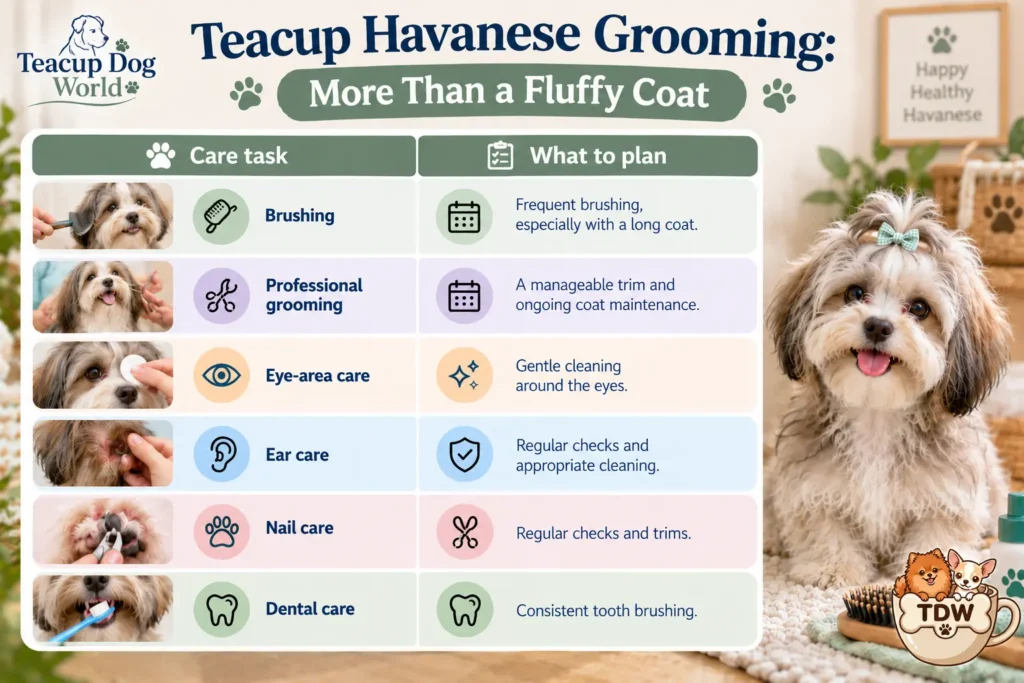
Caring for a teacup Havanese is much like caring for any Havanese, with extra attention to regular meals, safe handling and warmth.
Feeding
Feed a complete puppy food made for small breeds. Young puppies need several small meals spread through the day, which also helps keep their blood sugar steady. Ask your vet how much and how often to feed, since needs depend on your puppy’s weight and age. Once grown, keep your dog lean, because extra weight strains small joints.
Exercise and Safe Play
A Havanese needs daily activity, but short walks and indoor games are usually enough. Match walks and other activity to your dog’s age, health, and fitness. Avoid rough play with much bigger dogs and jumps from high furniture. Many vets suggest a harness rather than a collar for small dogs, so pressure falls on the chest instead of the neck.
Grooming the Havanese Coat
The Havanese has a long, silky double coat that tangles and mats easily. For a long coat, plan on daily brushing and combing. Many families choose a shorter “puppy cut” from a groomer, which makes home care much easier. You will also need to brush teeth often, trim nails, wipe around the eyes, and check the ears.
Training and Housetraining
The Havanese learns quickly with praise, treats and play. Because it is a sensitive breed that responds best to positive training, skip harsh corrections. Housetraining takes patience, since young puppies need frequent potty breaks. Keep a steady schedule and reward every success.
Keeping a Small Havanese Warm and Safe
Small puppies can get chilled easily. Consider the individual dog’s size, coat, age, and weather conditions when deciding whether extra warmth is needed, such as a sweater or shorter walks in cold weather. Around the house, watch doors, stairs and recliners, and keep small objects off the floor.
Teacup Havanese Cost: What to Budget For
The purchase price is only the start. A Havanese can live for many years, so plan for the full picture before you commit.
| Cost area | What it covers |
|---|---|
| Getting your dog | Breeder price or adoption fee. These vary widely, and price alone tells you nothing about health |
| First supplies | Crate, baby gates, harness, bed, sweater, small breed food, brushes and toys |
| Grooming | Regular professional grooming visits, or tools and time if you groom at home |
| Routine vet care | Puppy vaccines, checkups, parasite prevention, dental care and spay or neuter surgery |
| Unexpected costs | Emergency visits, or treatment for problems such as slipping kneecaps or a liver shunt |
Many families set aside an emergency fund or look into pet insurance while their dog is young and healthy. If a seller’s price is very different from what other Havanese breeders charge, take that as a reason to ask more questions.
How to Buy a Teacup Havanese Carefully
The goal is to verify, not just trust. A careful breeder expects questions and is happy to show you records.
A careful breeder will usually:
- Let you see the puppy, its mother where possible, and where the puppies are raised
- Give you both parents’ registered names and registration numbers
- Share the parents’ health screening results and the puppy’s own vet records
- Provide a written contract that explains what happens if a health problem appears
- Avoid promising an exact adult size
Health Tests to Ask the Breeder For
The Havanese Club of America (HCA), the AKC parent club for the breed, takes part in a health program run with the Orthopedic Foundation for Animals (OFA). For a Havanese to receive a health certificate called a CHIC number, the HCA requires three tests:
- Hips, evaluated with X-rays after age two
- Kneecaps, checked for slipping
- Eyes, examined every year by a veterinary eye specialist
A dog does not have to pass these tests to get a CHIC number. The number only means the tests were done and the results are public. The Havanese Club of America’s health testing guide explains each test, and notes that the club requires CHIC certificates on both parents before a member can list puppies in its breeder directory.
How to Check the Parents’ Records
Follow these steps for each parent:
- Get the details. Ask for the dog’s full registered name and registration number.
- Confirm identity. Ask how the dog is permanently identified, such as by microchip, and check that the number matches its records.
- Look it up. Search for the dog by name in the OFA public database.
- Read the results. Look at the actual result for each test, not only whether a CHIC number exists.
- Check the dates. Eye exams should be recent, since the HCA asks for them every year. Hip results should come from an exam done after age two.
- Ask about the puppy. Request the puppy’s own vet exam notes and vaccine records.
If a seller cannot or will not share these details, that tells you something important.
Warning Signs When Buying a Teacup Havanese
The Better Business Bureau’s puppy scam research describes fake sellers who use stolen photos, then keep asking for extra money for shipping, crates or insurance. In many cases, no puppy ever arrives.
Stop and do not pay if:
- You are pressured to pay quickly, or to use payment methods that are hard to reverse or have no purchase protection, such as wire transfers or gift cards
- You cannot verify the puppy’s identity or see the puppy
- Unexpected fees keep appearing after you pay
- The seller cannot provide registration or health documents
Ask more questions if:
- The ad leans heavily on words like teacup, micro or pocket
- The price is much lower or much higher than other Havanese breeders charge
- The seller promises an exact tiny adult weight
- The puppy is only offered with shipping
These do not prove a scam on their own, but they are good reasons to slow down and check everything above. For more examples, see our guide to teacup puppy adoption scams.
Alternatives to a Teacup Havanese
If your heart is set on a small, cuddly Havanese, you have options that do not rely on a size label.
- A small standard Havanese. Ask breeders whether they expect puppies at the smaller end of the standard, from parents with health screening on record.
- An adult Havanese. You can measure its current size, see its behavior, and review its vet history. No dog’s future health is fully known, but there are fewer surprises. Some breeders place retired adults in pet homes.
- A rescue Havanese. Breed rescues often have adult Havanese and Havanese mixes that need homes.
Is a Teacup Havanese Right for Your Family?
Use this table for an honest check before you decide.
| A very small Havanese may fit if… | It is probably not a good fit if… |
|---|---|
| You can supervise every interaction and give the dog a quiet rest area | You cannot reliably supervise interactions or provide a protected rest area |
| Someone is home most of the day | Everyone is out for long workdays |
| You can feed several small meals a day | Your schedule makes regular meals hard |
| You are ready for brushing or regular grooming visits | You want a low care coat |
| You can afford vet care if a health problem shows up | A surprise vet bill would be hard to manage |
| You found a breeder who shows health results | The seller only offers shipping and a size promise |
If most of your answers land in the right column, consider an adult Havanese, or wait until your family’s situation is a better match for a small puppy.
Teacup Havanese FAQs
Are Teacup Havanese Hypoallergenic?
No dog is truly hypoallergenic, and that includes the Havanese. People react mainly to proteins in dog saliva and skin, not just hair. A 2012 study in the Journal of Allergy and Clinical Immunology found no evidence that breeds sold as hypoallergenic release fewer allergens into the home. If someone in your family has allergies, spend real time around Havanese before you commit. Spending time with a dog cannot guarantee you will remain symptom-free at home. Discuss significant allergies with an allergist.
Do Teacup Havanese Shed?
They shed very little. Loose hairs tend to get caught in the long coat instead of falling on the floor. That is nice for your sofa, but it is also why the coat mats easily without regular brushing.
Can You Adopt a Teacup Havanese?
Sometimes. Havanese rescues and shelters do take in small dogs and Havanese mixes, though size labels in rescue listings are estimates too. Adopting an adult lets you see the dog’s current size before you bring it home.
The Bottom Line on Teacup Havanese
On its own, the teacup label tells you very little about a Havanese’s future size, breeding or health.
The questions that matter are the same for any Havanese: who the parents are, what their health records show, what the puppy’s vet has found, and whether your family can meet a small dog’s needs. Use the record checklist and decision table above before you pay anyone, and ask your vet to help you plan your puppy’s first weeks. If you are still comparing small dogs, browse our teacup dog breed guides.

The TeacupDogWorld Editorial Team researches and creates practical guides about small and teacup sized dogs, including breed characteristics, grooming, nutrition, health, training, and everyday care. Our content is developed using reputable veterinary, breed club, and animal welfare sources to help dog owners make better informed decisions.